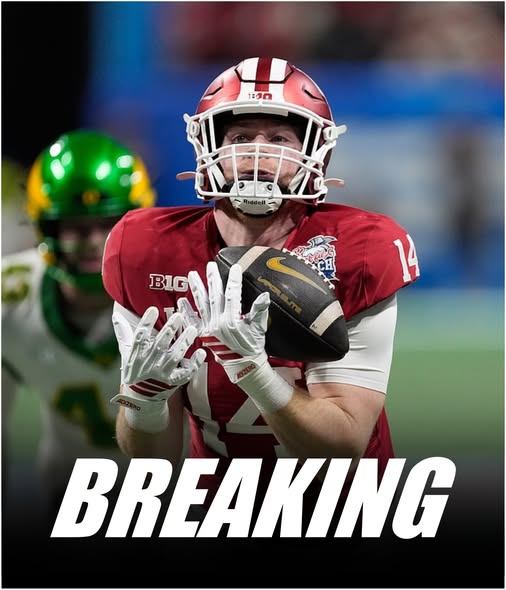
The NCAA has opened an investigation into former Indiana University quarterback Brendan Sorsby over allegations that he may have placed wagers on Indiana football games during his time with the program, according to sources familiar with the matter, marking another high-profile moment in the governing body’s ongoing crackdown on gambling-related violations in college athletics.
The inquiry, which is still in its early stages, centers on whether Sorsby, who previously played for the Indiana Hoosiers football program, violated NCAA rules that strictly prohibit student-athletes and program personnel from betting on sports in which they participate or have insider knowledge. While details remain limited, the investigation underscores the increasing sensitivity around sports wagering in collegiate athletics as legalized betting continues to expand across the United States.
Neither the NCAA nor Indiana University has issued a detailed public statement outlining specific findings in the case. However, the university acknowledged awareness of the situation and indicated it is cooperating with any review conducted by the governing body. As with all NCAA compliance matters, institutions are typically limited in what they can disclose while investigations are ongoing.
Sorsby, who emerged as a notable quarterback during his time with Indiana, has not been publicly charged with any wrongdoing, and no formal penalties have been announced. The allegations themselves, however, have already sparked significant attention across the college football landscape, where gambling-related cases have become a recurring concern in recent years.
The NCAA maintains some of the strictest gambling policies in American sports. Student-athletes are prohibited from betting on any sport sponsored by the organization, whether professional or collegiate, and are barred from sharing inside information, influencing game outcomes, or associating with gambling activities tied to their sport. Violations can result in suspensions, loss of eligibility, or permanent bans depending on severity and intent.
In recent years, the NCAA has increased enforcement efforts as legalized sports betting has become widely accessible in many U.S. states. Mobile apps, online sportsbooks, and promotional campaigns have made wagering more visible than ever before, raising concerns among administrators about the potential for rule violations, both intentional and accidental.
The case involving Sorsby adds to a growing list of gambling-related investigations across college athletics. In several previous instances, athletes have been disciplined for placing small wagers on professional sports or using team-related information in ways that violate NCAA rules. The governing body has consistently emphasized that even minor infractions can carry serious consequences due to the integrity risks involved.
For Indiana University, the situation brings renewed attention to compliance oversight within its athletic department. The Hoosiers football program, a member of the Big Ten Conference, has worked in recent years to strengthen education around gambling rules, particularly as student-athletes are increasingly exposed to betting advertisements and social media content promoting sportsbooks.
Indiana’s athletic department has previously conducted mandatory educational sessions for athletes, staff, and support personnel, focusing on prohibited conduct, reporting responsibilities, and the risks associated with gambling. Despite these measures, compliance violations remain a challenge for programs nationwide, especially as the cultural normalization of sports betting continues to grow.
Sorsby’s tenure at Indiana drew attention from fans and analysts for his development as a quarterback within the program. Known for his dual-threat capabilities and athletic upside, he became a notable figure in the Hoosiers’ offensive rotation. While his time in Bloomington included both opportunities and challenges on the field, the current allegations now place him at the center of an off-field issue that could carry significant implications for his athletic future.
At this stage, it remains unclear what specific evidence prompted the NCAA investigation. In many cases involving gambling, inquiries begin after data monitoring systems flag unusual betting patterns or when tips are submitted through compliance hotlines. Sportsbooks and integrity monitoring services also work with leagues and governing bodies to detect irregular activity, though there is no public confirmation of how the current case was initiated.
The NCAA has previously stated that it collaborates with integrity monitoring firms to track betting activity and ensure compliance with its rules. These partnerships have become increasingly important as betting markets expand across college sports, particularly during football and basketball seasons when wagering volume peaks.
Legal experts familiar with NCAA enforcement procedures note that investigations of this nature can take weeks or months to conclude, depending on the availability of evidence and the cooperation of involved parties. Outcomes can range from no violation being found to more severe disciplinary action if rules are determined to have been breached.
In cases where student-athletes are found to have bet on their own games, penalties tend to be significantly more severe due to the heightened risk of game manipulation or insider influence. Even placing bets on one’s own team without direct involvement in game-fixing can still constitute a major violation under NCAA bylaws.
The broader context of the investigation reflects ongoing concerns about the intersection of college athletics and the rapidly expanding sports betting industry. Since the U.S. Supreme Court’s 2018 decision allowing states to legalize sports wagering, the number of jurisdictions permitting betting has increased dramatically. As a result, college athletes are now operating in an environment where gambling advertisements are common and betting lines on their own performances are widely accessible.
This shift has prompted the NCAA to repeatedly call for tighter regulations around advertising and athlete protections. Officials have warned that the exposure of student-athletes to gambling content raises the risk of both intentional violations and inadvertent rule-breaking due to misunderstanding of complex compliance policies.
Public reaction to gambling-related investigations in college sports has been mixed. Some observers argue that the NCAA’s rules are outdated in an era of widespread legalized betting, while others maintain that strict enforcement is essential to preserving the integrity of competition. The Sorsby case is likely to reignite that debate, particularly among fans of the Indiana program and broader college football community.
Within Indiana University’s athletic circles, the focus remains on due process and adherence to NCAA protocols. Institutional representatives typically avoid commenting on specific cases until investigations are concluded, but emphasize education and compliance as key priorities for student-athletes across all sports.
The Big Ten Conference, of which Indiana is a member, has also taken steps in recent years to address gambling awareness among its athletes. Conference-wide initiatives include educational seminars, integrity workshops, and collaboration with enforcement agencies to ensure athletes understand the risks and consequences associated with wagering.
For Sorsby, the outcome of the NCAA’s investigation could have significant implications depending on its findings. While he is no longer part of Indiana’s roster, eligibility determinations and potential penalties can still affect a player’s ability to transfer, compete at another institution, or pursue professional opportunities in football.
Historically, NCAA gambling violations have resulted in a range of sanctions, including suspensions, loss of eligibility, and in some cases, permanent dismissal from collegiate athletics. However, each case is evaluated individually, taking into account intent, severity, cooperation, and prior conduct.
As the investigation continues, both Indiana University and the NCAA are expected to maintain limited public communication, consistent with standard protocol in ongoing compliance matters. Any formal resolution would typically be announced once findings are finalized and reviewed through the appropriate enforcement channels.
For now, the situation remains fluid, with no confirmed conclusion and no official determination of wrongdoing. What is clear, however, is that the case has once again placed the spotlight on the challenges facing college sports as they navigate an increasingly complex relationship with legalized gambling.
The NCAA has reiterated in past statements that protecting the integrity of competition remains its top priority, and that it will continue to pursue violations wherever they are identified. As this investigation unfolds, it will serve as another test of that commitment in an era where the boundaries between sports participation and sports wagering are becoming harder to separate.
For Indiana, the focus will likely remain on maintaining program stability and reinforcing compliance education for current athletes. For Sorsby, the next steps will depend entirely on the outcome of the NCAA’s review, which could take time to fully develop as investigators gather information and assess whether any rules were violated.
Until then, the case stands as an active reminder of the strict regulatory framework surrounding college athletics and the serious consequences that can arise when those rules are called into question.