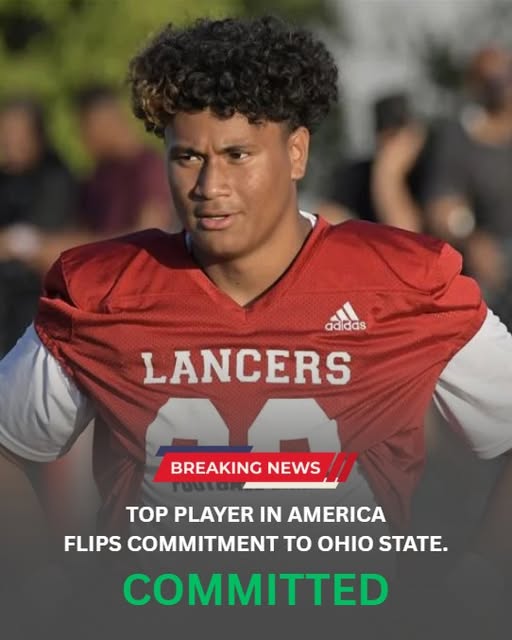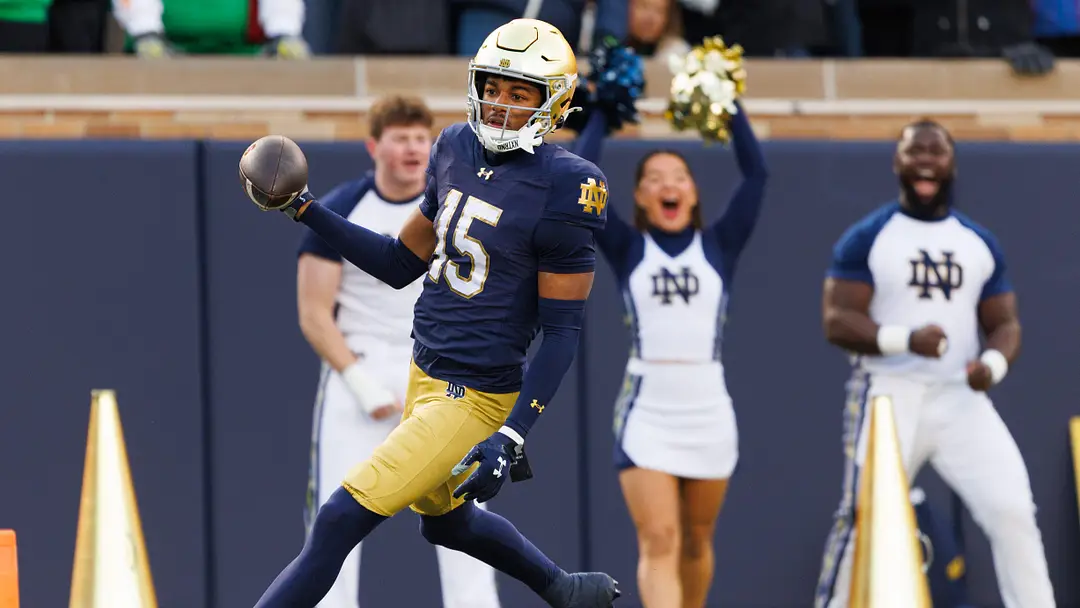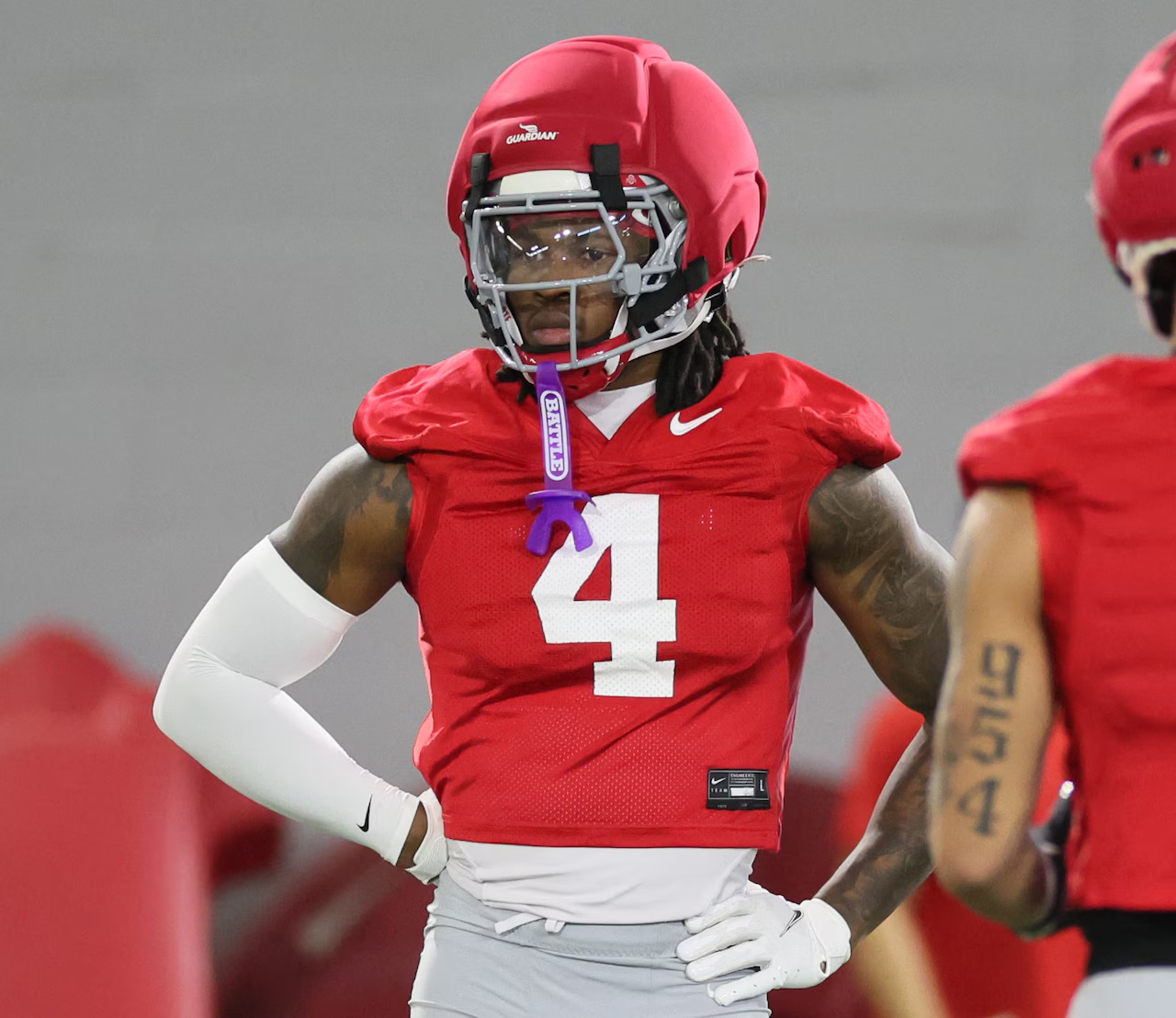
The evolving landscape of college athletics continues to blur the lines between amateurism and professional opportunity, and few recent revelations have captured that shift more vividly than comments from Jeremiah Smith. The Ohio State Buckeyes football standout has emerged not only as one of the most electrifying young talents in the nation, but also as a symbol of the new financial reality driven by Name, Image, and Likeness opportunities and the ever-active transfer portal. In a candid moment that quickly reverberated across the college football landscape, Smith disclosed the staggering financial figure he believes he could have commanded had he chosen to enter the transfer portal—an amount that underscores just how dramatically the sport has changed.
Smith, widely regarded as one of the premier wide receivers in college football, has been at the center of attention since his arrival in Columbus. His combination of elite speed, physicality, and football intelligence has made him a nightmare matchup for opposing defenses and a cornerstone of Ohio State’s offensive future. Yet, beyond his on-field exploits, it is his recent admission about the business side of college football that has ignited widespread discussion among fans, analysts, and administrators alike.
According to Smith, the offers he could have entertained in the transfer portal would have reached an “astronomical” level, with figures that reportedly climbed into the multi-million-dollar range. While he stopped short of confirming exact numbers publicly, the implication was clear: top-tier talent in college football is now commanding sums once reserved for professional athletes. The mere suggestion that a college sophomore—or even a freshman—could leverage his value to secure such lucrative deals reflects the seismic shift brought about by NIL legislation and the increasingly competitive transfer market.
For Ohio State, Smith’s decision to remain with the Buckeyes speaks volumes about both the program’s stability and its ability to retain elite talent in an era defined by player mobility. Head coach Ryan Day has built a reputation for fostering NFL-ready receivers, and Smith’s development under his system is widely viewed as a key factor in his choice to stay put. The Buckeyes have long been a pipeline for wide receiver excellence, producing stars who seamlessly transition to the professional ranks, and Smith appears poised to continue that tradition.
Still, the allure of the transfer portal cannot be overstated. What was once a mechanism for players seeking more playing time or a better fit has evolved into a high-stakes marketplace. Programs across the country are now leveraging NIL collectives and donor-backed initiatives to attract elite players, creating a dynamic that resembles free agency more than traditional college recruiting. In this environment, a player of Smith’s caliber becomes one of the most valuable commodities in the sport.
The reaction to Smith’s comments has been swift and varied. Some see it as a natural progression in a system that has long generated massive revenues without adequately compensating the athletes at its core. For decades, college football has been a billion-dollar industry, with television deals, sponsorships, and merchandise sales fueling enormous profits for universities and governing bodies like the NCAA. From this perspective, Smith’s potential earnings are simply a reflection of his market value finally being realized.
Others, however, view the situation with concern. Critics argue that the influx of money into college sports risks undermining the competitive balance and the traditional ethos of collegiate athletics. The fear is that wealthier programs—or those with more robust NIL infrastructures—will be able to effectively “buy” top talent, creating a widening gap between the haves and have-nots. Smith’s revelation, in this sense, serves as both a milestone and a warning sign.
Within the locker room, Smith’s decision to stay could have a stabilizing effect. Team chemistry, often overlooked in discussions about NIL and transfers, remains a critical component of success. By choosing continuity over a potentially massive payday elsewhere, Smith reinforces a culture of commitment that Ohio State hopes will translate into championships. His presence not only elevates the offense but also sets an example for younger players navigating similar decisions.
From a broader perspective, Smith’s comments highlight the growing sophistication of college athletes as they navigate their careers. Today’s players are more informed and empowered than ever before, often working with agents, advisors, and marketing professionals to maximize their opportunities. The days of athletes being passive participants in the system are long gone; they are now active stakeholders, making strategic decisions that balance financial gain, development, and long-term goals.
For Smith, the calculus appears to have been about more than just money. Remaining at Ohio State offers a combination of elite coaching, national exposure, and a clear pathway to the NFL. While the immediate financial incentives of the transfer portal might have been tempting, the long-term benefits of staying in a proven system likely played a significant role in his decision. It is a reminder that, even in this new era, not every choice is driven solely by dollars.
The ripple effects of Smith’s revelation extend beyond Ohio State. Recruits and current players across the country are undoubtedly taking note, recalibrating their expectations and strategies in light of the figures being discussed. Coaches, too, must adapt, finding ways to not only attract talent but also retain it in an increasingly fluid environment. The traditional pitch of playing time and development is now supplemented by discussions of NIL opportunities and financial packages.
Media coverage has also evolved to keep pace with these changes. Stories that once focused exclusively on performance and results now delve into contracts, endorsements, and market dynamics. Smith’s comments fit squarely within this new narrative, offering a glimpse into the high-stakes world that college football has become. It is a world where a single decision—whether to stay or enter the portal—can carry implications worth millions.
Despite the controversy and debate, there is an undeniable sense of excitement surrounding this transformation. For fans, the added layer of intrigue brings a new dimension to the sport. Offseason moves, transfer rumors, and NIL deals create a year-round cycle of engagement, keeping college football in the spotlight even beyond the games themselves. Smith’s story is a prime example of how individual narratives can captivate and energize the fanbase.
At the same time, the human element should not be overlooked. Behind the headlines and dollar figures is a young athlete navigating unprecedented circumstances. The pressure to perform on the field is now matched by the pressure to make financially and strategically sound decisions off it. For Smith, handling that pressure with maturity and clarity will be as important as his performance on Saturdays.
Looking ahead, the implications of this new era are still unfolding. Regulatory efforts, both within the NCAA and at the legislative level, aim to bring some structure and consistency to NIL and transfer policies. However, the rapid pace of change suggests that the landscape will continue to evolve, with players like Smith at the forefront of that evolution.
For Ohio State, the focus remains on translating talent into success. With Smith anchoring the receiving corps, expectations are as high as ever. The Buckeyes are perennial contenders, and maintaining a roster of elite players is essential to sustaining that status. Smith’s decision to stay not only strengthens their immediate prospects but also sends a message about the program’s ability to compete in this new environment.
Ultimately, Jeremiah Smith’s revelation serves as a powerful illustration of where college football stands today. It is a sport in transition, balancing tradition with innovation, and grappling with questions that have no easy answers. The notion that a college player could command an “astronomical” payday through the transfer portal would have seemed unthinkable just a few years ago. Now, it is part of the everyday conversation.
As the season approaches, the spotlight will inevitably return to the field, where Smith’s performance will be the ultimate measure of his impact. Yet, his comments ensure that the conversation surrounding him will extend far beyond touchdowns and highlight reels. They represent a moment of clarity in a rapidly changing sport—a moment that encapsulates both the opportunities and challenges of the modern college football era.
In the end, Smith’s choice to remain with Ohio State, despite the lure of a massive payday, may prove to be as significant as any play he makes on the field. It is a decision that speaks to his priorities, his confidence in the program, and his vision for the future. And in a landscape defined by constant movement and shifting allegiances, that kind of stability is, in its own way, invaluable.