The recruiting trail in college football has always been fueled by momentum, whispers, relationships and perception, but every once in a while a single pursuit sends a ripple through the sport that feels far larger than one prospect. That is exactly where things stand now as a Miami commitment aggressively pushes to flip five-star defensive back DJ Jacobs away from Ohio State, a development that is beginning to generate real concern around the Buckeyes’ recruiting circle and across the national landscape.
What initially looked like routine offseason recruiting chatter has quickly evolved into something that carries genuine weight. Ohio State has spent months positioning itself as the heavy favorite for Jacobs, one of the premier defensive prospects in the country and a player many evaluators believe could become an instant-impact contributor at the collegiate level. The Buckeyes built a strong relationship early, established consistent communication with Jacobs and his family, and appeared to have the kind of recruiting stability elite programs crave when competing for a top-tier talent.
But Miami’s recent push has changed the temperature dramatically.
Sources around the recruitment indicate that a Miami commit has become increasingly vocal behind the scenes in recruiting Jacobs toward Coral Gables, helping orchestrate peer-to-peer pressure that has become one of the most powerful tools in modern college football recruiting. While coaching staffs still control the structure of recruitment, it is often current commits and future classmates who close the deal. In Jacobs’ case, Miami’s recruiting class appears determined to make him a centerpiece addition.
That development feels especially alarming for Ohio State because of what Jacobs represents beyond rankings and stars. He is viewed as a potential cornerstone defensive player, someone capable of elevating a secondary with elite athleticism, instincts and versatility. Multiple recruiting analysts have praised his ability to cover receivers in open space while also playing downhill with physicality, making him the type of defensive back modern programs covet against increasingly explosive offenses.
For Ohio State, losing a prospect of that caliber late in the process would not simply sting from a talent standpoint. It would also create questions about momentum.
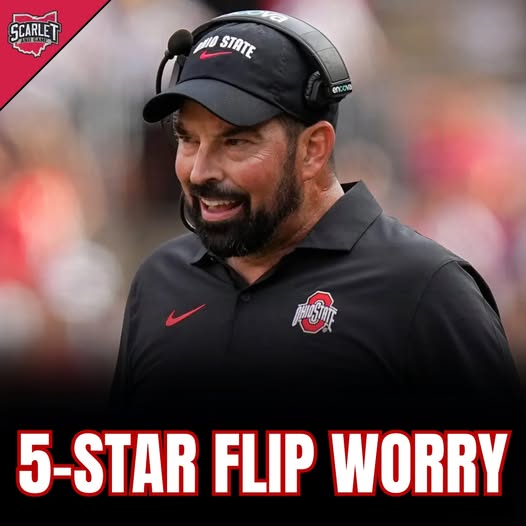
The Buckeyes have long operated as one of the nation’s premier recruiting powers, especially under head coach Ryan Day. Even amid criticism over recent postseason shortcomings and losses to rival programs, Ohio State has consistently remained near the top of recruiting rankings nationally. The program’s ability to secure elite defensive talent has been central to maintaining championship expectations.
That is why Miami’s emergence in the Jacobs sweepstakes has become such a significant storyline.
Recruiting insiders have pointed to Miami’s aggressive NIL infrastructure, renewed confidence under Mario Cristobal and the energy surrounding the Hurricanes’ recent recruiting efforts as major factors influencing elite prospects. Miami has made it clear that it intends to challenge traditional powers for top national talent rather than simply dominate regional recruiting battles.
Jacobs now sits at the center of that strategy.
The timing also matters. Summer recruiting season often determines the emotional direction of a class. Official visits, peer recruiting and social media activity tend to intensify dramatically during this stretch, and perception can shift almost overnight. Programs riding positive momentum suddenly look irresistible to recruits, while even established powers can appear vulnerable if uncertainty begins creeping into conversations.
Ohio State now finds itself attempting to prevent exactly that kind of momentum swing.
The concern around Columbus is not necessarily that the Buckeyes have lost control entirely, but rather that Miami’s push appears legitimate enough to create instability where there previously was little. That alone is noteworthy. Ohio State rarely finds itself reacting nervously to another program’s late recruiting charge, particularly for a defensive prospect it has prioritized heavily.
What makes the situation even more intriguing is the role of relationships among recruits themselves.
Modern recruiting has evolved into something closer to roster-building campaigns than individual commitments. Elite prospects recruit each other constantly through group chats, social media interactions, private visits and direct communication. Miami’s current commits have embraced that culture aggressively, and the effort surrounding Jacobs reflects how seriously the Hurricanes are taking this cycle.
One Miami pledge reportedly has taken a particularly active role in maintaining communication with Jacobs, reinforcing the vision Cristobal’s staff has presented. Those efforts matter more than many outsiders realize. Recruits often trust fellow players because the conversations feel more authentic and less transactional than traditional coaching pitches.
That dynamic has helped Miami gain traction.
For Ohio State, the challenge becomes maintaining the trust and consistency that initially positioned the Buckeyes so strongly. The program still carries enormous advantages. Ohio State remains one of the sport’s most visible brands, consistently produces NFL talent and offers a championship-level environment. Defensive backs especially have thrived within the Buckeyes’ system over the years, and that developmental track record remains a compelling selling point.
Still, recruiting battles are rarely won solely on history.
Emotion, excitement and vision can rapidly reshape outcomes, especially when elite prospects begin imagining themselves as foundational pieces of a rising movement. Miami is selling exactly that right now. Cristobal’s program is pitching recruits on the idea of restoring the Hurricanes to national dominance, and there is growing belief among players that Miami could soon become a legitimate College Football Playoff contender.
That message appears to be resonating with Jacobs.
The Buckeyes are unlikely to panic publicly. Programs with Ohio State’s stature rarely do. Internally, however, there is little doubt the situation has become more serious than many initially anticipated. Recruiting staffs monitor every shift carefully, from social media engagement to visit scheduling to the tone of conversations with family members. Even subtle changes can signal larger movement.
And right now, Miami’s confidence surrounding Jacobs appears to be increasing.
Part of the anxiety for Ohio State fans stems from how important defensive recruiting has become for the program’s national championship aspirations. The Buckeyes have consistently fielded elite offenses, but recent postseason shortcomings exposed defensive vulnerabilities against top-tier competition. Securing elite defensive talent remains critical if Ohio State hopes to return to the summit of college football.
Jacobs fits that blueprint perfectly.
Evaluators describe him as an impact defender capable of changing games with range, ball skills and physical presence. He possesses the type of versatility that allows coordinators to move him around the field depending on matchup needs. Against spread offenses loaded with speed, players like Jacobs become invaluable.
That is why Miami’s push feels so threatening from Ohio State’s perspective.
There is also the optics factor. Recruiting battles between traditional powers often carry symbolic weight beyond the individual player involved. If Miami successfully flips a premier target long associated with Ohio State, it reinforces the narrative that the Hurricanes are becoming increasingly dangerous on the national recruiting stage.
For a Miami program attempting to fully re-establish itself among college football’s elite, victories like this matter enormously.
Cristobal has emphasized recruiting from the moment he arrived, believing roster talent ultimately determines championship ceilings. Miami’s staff has attacked recruiting with relentless intensity, leveraging NIL opportunities, facilities and South Florida culture as major advantages. The Hurricanes understand that perception can change quickly if enough elite prospects buy into the vision simultaneously.
Landing Jacobs would represent another major statement.
Meanwhile, Ohio State faces the reality that recruiting has never been more competitive nationally. NIL has transformed the landscape, creating new variables in virtually every major recruitment. Traditional powers still hold advantages, but emerging contenders can now create compelling alternatives for elite players.
Miami is proving that in real time.
The emotional aspect of recruiting should not be overlooked either. Prospects want to feel wanted. They want constant energy, communication and validation from programs pursuing them. Miami’s commits have reportedly delivered that aggressively in Jacobs’ recruitment, helping create an environment where the Hurricanes feel increasingly personal rather than merely transactional.
That peer-driven momentum can become difficult to stop once it gains traction.
Ohio State still has time to reassert control. Official visits remain critical, and the Buckeyes’ ability to showcase their development pipeline and national championship aspirations could ultimately steady the situation. Ryan Day’s staff has navigated high-profile recruiting battles before and understands how volatile the process can become.
But there is no denying the shift in tone.
What once looked like a likely Ohio State victory now feels like a genuine heavyweight battle, and Miami appears determined to push the fight all the way to the finish. For Buckeyes supporters accustomed to landing elite talent with relative consistency, that uncertainty alone feels unsettling.
The broader recruiting world is watching carefully because battles like this often reveal larger trends forming beneath the surface. If Miami can successfully challenge programs like Ohio State for elite national prospects consistently, it signals a potentially significant power shift in recruiting dynamics.
That possibility explains why the Jacobs pursuit has generated so much attention.
Recruiting ultimately remains unpredictable until signatures are finalized. Commitments change, relationships evolve and momentum swings constantly. Ohio State still possesses every resource necessary to keep Jacobs in its class orbit. The Buckeyes’ reputation, developmental history and competitive standing remain among the strongest in the nation.
Yet Miami’s push has clearly become impossible to dismiss.
The Hurricanes are not acting like outsiders hoping for a miracle flip. They are recruiting Jacobs with the confidence of a program that believes it belongs directly in the fight with college football’s traditional heavyweights. That mindset alone reflects how much Miami’s recruiting posture has changed under Cristobal.
For Ohio State, the coming weeks suddenly feel far more important than expected.
Every interaction matters now. Every visit, every conversation and every message exchanged between recruits could influence the outcome. In today’s recruiting environment, relationships often move faster than public perception. By the time fans realize a recruitment has shifted significantly, the groundwork may already have been laid behind closed doors.
That reality is precisely why Miami’s pursuit of DJ Jacobs feels alarming for Ohio State.
The Buckeyes are still standing firmly in the battle, but the comfort level surrounding Jacobs no longer appears nearly as secure as it once did. Miami’s aggressive recruiting effort has introduced uncertainty into a recruitment Ohio State once seemed poised to control, and in the world of elite college football recruiting, uncertainty is often where the real danger begins.