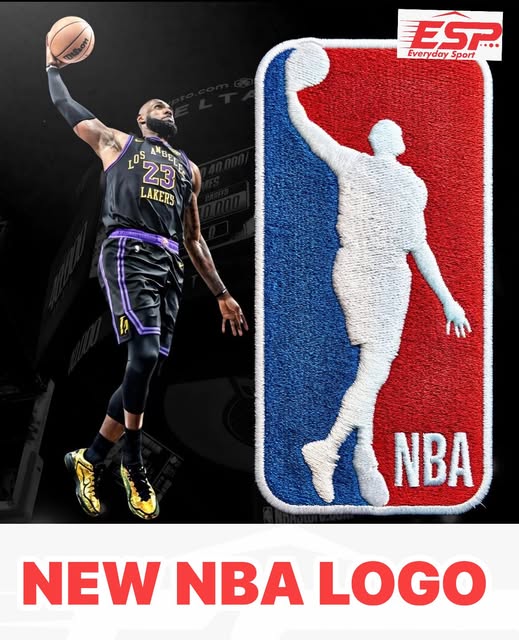
The silhouette is one of the most recognizable images in sports. For more than five decades, the National Basketball Association’s logo has stood as a symbol of excellence, history and global influence, with the image widely believed to be modeled after Hall of Famer Jerry West. Now, according to reports circulating around league circles, the NBA is once again confronting a question that has sparked debate among fans, executives and former players for years: Should the league’s iconic logo evolve, and if so, should LeBron James become the new face of professional basketball’s most recognizable brand?
The reported discussions have reignited one of the most fascinating conversations in modern sports. It is a debate that touches on history, legacy, business, marketing and the ever-changing identity of a league that has transformed dramatically since the logo first emerged in 1969. While no official decision has been announced by the NBA, the mere possibility that James could replace West as the inspiration behind the logo has generated significant attention throughout the basketball world.
Few athletes in any sport possess a résumé capable of supporting such a discussion. James, now firmly established among the greatest players in NBA history, has spent more than two decades redefining longevity, consistency and excellence. From his arrival as a teenage phenom to his evolution into a four-time NBA champion and one of the league’s most influential ambassadors, James has left an imprint on the game that extends far beyond statistics.
The prospect of a logo change comes at a time when James’ career accomplishments continue to reshape historical benchmarks. He became the NBA’s all-time leading scorer, surpassed numerous records once considered untouchable and maintained elite production well into his late 30s and early 40s. His influence has stretched beyond the court into business, entertainment, philanthropy and player empowerment, making him arguably the most globally recognized basketball figure of his generation.
The NBA logo itself carries an immense cultural significance. Introduced during a period of explosive growth for professional basketball, the red, white and blue design became synonymous with the sport’s rise in America and eventually around the world. While the league has never officially acknowledged Jerry West as the model for the logo, the connection has long been accepted throughout basketball circles.
West’s contributions to the game remain undeniable. A champion, Hall of Famer, executive and ambassador, he helped shape multiple eras of NBA history. His legacy extends beyond his playing career with the Los Angeles Lakers, reaching into decades of front-office success and talent evaluation. Any discussion involving a potential replacement naturally invites comparisons between honoring the past and embracing the future.
The conversation intensified in recent years following the death of NBA legend Kobe Bryant in 2020. Many players, fans and analysts publicly advocated for Bryant to become the inspiration behind a redesigned logo. The movement gained traction across social media and generated widespread support throughout the basketball community. However, the league ultimately retained its existing branding, emphasizing the enduring value and global recognition associated with its current identity.
Now, James has emerged as another figure frequently mentioned whenever logo discussions surface. Supporters argue that no player has had a greater impact on the NBA’s modern era. Since entering the league in 2003, James has helped usher professional basketball into a new age of global accessibility. His games are watched across continents, his jersey has ranked among the league’s top sellers for years, and his presence has become a central component of the NBA’s international expansion strategy.
From Akron, Ohio, to basketball arenas around the world, James’ story has resonated with multiple generations of fans. He arrived carrying unprecedented expectations and somehow exceeded them. The journey included championships with the Miami Heat, Cleveland Cavaliers and Los Angeles Lakers, MVP awards, All-NBA selections and countless signature moments that have become embedded in league history.
Advocates for a logo change point to those achievements as evidence that James represents the modern NBA more completely than any other active or retired player. They argue that the logo should reflect the league’s contemporary identity, and no athlete embodies that identity more than James.
Critics, however, raise important counterarguments. Many believe the NBA logo should remain untouched regardless of changing eras. The existing design has become one of the most recognizable symbols in global sports, standing alongside the logos of the NFL, MLB and international soccer organizations. Altering such an iconic image carries substantial risk, both culturally and commercially.
Others contend that selecting a single player inevitably creates controversy. Basketball history is rich with transformative figures, from Bill Russell and Wilt Chamberlain to Magic Johnson, Larry Bird, Michael Jordan, Kobe Bryant and Stephen Curry. Choosing one player over another could spark endless debates regarding who most deserves the honor.
The Michael Jordan factor also looms large over any discussion involving basketball symbolism. Although Jordan has never served as the official NBA logo, his silhouette has become the foundation of the immensely successful Jumpman brand. For many fans, Jordan remains the defining figure of basketball excellence. Any attempt to elevate another player through an official league logo would inevitably invite comparisons with the six-time champion’s legacy.
Yet James’ candidacy stands on uniquely strong ground. Beyond his achievements, he has become a bridge between multiple generations of NBA basketball. He entered the league while many stars from the 1990s were still active and remains a prominent player as an entirely new generation emerges. Few athletes in sports history have maintained relevance across such an expansive timeframe.
The financial implications of a potential redesign would also be significant. League branding extends across merchandise, digital platforms, television broadcasts, international partnerships and marketing campaigns. Any logo modification would require careful planning and substantial investment. At the same time, a new logo centered on James could generate enormous commercial interest and create one of the largest branding events in professional sports history.
League executives would likely consider a wide range of factors before implementing any change. Historical tradition, fan sentiment, international recognition, licensing agreements and long-term marketing strategy would all play crucial roles in the decision-making process. The NBA has consistently positioned itself as a league that respects its history while embracing innovation, making the balance particularly delicate.
Current and former players have often spoken about James’ influence on the game. His commitment to conditioning and longevity has reshaped expectations for aging superstars. His willingness to leverage his platform on social and business issues has influenced a generation of athletes seeking greater control over their careers and public identities. His impact can be seen not only in box scores but also in the broader culture surrounding professional basketball.
That influence has helped fuel arguments that James represents more than individual greatness. Supporters view him as a symbol of the NBA’s evolution into a truly global entertainment product. His career coincided with the rise of social media, streaming platforms and international basketball fandom, making him one of the first athletes to dominate both traditional and digital landscapes simultaneously.
For West himself, the topic has previously generated mixed emotions. Over the years, he has expressed humility regarding his association with the logo and has even suggested that the league consider alternatives. Those comments have occasionally reignited speculation about whether the NBA might someday move toward a new design that reflects a different era.
If the league were ultimately to choose James, the decision would mark one of the most significant branding transformations in sports history. It would symbolize not only recognition of an extraordinary career but also an acknowledgment of the NBA’s evolution during the 21st century. Such a move would undoubtedly dominate headlines, generate passionate debate and become a defining moment in the league’s ongoing narrative.
For now, however, the discussions remain just that—discussions. The NBA has not publicly confirmed plans to alter its logo, and no formal proposal has been announced. Nevertheless, the report alone underscores the magnitude of James’ place in basketball history. Very few athletes reach a level where their image becomes synonymous with an entire sport. Even fewer inspire serious consideration as the visual representation of a global league.
Whether the logo ultimately changes or remains exactly as it is, the conversation highlights an undeniable reality: LeBron James has transcended the traditional boundaries of athletic achievement. His career has become a benchmark against which future generations will be measured. He has influenced how the game is played, how players manage their careers and how the NBA presents itself to the world.
The debate over the logo is therefore about more than graphic design. It is about legacy. It is about deciding which figure best represents the values, achievements and aspirations of professional basketball. It is about balancing reverence for history with recognition of modern greatness.
As the league reportedly weighs its options, basketball fans around the world are left to consider a compelling question. If the NBA were designing its logo for the very first time today, would any player be a stronger candidate than LeBron James?
The answer may vary depending on whom you ask. What remains unquestioned is that James has earned a place at the center of the conversation. Whether as a champion, record-breaker, global icon or potential logo inspiration, his impact on the NBA is already permanent. The silhouette may or may not change in the years ahead, but LeBron James’ imprint on the league is one that no redesign could ever make larger than it already is.