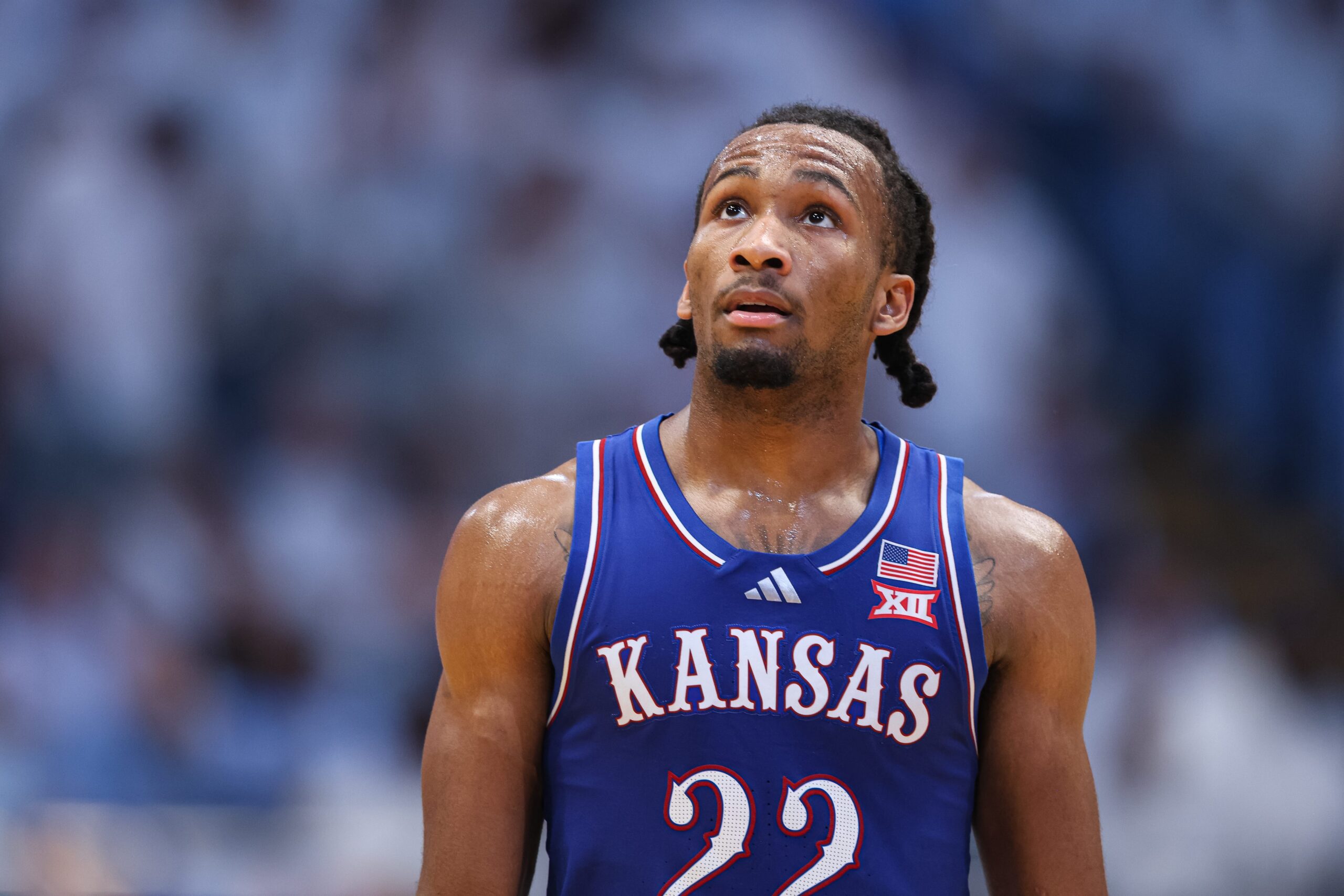
The Utah Jazz took a major step toward shaping the franchise’s future on Wednesday night, selecting Darryn Peterson with the No. 2 overall pick in the NBA Draft and securing one of the most coveted young talents in this year’s class.
For a franchise firmly committed to building a sustainable contender in the Western Conference, the selection of Peterson represents more than simply adding another highly ranked prospect. It signals the next phase of Utah’s rebuilding process, one centered on elite young talent, long-term development and the belief that Peterson possesses the tools to become a cornerstone player for years to come.
Peterson entered draft night as one of the most celebrated prospects in the country, earning widespread praise from scouts, executives and analysts for his unique combination of size, scoring ability, playmaking instincts and competitive mentality. Throughout the pre-draft process, many evaluators viewed him as one of the safest bets in the class to develop into a future NBA star.
Now, that future belongs to Utah.
The Jazz arrived at the draft in a position of opportunity. After several seasons dedicated to collecting draft assets, developing young players and maintaining financial flexibility, the organization found itself holding one of the draft’s most valuable selections. While speculation surrounded numerous possibilities, including trade discussions and alternative prospects, Utah ultimately stayed the course and selected the player many considered the best available talent on the board.
Peterson’s basketball journey has been marked by high expectations from an early age. Long before hearing his name called on draft night, he established himself as one of the premier players in his age group. His rise through the amateur ranks showcased a player capable of impacting games in virtually every way imaginable.
What separates Peterson from many young prospects is the versatility of his offensive game. Standing with the size and strength necessary to compete against professional defenders, he possesses the ball-handling skills of a guard, the scoring instincts of an elite shot creator and the vision needed to function as a primary playmaker. That combination has become increasingly valuable in today’s NBA, where positionless basketball and multi-dimensional offensive creators often drive championship success.
Utah’s front office undoubtedly considered those traits when making its decision.
The modern NBA places enormous value on players capable of creating offense for themselves and others. Peterson demonstrated throughout his developmental career that he can operate in isolation situations, attack defenses off the dribble, create opportunities in pick-and-roll actions and make advanced passing reads under pressure. Those skills provide a foundation that many scouts believe will translate quickly to the professional level.
His scoring ability has drawn particular attention.
Whether attacking the rim, pulling up from mid-range or extending his range beyond the three-point line, Peterson has consistently shown an advanced offensive repertoire. He possesses the confidence expected of elite scorers while maintaining the efficiency and decision-making coaches desire from primary offensive options.
That offensive package made him one of the most difficult prospects in the draft to defend.
Opposing teams often struggled to identify a single defensive strategy capable of slowing him down. When defenders played aggressively on the perimeter, Peterson used his athleticism and strength to attack the basket. When defenses collapsed in the paint, he displayed the passing vision necessary to find open teammates. When opponents attempted to force the ball out of his hands, he remained effective as an off-ball scorer.
For the Jazz, those attributes fit seamlessly into the organization’s long-term vision.
Utah has spent recent years accumulating young talent while emphasizing player development. The franchise understands that building a championship contender requires multiple foundational pieces capable of growing together. Peterson now joins a young core that will be expected to evolve collectively over the coming seasons.
The excitement surrounding the selection was evident immediately after the announcement.
Inside the arena, Jazz fans celebrated the arrival of a player many had hoped would become available. Across social media, reactions poured in from analysts, former players and fans who viewed the selection as one of the most significant moments in Utah’s rebuilding effort.
The optimism is understandable.
Elite prospects rarely become available, and franchises often spend years searching for players capable of altering their trajectory. While every draft selection carries uncertainty, Peterson arrives with the type of résumé that inspires confidence throughout an organization.
League executives have consistently praised his maturity and approach to the game.
Beyond the physical tools and statistical accomplishments, evaluators frequently point to Peterson’s competitiveness, work ethic and leadership qualities. Those characteristics often prove essential when transitioning from amateur basketball to the NBA, where expectations increase dramatically and development becomes a year-round commitment.
The Jazz believe they are acquiring more than talent.
They believe they are acquiring a player capable of embracing responsibility and helping establish the culture necessary for sustained success.
That culture has long been a hallmark of the Utah organization.
Throughout franchise history, the Jazz have built competitive teams through strong player development, disciplined roster construction and organizational stability. From previous eras led by franchise legends to the current rebuilding phase, Utah has consistently emphasized patience and long-term planning.
Peterson now becomes one of the most important figures in that vision.
His arrival also comes at a pivotal moment for the Western Conference.
The conference remains loaded with established stars and emerging contenders, creating one of the most competitive landscapes in professional sports. For young teams hoping to rise through the standings, acquiring elite talent through the draft remains one of the most effective pathways toward contention.
Utah understands that reality.
While Peterson may not immediately transform the Jazz into a playoff team, his presence significantly raises the organization’s long-term ceiling. Players with his blend of physical tools and basketball skill are difficult to find, and franchises often build entire systems around talents of this caliber.
The developmental process will require patience.
Even the league’s brightest young stars face adjustments upon entering the NBA. The speed of the game, physical demands of an 82-game season and sophistication of professional defenses create challenges that every rookie must navigate.
However, Peterson’s supporters believe he is uniquely equipped for that transition.
His advanced feel for the game, combined with his willingness to compete and learn, has convinced many talent evaluators that he possesses the foundation necessary for long-term success.
Coaches often speak about the importance of adaptability among young players. Peterson has repeatedly demonstrated that quality throughout his basketball career. Whether facing stronger competition, adjusting to new teammates or responding to defensive attention, he has shown an ability to evolve and find solutions.
That adaptability should serve him well in Utah.
The Jazz coaching staff will have an opportunity to develop his strengths while refining areas of his game that can improve further. As talented as Peterson already is, many scouts believe he remains far from reaching his full potential.
That reality may be the most exciting aspect of the selection.
The player Utah drafted Wednesday night is already one of the most accomplished prospects in the country. Yet many evaluators believe his best basketball remains years away.
If that projection proves accurate, the Jazz may have secured one of the defining players of this draft class.
Draft night often serves as a turning point for franchises. It represents hope, possibility and the beginning of a new chapter. For Utah, selecting Peterson embodies all three.
The organization has spent years positioning itself for moments like this. Through strategic decisions, patient asset accumulation and a commitment to long-term growth, the Jazz created an opportunity to add a potential franchise centerpiece.
Now comes the challenge of turning potential into production.
The expectations surrounding Peterson will be substantial. Fans will analyze every performance. Comparisons to fellow members of his draft class will be inevitable. Questions regarding his development timeline will follow him throughout his rookie season.
Such scrutiny accompanies elite prospects.
Yet those who know Peterson best believe he welcomes those challenges rather than fears them.
His confidence has never been difficult to identify. Neither has his desire to compete against the best players available. Throughout his rise to becoming the No. 2 overall pick, Peterson consistently embraced high-pressure situations and elevated expectations.
That mindset may prove invaluable as he begins his NBA career.
For the Jazz, the selection represents optimism for the future and validation of a carefully constructed rebuilding plan. While championships are not won on draft night, successful organizations often identify transformative talent through the draft process.
Utah believes it has done exactly that.
As the celebrations continue and preparations for summer basketball begin, attention will quickly shift toward Peterson’s professional debut. Fans will eagerly await their first opportunity to watch the newest face of the franchise take the floor wearing a Jazz uniform.
There will be excitement, anticipation and inevitable growing pains.
There will also be opportunity.
Opportunity for Peterson to establish himself among the league’s next generation of stars.
Opportunity for the Jazz to accelerate their rebuild.
Opportunity for a franchise and a player to grow together.
On a night defined by dreams becoming reality, Utah made its choice. The Jazz selected Darryn Peterson with the No. 2 overall pick, adding one of basketball’s most promising young talents and taking another significant step toward shaping the future of the franchise.
Whether Peterson ultimately becomes an All-Star, an All-NBA performer or the centerpiece of Utah’s next championship contender remains to be seen. What is clear, however, is that the Jazz have placed their faith in a player widely regarded as one of the brightest prospects in the sport.
For a rebuilding franchise searching for its next superstar, Wednesday night may be remembered as the moment everything changed.