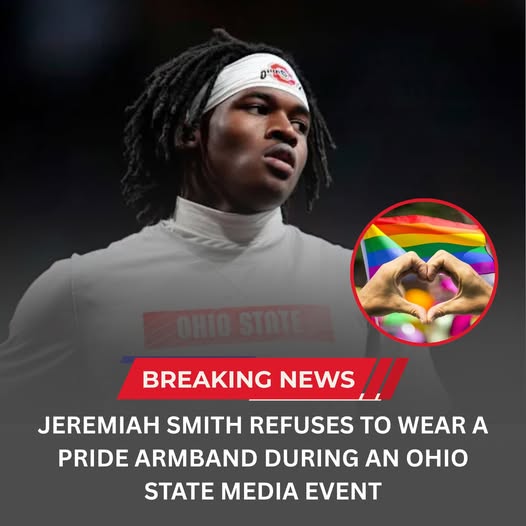
COLUMBUS, Ohio — In the high-stakes, meticulously calculated ecosystem of college athletics, even a single gesture can reverberate far beyond the football field. Ohio State wide receiver Jeremiah Smith, the reigning Consensus All-American and arguably the most gifted pass-catcher in college football, found himself at the epicenter of a national political and cultural debate this week following a team media presentation in Columbus.
Sources close to the program confirmed that during a scheduled preseason media event featuring university-sponsored social initiatives, Smith elected not to wear a designated LGBT-themed armband. When subsequently asked about his decision, the 20-year-old superstar expressed reservations regarding what he termed an “extreme woke agenda,” adding that he did not believe the initiative aligned with personal values he wished to publicly endorse.
The decision—and the immediate public reaction that followed—has sent ripples across the Big Ten and the broader landscape of modern college sports. In an era where Name, Image, and Likeness (NIL) valuations, institutional branding, and social activism intersect daily, Smith’s stance represents a rare, raw friction point between an elite athlete’s personal convictions and the carefully curated public image of a blue-blood athletic department.
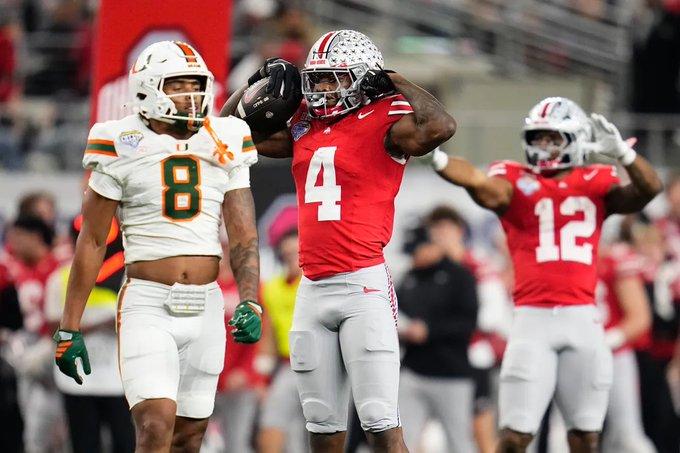
For Ohio State, a program currently navigating the high expectations of national championship pursuit, the fallout introduces a complex off-field dynamic. On the field, Smith’s talent is unquestioned. Arriving in Columbus as the highest-rated wide receiver prospect in modern recruiting history, the South Florida native delivered an unprecedented freshman campaign in 2024, setting NCAA FBS records for freshman receiving yards and touchdowns while helping propel the Buckeyes to a College Football Playoff title. He followed that with a dominant sophomore season, cementing his status as a projected top pick for the 2027 NFL Draft.
Yet in 2026, the modern student-athlete exists in a fishbowl where every action is magnified. Ohio State officials issued a brief statement affirming the university’s commitment to diversity, equity, and inclusion, while acknowledging that individual athletes retain personal autonomy regarding participation in non-competition promotional campaigns. Head coach Ryan Day addressed the situation guardedly during a scheduled press conference, stressing squad unity and open dialogue. Day noted that while the program fosters an environment of mutual respect, the primary focus inside the Woody Hayes Athletic Center remains on football operations and preparing for the upcoming season.
Industry experts point out that the financial and cultural stakes surrounding marquee college athletes have never been higher. With top-tier players commanding multi-million-dollar NIL portfolios through corporate endorsements and donor-funded collectives, public stances on socio-political issues carry distinct commercial implications. While some major corporate partners prioritize social alignment, other consumer bases and NIL donors strongly support athletes expressing traditional or non-conformist views. Financial advisors within the sports space suggest that while controversial stances can alienate certain national brands, they rarely erode an athlete’s core professional draft stock, which remains predominantly governed by on-field production, medical evaluations, and athletic traits.
From an NFL evaluation perspective, league scouts and front-office executives generally view such off-field debates through a pragmatic lens. Several NFL personnel directors noted off the record that NFL front offices evaluate character primarily around locker room cohesion, work ethic, legal history, and football intelligence. While social media controversy draws headlines, talent and production consistently dictate draft capital.
As the Buckeyes prepare for a grueling Big Ten slate, the primary question in Columbus is whether this public debate will impact team chemistry or serve as a minor footnote in an otherwise championship-caliber season. Inside the locker room, teammates have largely rallied around the principle of personal choice, emphasizing that differing personal views have not diminished Smith’s standing as a dedicated teammate and focal point of the offense.
Whether Smith’s comments represent an isolated moment of candid expression or part of a broader shift in how college athletes navigate socio-political expectations, the narrative serves as a stark reminder: in today’s modern sports media ecosystem, the boundary between the athletic arena and national discourse has vanished.