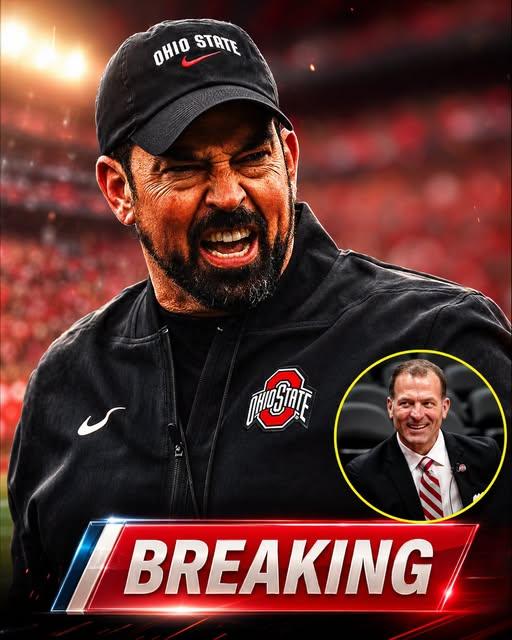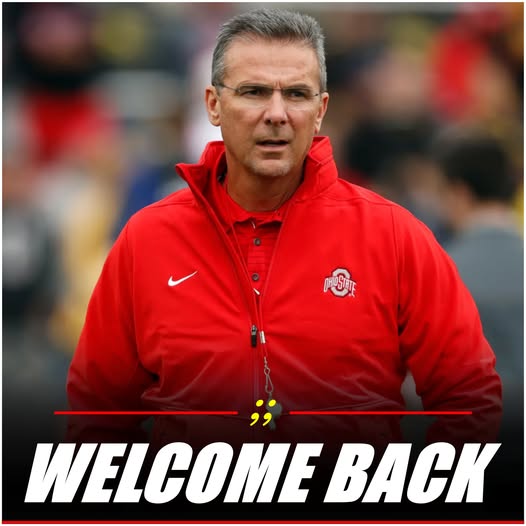
COLUMBUS, Ohio — Urban Meyer is back around Ohio State football, but not in the way some Buckeye fans may be hoping.
The former Ohio State coach remains one of the most influential figures in the program’s modern history, and his presence continues to generate the kind of reaction that few former coaches can command. But despite renewed speculation surrounding his name, there is no verified indication that Meyer has returned to the Ohio State sideline or replaced Ryan Day as head coach.
For now, Meyer remains on the outside looking in — a television analyst and prominent voice around the sport — while Day prepares Ohio State for another season with expectations that remain as high as anywhere in college football.
That distinction matters because the idea of Meyer returning to Columbus carries considerably more weight than an ordinary coaching rumor.
Meyer built one of the most dominant stretches in Ohio State history. From 2012 through 2018, his Buckeyes went 82-9, including a 7-0 record against Michigan and a 54-4 mark in Big Ten play. His teams won four conference championships and captured the inaugural College Football Playoff national championship following the 2014 season.
The 2014 championship remains the defining achievement of the Meyer era.
After an injury to starting quarterback Braxton Miller before the season, Ohio State developed a new identity around quarterback J.T. Barrett before turning to Cardale Jones late in the year. The Buckeyes defeated Alabama in the College Football Playoff semifinal and then overwhelmed Oregon in the championship game, completing one of the most memorable title runs in the program’s history.
Meyer left Ohio State after the 2018 season, announcing his retirement following the Rose Bowl. At the time, the university cited an 82-9 record, seven consecutive division championships and three Big Ten titles during his tenure.
Ryan Day was then elevated from offensive coordinator to head coach.
Seven years later, Day has constructed his own résumé, one that makes any suggestion of an immediate coaching change considerably more complicated.
Ohio State’s official record under Day through June 2026 stands at 82-12, including a 55-5 mark against Big Ten opponents and five College Football Playoff appearances. His teams have won two Big Ten championships and the national championship following the 2024 season.
That championship is particularly important to the current discussion.
Day entered the 2024 season facing enormous pressure after four consecutive losses to Michigan. Instead of collapsing, Ohio State produced a championship season, navigating the expanded 12-team playoff and defeating Tennessee, Oregon, Texas and Notre Dame on the way to the national title. The performance ultimately earned Day a new seven-year agreement that runs through the 2031 season.
The contract carries reported total annual compensation of $12.5 million, with a $2 million base salary and additional compensation tied to the structure of the agreement.
That means any legitimate move to replace Day would have enormous financial and institutional consequences.
Unlike the NFL, college football does not operate under a traditional salary-cap system for coaches, and Ohio State does not face a conventional NFL-style dead-money charge. But coaching buyouts, guaranteed compensation, staff contracts and the enormous cost of maintaining a championship-caliber operation all factor into the decision-making process.
More importantly, replacing Day would mean moving away from a coach who already has delivered a national championship and has Ohio State positioned among the sport’s elite programs.
There is also a practical football reason the Meyer speculation deserves caution.
The college game Meyer dominated no longer exists in the same form.
The transfer portal, revenue sharing, NIL-era recruiting, expanded playoff and increasingly sophisticated roster-management operations have changed the job. Recruiting is no longer simply about evaluating high school prospects and building relationships. Coaches and their staffs must manage retention, player compensation, roster construction and an increasingly fluid marketplace.
Meyer himself has acknowledged his reluctance to return to coaching in the current college football environment. The three-time national championship coach was inducted into the College Football Hall of Fame in 2025 and has continued working in college football media. The Associated Press reported that Meyer expressed reluctance about returning to coaching or college administration under the modern NIL landscape.
That makes a full-time return to Ohio State far from straightforward.
Yet the fascination is understandable.
Meyer’s fingerprints remain all over the program’s modern identity. The aggressive spread-option principles that characterized his offenses helped establish the Buckeyes as a national power. His recruiting operation consistently produced NFL-caliber talent. His teams played with an edge that became synonymous with Ohio State football during the 2010s.
His 2014 team included players such as Joey Bosa, Ezekiel Elliott, Michael Thomas, Marshon Lattimore and numerous other future NFL contributors. The program’s depth and physicality became a blueprint for the modern Big Ten contender.
Today’s Ohio State team is being constructed differently.
Day has made significant staffing changes entering the 2026 season, including the addition of former NFL head coach Arthur Smith as offensive coordinator. Matt Patricia remains defensive coordinator, while Larry Johnson, Tim Walton, Matt Guerrieri and James Laurinaitis form a veteran-heavy defensive coaching structure.
The current roster also reflects the realities of modern college football.
Ohio State enters the season with a combination of returning veterans, transfer additions and highly rated recruits. The Buckeyes’ official 2026 roster includes defensive tackle Eddrick Houston, center Carson Hinzman and a collection of young defensive talent expected to play significant roles.
Hinzman, in particular, represents the kind of veteran foundation Ohio State needs. After reclaiming the starting center job and starting all 14 games in 2025, he enters his final season as an experienced interior anchor for an offense expected to place greater emphasis on the run game.
That transition will be closely watched.
Smith’s offensive philosophy could produce a more physical, balanced Ohio State attack, reducing the burden on the quarterback and creating more favorable down-and-distance situations. For a program competing in a conference increasingly defined by defensive fronts and playoff-caliber rosters, efficiency on early downs and success in the red zone could ultimately determine whether the Buckeyes return to the national championship conversation.
And that is where the Meyer storyline should ultimately land.
If Ohio State is successful in 2026, speculation about replacing Day becomes irrelevant. If the Buckeyes struggle, particularly against Michigan or in the expanded College Football Playoff race, the conversation could become much louder.
But even then, Meyer would not automatically become the obvious answer.
His legacy in Columbus is secure. His record speaks for itself. But returning to the same job under an entirely different college football ecosystem would require more than nostalgia.
It would require Meyer to want the job.
There is no verified evidence that he does.
For now, the Buckeyes belong to Day.
Ohio State’s training camp is already underway, and the program is preparing for another season in which anything short of serious national-title contention will be scrutinized.
Meyer, meanwhile, remains a fascinating figure hovering over the program’s history rather than its present.
So, for those waiting to see Urban Meyer walk back onto the Ohio Stadium sideline, the message is simple: not yet.
The former coach may always have a home in Columbus. His championship banners are permanent, his record remains extraordinary and his influence on the program is impossible to erase.
But the man currently responsible for Ohio State’s next chapter is Ryan Day.
And with a contract extending through 2031, a national championship already on his résumé and another championship-caliber roster assembling around him, Day has earned the opportunity to determine how the next era of Ohio State football unfolds.
Urban Meyer helped build the modern standard.
Ryan Day is still responsible for meeting it.