COLUMBUS, Ohio — The pull of Ohio State has a way of resurfacing, even for those who have left the Horseshoe behind.
For Brian Hartline, that connection has never been especially difficult to explain.
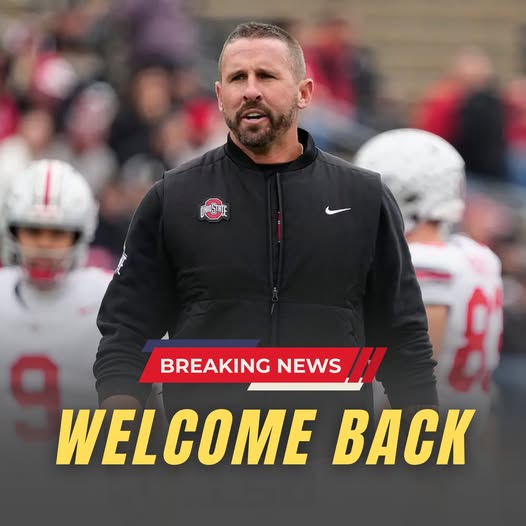
The former Buckeyes wide receiver, NFL veteran and Ohio State assistant spent years turning one of college football’s most recognizable offensive position rooms into a recruiting and development powerhouse. Now, only months after leaving Columbus to become the head coach at South Florida, Hartline’s name is again being tied to Ohio State — and the possibility of one day returning to the program where his football identity was built.
The important distinction is that there is no indication that Hartline is currently negotiating a return or that Ohio State has an open position specifically designed for him. Any immediate reunion remains speculative. But Hartline’s history in Columbus, combined with the dramatic reshaping of Ryan Day’s staff and the increasingly fluid nature of modern college football, ensures that the idea of another Ohio State chapter will continue to follow him.
And in college football, where coaching careers now move as quickly as the transfer portal itself, the distance between “former assistant” and “future return” can be shorter than it appears.
Hartline left Ohio State following the 2025 season to accept the South Florida head coaching job, ending an eight-year coaching run in Columbus that transformed him from an accomplished former player into one of the sport’s most influential offensive assistants. His South Florida contract reportedly carries a value of approximately $21 million, representing the type of long-term financial commitment that accompanies a major step into the head-coaching profession.
But Hartline’s departure did not erase his influence from Ohio State’s football operation.
The Buckeyes’ current roster still bears the imprint of the recruiting machine he helped construct. Jeremiah Smith, widely regarded as one of the most dominant players in college football, developed in a program where Hartline’s reputation for receiver development had become one of Ohio State’s most powerful recruiting advantages. Even after Hartline’s departure, Smith made clear that leaving Columbus was never part of his thinking.
That continuity matters.
Hartline was not simply another assistant who cycled through the program. He was part of the bridge between Ohio State’s past and its present, first starring for the Buckeyes from 2005 through 2008 before returning to Columbus after a seven-year NFL career.
As a player, Hartline was a reliable and productive part of Ohio State’s offense during an era that included four consecutive bowl appearances and a trip to the BCS national championship game. His understanding of the expectations surrounding the program was not learned through a recruiting brochure or a coaching clinic. He experienced the environment from inside the locker room.
He knew what it meant to run onto the field at Ohio Stadium.
He understood the pressure attached to The Game, the importance of recruiting Ohio, and the difference between simply winning games and meeting the championship expectations that come with coaching at one of the sport’s most powerful brands.
That background became increasingly valuable as Hartline climbed the coaching ladder.
When he returned to Ohio State, first as a quality-control assistant before becoming wide receivers coach and eventually offensive coordinator, Hartline developed into one of the most effective position coaches in the country. Ohio State consistently produced NFL-caliber receivers, while the Buckeyes continued to recruit at an elite level at the position.
The list of receivers associated with that developmental pipeline became a significant part of his coaching résumé. The program produced first-round talent and established one of the deepest wide receiver traditions in modern college football.
Hartline’s value, however, extended beyond recruiting rankings and draft projections.
His coaching philosophy emphasized technical precision — releases against press coverage, leverage recognition, stem variation, route pacing and the ability to create separation at the top of the route. Ohio State’s receivers were expected to understand more than assignments. They were trained to recognize coverage structure and adjust within the timing of the offense.
That approach helped make the Buckeyes unusually difficult to defend when operating with NFL-level quarterback talent.
The possibility of Hartline eventually returning to Columbus must also be viewed through the lens of how dramatically Ohio State’s staff has changed since his departure.
Ryan Day has moved toward a more professional-style coaching structure, bringing veteran NFL experience into the building. Arthur Smith arrived as offensive coordinator after previous NFL stops that included head-coaching experience with the Atlanta Falcons and an offensive coordinator role with the Pittsburgh Steelers. Matt Patricia also joined the defensive side of the operation, giving Day a staff with extensive professional football experience.
Day acknowledged that the presence of former NFL head coaches allows him to be more involved across the program, including player development, staff management and the increasingly demanding NIL environment.
That evolution creates an intriguing backdrop for Hartline’s future.
If he succeeds at South Florida, his long-term trajectory could eventually move toward larger Power conference opportunities. A successful head coach with Ohio State roots would immediately become relevant whenever significant coaching positions opened across the sport.
If his career eventually brings him back to Columbus, however, the circumstances would almost certainly be different from his previous tenure.
Hartline has already served as a position coach and offensive coordinator. His next return, if it ever happens, would likely come after gaining experience with the responsibilities that only a head coach fully understands: roster management, NIL allocation, transfer portal retention, staffing decisions, game management and the political demands of leading an athletic department’s highest-profile program.
That experience could fundamentally change the conversation surrounding his future.
For now, though, South Florida represents Hartline’s opportunity to prove that his influence extends beyond an elite Ohio State infrastructure.
That will be one of the most important evaluations of his head-coaching career.
At Ohio State, Hartline worked with blue-chip quarterbacks, nationally ranked recruiting classes and one of the most sophisticated support structures in college football. At South Florida, he faces the challenge of building an entire program identity while navigating the modern economics of the sport.
The transfer portal has made roster continuity increasingly difficult. NIL has turned recruiting and retention into a year-round competition. Conference realignment and the expanded playoff structure have created additional pressure on programs attempting to move from regional relevance to national contention.
Success in that environment would strengthen Hartline’s résumé considerably.
It would also reinforce the belief that Ohio State did not merely lose an elite recruiter when he left Columbus. The Buckeyes may have watched a future head coach begin the next stage of his career.
There is another reason the idea of Hartline eventually coming home resonates so strongly with the Ohio State fan base: the program has increasingly embraced former players within its coaching infrastructure.
James Laurinaitis, another former Buckeyes star, returned to the program and has become Ohio State’s linebackers coach after beginning his coaching career at Notre Dame. His development has reinforced the value of former players who understand the standards and culture attached to the program.
The broader trend is clear. Ohio State values institutional knowledge, but it also demands results.
Sentiment alone does not earn a place on Day’s staff.
Hartline understood that as well as anyone.
His rise in Columbus was not based simply on nostalgia for his playing days. He became one of the most respected receiver coaches in the sport because the results supported the reputation. His recruiting classes were elite. His players developed. Ohio State continued sending receivers to the NFL.
And when Hartline accepted the South Florida job, he left with something more valuable than a title: he left with a coaching identity.
That identity will now be tested every Saturday.
The timing of any future Ohio State reunion remains impossible to predict. Day is entering his eighth season as the Buckeyes’ head coach, and Ohio State is coming off an early College Football Playoff exit against Miami while attempting to reestablish itself among the teams competing for the national championship. The program’s response has included significant staff changes and a renewed emphasis on NFL experience.
For the Buckeyes, the immediate focus is the 2026 season, not speculation about former assistants.
For Hartline, the priority is building South Florida into a winning program.
But college football rarely allows stories to end cleanly.
Coaches leave. Programs change. Opportunities reopen.
And sometimes, the people most closely connected to a program’s past become part of its future.
Hartline’s first run through Ohio Stadium came as a player, when he helped represent the scarlet and gray in front of more than 100,000 fans. His second chapter came from the sideline, where he became one of the most influential assistants in college football and helped reshape Ohio State’s identity as a destination for elite wide receivers.
Now comes the third chapter: proving himself as a head coach.
Whether that journey eventually leads him back to Columbus remains unanswered.
But the connection between Hartline and Ohio State has always been deeper than a coaching contract or a job title. His name is woven into two different eras of Buckeyes football, and if his career continues its upward trajectory, the question may not disappear.
For now, Hartline is gone.
But in Columbus, some departures never feel entirely permanent.
And if the former Buckeyes assistant eventually returns to the Horseshoe, it would not simply be another coaching move.
It would be a homecoming.