The most expensive seats at Ohio Stadium are about to get even closer to the field — and significantly farther from the average fan’s budget.
Ohio State is preparing to unveil a new premium seating experience in the south end zone for the 2026 season, including nine field-level suites and 400 of the stadium’s widest chairback seats. The price tag for the suites has now come into sharper focus: reports indicate each one is being offered for $142,700 for the season, while the premium chairback seats are priced at $6,000 per seat.
The timing is hardly accidental. Ohio State enters the 2026 season with championship expectations, a seven-game home schedule and a national profile that continues to make Ohio Stadium one of the most valuable properties in college football.
And as a new video showing the field-level suites has circulated, the reaction has underscored a growing divide in the modern college game: How much is a premium experience worth when the price of admission begins to resemble a luxury purchase rather than a football ticket?
The new south end zone development is one of the most visible pieces of Ohio State’s effort to modernize the game-day experience without undertaking a wholesale reconstruction of the Horseshoe.
According to Ohio State, the project includes nine elevated field-level suites with 12-person capacities and 400 chairback seats positioned directly above them. The university describes the chairbacks as the widest seats in Ohio Stadium. Those seats also come with access to the new 1922 Club, an indoor hospitality space designed around all-inclusive food and beverage service.
The field-level suites take the concept even further.
Recent reporting on the completed installation indicates the suites can accommodate 12 guests, with additional standing-room capacity, while providing access to premium amenities and the 1922 Club. Each suite is reportedly priced at $142,700 for the 2026 season.
At that price, a 12-person group is paying nearly $11,900 per person before accounting for any additional costs associated with travel, parking or other game-day expenses.
That is a remarkable number in any stadium. In Columbus, however, it reflects a broader economic reality surrounding Ohio State football.
The Buckeyes remain one of the sport’s premier attractions, and demand for premium inventory has become increasingly important as athletic departments search for new revenue streams in an era defined by escalating roster costs, expanded revenue sharing and increasingly sophisticated NIL operations.
Ohio State’s premium seating strategy is therefore about more than making the Horseshoe look better.
It is about monetizing the most valuable real estate inside one of college football’s most recognizable stadiums.
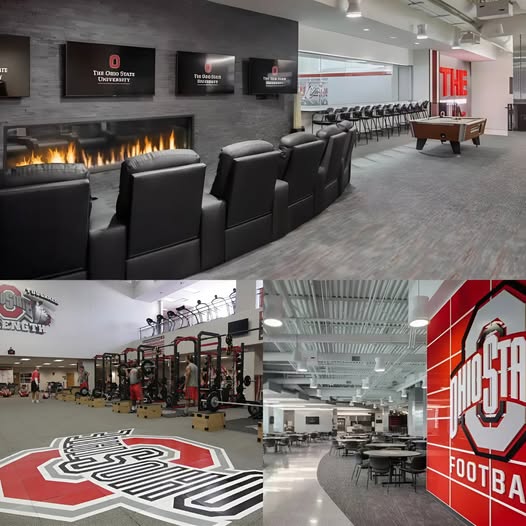
The 1922 Club, named for the year Ohio Stadium opened, was announced in 2024 as an upscale, climate-controlled venue intended to combine the history of the stadium with a modern hospitality experience. The club is designed to operate not only on football Saturdays but also as a restaurant and event space on non-game days. For premium chairback customers, the $6,000 season package includes access to the 1922 Club, all-inclusive food and beer and wine service, dedicated restrooms, in-seat service and the ability to purchase game-day parking. Members also receive access through the Ohio State player tunnel and opportunities involving away games and postseason tickets.
The economics become even more revealing when the entire package is considered.
The 400 premium chairback seats alone represent $2.4 million in potential annual ticket revenue if all are sold at the listed $6,000 season price. Ohio State has indicated that the premium chairback inventory has sold out for 2026, demonstrating that the market for high-end Buckeye experiences remains strong despite the price.
That is before counting the nine field-level suites.
Sports Business Journal reported that the south end zone project cost approximately $5 million and was designed with an important piece of flexibility: the field-level structures can be removed for non-football events.
That detail matters.
Ohio Stadium is not simply a football venue. It is one of the university’s most valuable physical assets, and every square foot that can generate revenue without permanently compromising the building’s primary function has potential financial value.
For Ohio State athletic director Ross Bjork, the premium seating expansion is also part of a broader effort to enhance the fan experience.
“We’re proud to introduce a premium seating area on the field level in the south end zone,” Bjork said when the project was announced, describing it as an investment in the fan experience.
There is, however, a football question embedded in all of this.
Field-level seating sounds spectacular until the geometry of the game is considered.
Fans sitting extremely close to the field can experience an unmatched sense of speed and physicality. But lower sightlines can also make it more difficult to see developing plays, particularly when action moves toward the opposite end of the field.
That criticism has already emerged from fans who have seen the new suites, with some questioning whether the proximity to the field actually produces a better football view than a more elevated seat.
For Ohio State, though, the product is not necessarily being sold as the best tactical vantage point in the stadium.
It is being sold as an experience.
That distinction is increasingly important across major college football.
The modern premium customer is often buying hospitality, exclusivity, networking opportunities and access as much as the game itself. A climate-controlled club, private restroom, catered food, tunnel access and premium seating can turn a Saturday afternoon into a corporate entertainment opportunity.
And Ohio State’s 2026 schedule gives the university plenty of premium inventory to sell.
The Buckeyes will open Sept. 5 against Ball State before traveling to Texas the following week. At home, Ohio State also hosts Kent State, Illinois, Maryland, Oregon, Northwestern and Michigan. The Oregon and Michigan games, in particular, provide obvious premium-demand opportunities.
The regular-season schedule is also unusually demanding. Nine of Ohio State’s 12 opponents in 2026 played in a bowl game or College Football Playoff the previous season, while seven recorded at least nine wins. The Buckeyes will face Texas on the road, travel to Indiana and USC and host Oregon and Michigan.
That means the premium environment is arriving at precisely the moment when the football product itself carries enormous stakes.
Ohio State is expected to compete for the Big Ten championship and College Football Playoff, and every major home game has the potential to become a national television event.
The university’s standard ticket market remains far more accessible than the premium suites suggest. Ohio State has listed 2026 single-game tickets starting at $57, depending on the opponent and seating zone, while a three-game mini-plan was advertised starting at $205.
That contrast is important.
The $142,700 suite is not replacing the traditional Ohio State experience. It is creating another tier above it.
The same stadium can now serve students standing in the student section, families purchasing conventional seats, longtime season-ticket holders and corporations willing to spend six figures for a private space.
That is the economic model increasingly shaping college athletics.
Unlike the NFL, college football does not operate under a traditional salary-cap system, so the $142,700 suite price does not directly affect Ohio State’s roster construction in the way a luxury suite sale would interact with an NFL team’s salary cap. But the revenue generated by premium hospitality exists within a larger athletic-department financial ecosystem at a time when schools are confronting unprecedented costs associated with maintaining elite football programs.
Ohio State’s challenge will be ensuring that commercial expansion enhances the atmosphere rather than separating the most valuable portions of the stadium from the culture that made the Horseshoe special in the first place.
There is also a symbolic change coming with the project.
The Ohio State Marching Band is moving back to the north end of the stadium, a location it occupied before the major Ohio Stadium renovation in 2001. Ohio State believes the concrete foundation in the north end will help project the band’s sound more effectively and potentially make the stadium even more difficult for visiting teams. That is the balancing act.
Ohio State is adding luxury without abandoning tradition.
The 2026 season will provide the first real test of whether that formula works.
If the Buckeyes deliver the type of season many expect, those $142,700 suites will become more than expensive seats. They will become part of the business architecture surrounding a program chasing championships in the new era of college football.
For everyone else, the message is simpler.
The Horseshoe is getting closer to the field, more luxurious and, for some fans, considerably more expensive.
And on Saturdays this fall, Ohio State will be asking whether the premium price can match the premium expectation.