Cignetti Says Indiana Defense Is Finding Its Identity as Hoosiers Turn Focus Toward Western Kentucky
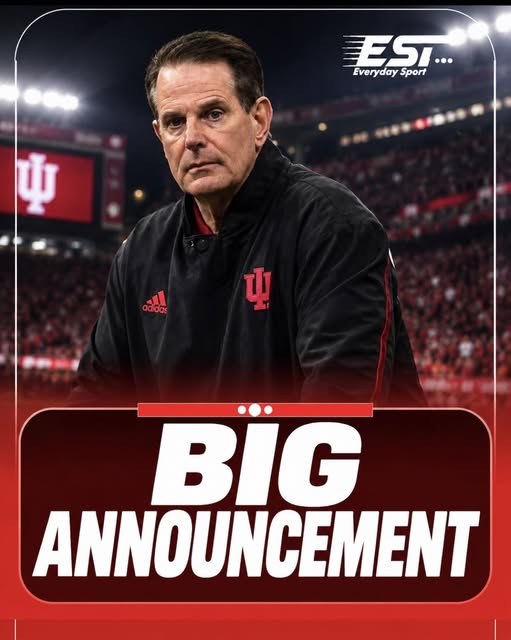
BLOOMINGTON, Ind. — Curt Cignetti did not need to search long for the most encouraging development from Indiana’s latest performance.
The Indiana coach saw a defense beginning to impose its will.
As the Hoosiers moved from reviewing Saturday’s victory over Howard to preparing for Western Kentucky, Cignetti said Indiana’s defense made perhaps the most significant week-to-week improvement of any unit on the field. The numbers supported the assessment, but so did the way Indiana controlled the game at the line of scrimmage, limited explosive opportunities and consistently forced the quarterback into uncomfortable situations.
Howard crossed midfield only once, and that possession was aided by a muffed punt rather than sustained offensive execution. Indiana stuffed the run, created pressure for most of the afternoon and allowed only limited success through two specific concepts: a naked bootleg and an RPO.
For Cignetti, that combination represented progress — but not perfection.
“Wasn’t pleased with the muffed punts,” Cignetti said, pointing to special teams as one of the areas Indiana must clean up despite the lopsided nature of the game.
The larger takeaway, however, was clear. Indiana’s defense is beginning to establish the physical identity Cignetti wants as the Hoosiers move deeper into the nonconference portion of their schedule and closer to the start of Big Ten play.
The challenge now is determining how much of Saturday’s defensive dominance was the product of Indiana’s own improvement and how much was influenced by the opponent. That is one of the central questions facing every program during September, particularly a team with Big Ten championship ambitions.
Cignetti’s answer was direct: Indiana is still measuring itself against itself.
“This week is still more about us,” Cignetti said, emphasizing the importance of identifying what the Hoosiers do best before the schedule begins demanding more complete performances against conference opponents.
That approach has become a defining characteristic of Cignetti’s program-building philosophy. Rather than allowing rankings, outside expectations or the quality of a particular opponent to dictate the standard, Indiana’s coaching staff is focused on developing a repeatable formula.
Against Howard, that formula began with stopping the run.
Indiana controlled the line of scrimmage and prevented Howard from establishing the kind of early-down success necessary to keep an offense on schedule. In modern college football, that matters beyond the traditional rushing statistics. Teams that consistently lose yardage or generate minimal gains on first down become predictable, allowing defenses to increase pressure and narrow the quarterback’s options.
That was the position Howard frequently found itself in.
Indiana’s front limited the run and harassed the quarterback for much of the game, creating the type of defensive environment Cignetti believes can translate against stronger competition. The Hoosiers did not have to manufacture success through constant high-risk pressure packages. Instead, the defense was able to create disruption while maintaining enough structure behind the line of scrimmage to prevent major breakdowns.
The two plays that produced notable success — a naked bootleg and an RPO — also offered useful teaching moments.
Both concepts are designed to punish defensive aggression.
A naked bootleg typically uses backfield action to influence edge defenders and linebackers before sending the quarterback in the opposite direction, often with fewer defenders immediately available to contain him. RPO concepts create a different problem, forcing defenders to react to the run while leaving the quarterback with the option to deliver the ball quickly if the defense commits too aggressively.
Indiana’s ability to identify those two situations as exceptions rather than recurring issues was encouraging. But against the offenses waiting later on the schedule, those exceptions can become major problems if they are not corrected.
That is why Cignetti’s evaluation remains more demanding than celebratory.
The Hoosiers are not simply trying to win September games. They are trying to develop a team capable of navigating the Big Ten, where defensive depth, line-of-scrimmage consistency and situational football often determine who remains relevant in November.
Western Kentucky presents another opportunity to continue that process.
The Hilltoppers entered the season facing the type of challenge that can make a nonconference result difficult to evaluate after their matchup with Georgia. Cignetti acknowledged that Western Kentucky had a tough time against the Bulldogs, but he made clear Indiana’s objective will not change based on what happened in another stadium.
“We’ll continue to make them struggle,” Cignetti said.
That statement reflects the standard Indiana is attempting to establish defensively.
The Hoosiers want opposing offenses to become one-dimensional. They want to win on early downs, force quarterbacks into obvious passing situations and use pressure to disrupt timing without sacrificing coverage integrity. The formula is hardly revolutionary, but executing it consistently separates good defenses from championship-caliber ones.
For Indiana, the next step will be maintaining that level of physicality against an opponent with a different offensive structure and a more meaningful opportunity to test the secondary and front seven.
The special teams issues from Saturday also remain part of the conversation.
Indiana committed only two penalties in the game, a relatively clean performance that pleased the coaching staff in an area where hidden yardage can quickly change momentum. But the muffed punts stood out because they represented avoidable mistakes rather than plays created by an opponent’s superior execution.
Cignetti specifically mentioned his dissatisfaction with the muffed punts, particularly because Howard’s lone trip across the 50-yard line came after one of those mistakes.
That is the type of sequence Indiana cannot afford to repeat once the competition improves.
Field position remains one of the sport’s most overlooked statistical advantages. A defense can dominate for an entire afternoon, but repeated special teams mistakes can erase that advantage by giving an opponent short fields. Advanced models consistently show that starting field position influences scoring probability, particularly when an offense begins a possession near midfield.
Indiana avoided major damage Saturday. The concern is whether the Hoosiers will be as fortunate later.
The penalty situation, meanwhile, provided another reminder of the thin margin between statistical production and actual production.
Indiana had only two penalties, but Lee Beebe has now had two touchdowns taken off the board this season. For an offense trying to establish rhythm and build confidence, those lost scoring plays can affect more than the final score. They can alter personnel rotations, game flow and opportunities for younger players to gain meaningful experience.
Beebe’s situation also illustrates why Cignetti continues to emphasize discipline.
A touchdown erased by penalty does not simply disappear from the scoreboard. It often changes the next several snaps. An offense may be forced into a longer down-and-distance situation, a different section of the playbook or a more conservative approach depending on game circumstances.
For a team with Indiana’s ambitions, those details matter.
The Hoosiers are also continuing to sort through a developing competition at tight end, where Cignetti made the program’s expectations particularly clear.
“Tight ends have got to be able to block,” he said.
That position battle remains unresolved and is expected to continue developing as Indiana searches for the right combination of players.
The emphasis on blocking speaks directly to how Indiana wants its offense to function. Tight ends have become increasingly valuable in modern football because of their versatility. The best players can align attached to the formation, flex into the slot, create mismatches as receivers and still serve as credible blockers in both the run game and pass protection.
But versatility only matters if the defense has to respect every possibility.
A tight end who cannot block consistently can become a schematic tell. Defenses can adjust personnel and coverage based on alignment, knowing the offense is less likely to run effectively toward that player. Conversely, a complete tight end forces defensive coordinators to prepare for multiple personnel packages and prevents them from easily predicting an offense’s intentions.
Cignetti’s comments suggest Indiana is still searching for answers there.
The competition is expected to continue, with development likely to determine playing time. The Hoosiers want tight ends who can contribute to the passing game, but they also need players capable of handling edge defenders, sealing the backside of zone concepts and assisting offensive tackles against pressure.
That requirement becomes even more important once Indiana enters Big Ten play.
The conference remains defined by physical football despite the sport’s broader offensive evolution. Defenses are larger, deeper and more capable of rotating bodies along the front. Offensive coordinators need personnel packages that can survive those matchups without becoming predictable.
Indiana’s next few games will help determine whether it has developed that kind of offensive versatility.
For now, Cignetti’s message entering Western Kentucky is centered on improvement rather than anticipation.
Indiana can acknowledge that the defense took a meaningful step forward against Howard. It can recognize that the run defense was effective, the quarterback faced consistent pressure and the opponent struggled to sustain possessions.
But the Hoosiers also have plenty to correct.
Muffed punts cannot become a habit. Touchdowns cannot continue disappearing because of penalties. Defensive discipline must improve against quarterback movement and RPO concepts. And the tight end position must continue developing into a reliable component of the offense rather than an unresolved personnel question.
That is the reality of September football for a program with bigger goals.
The final score against Howard may have suggested Indiana controlled the afternoon. Cignetti’s postgame assessment revealed something more useful: the Hoosiers still believe their most important opponent is themselves.
Western Kentucky now provides another measuring stick.
The objective is not simply to beat the Hilltoppers. It is to continue building a defensive identity, eliminate the mistakes that create unnecessary opportunities and learn exactly what Indiana can rely on when the calendar turns toward Big Ten competition.
Cignetti knows the schedule will eventually become less forgiving.
That is why a defense that stuffs the run, pressures the quarterback and limits opponents to isolated successes is worth noticing. It is also why Indiana’s coach is unwilling to let his team become satisfied after one encouraging performance.
The Hoosiers are improving.
Cignetti’s challenge now is making sure they are improving fast enough for what comes next.