Indiana Hoosiers face a potential changing of the guard as a key defensive player’s college career approaches its conclusion.
The Indiana Hoosiers have continued to build a reputation as one of college football’s most competitive programs under head coach Curt Cignetti. However, every successful program eventually faces difficult roster decisions, and the possibility of losing an experienced defensive star could become another major storyline for Hoosier Nation.
A veteran defender approaching the end of his college eligibility represents more than a potential vacancy on the depth chart. It marks the end of years of development, preparation and commitment to a program that has rapidly raised its expectations.
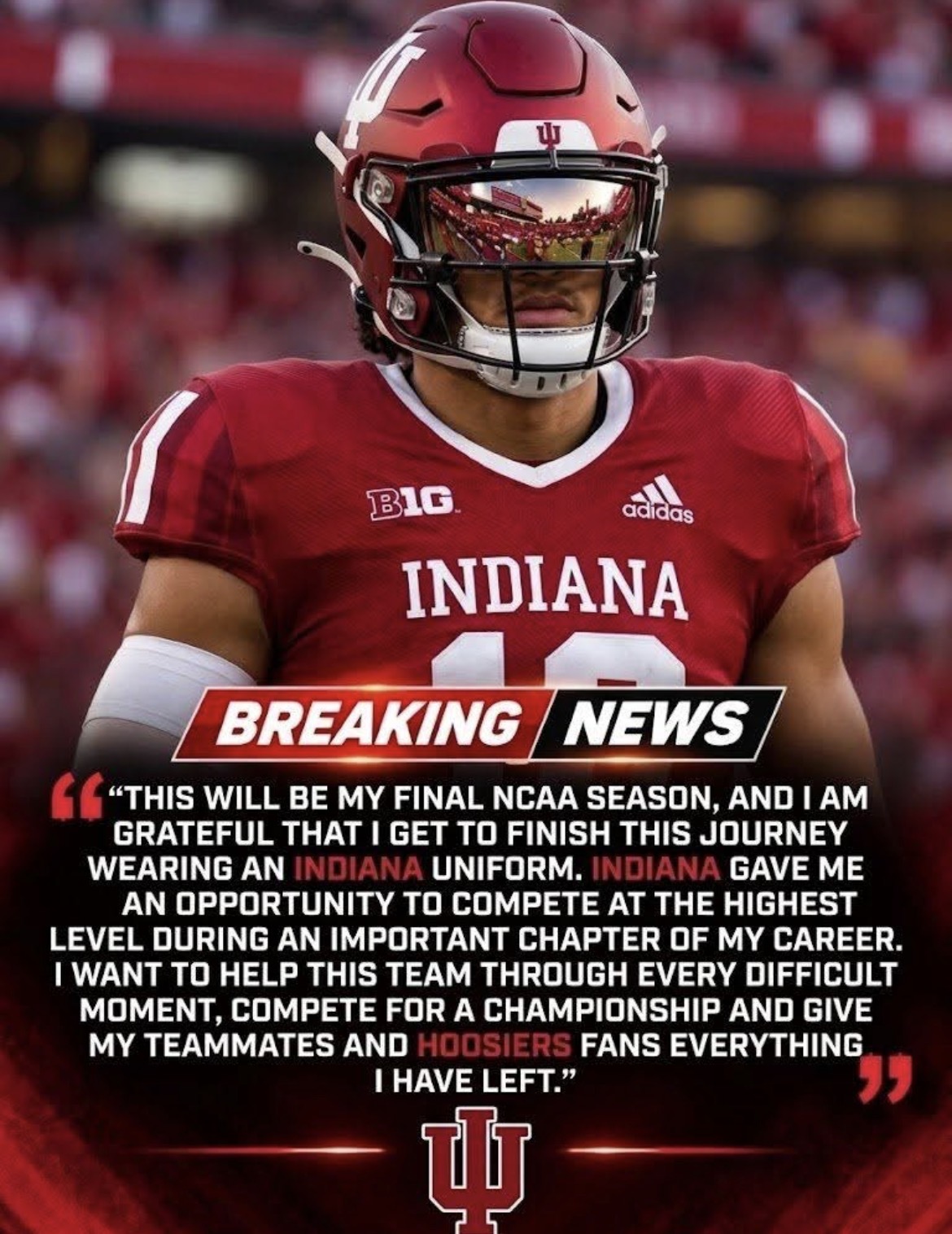
Although the specific emotional announcement described in the original headline could not be independently verified, Indiana’s defensive roster has undergone important changes heading into the 2026 campaign. The decisions made by experienced players will play a significant role in determining how the Hoosiers maintain their competitive edge.
Indiana’s Defense Faces Another Important Transition
Indiana’s rise under Cignetti has been built on toughness, discipline, physical football and a roster capable of competing against elite Big Ten opponents.
The defensive unit has been an important part of that identity. From creating pressure on opposing quarterbacks to defending explosive passing attacks, Indiana needs experienced players who understand the demands of Cignetti’s system.
When a veteran defender reaches the final chapter of his college career, the impact extends beyond individual statistics. Leadership, communication and familiarity with the coaching staff are qualities that younger players must learn to reproduce.
That is particularly important for a program attempting to sustain success rather than settle for a single breakthrough season.
Indiana cannot afford to assume that a departing veteran can be replaced immediately. Developing the next generation of defensive leaders requires preparation, competition and opportunities for younger players to demonstrate that they can handle larger responsibilities.
A Look at Indiana’s Experienced Defensive Players
Several defensive players have been important to Indiana’s roster planning for 2026.
Safety Amare Ferrell entered the season after establishing himself as an experienced member of the Hoosiers’ secondary. Before the 2026 campaign, The Daily Hoosier reported that Ferrell had appeared in 40 games over three seasons, recording 106 tackles, eight interceptions and 15 pass breakups. His return was expected to provide stability in the defensive backfield.
Defensive tackle Tyrique Tucker also returned for 2026 after a productive season in which he earned All-America recognition. He finished the 2025 campaign with 38 tackles and six sacks while starting all 16 games, according to On3’s coverage of his return.
Meanwhile, defensive end Stephen Daley and edge rusher Kellan Wyatt secured additional opportunities to play for Indiana in 2026 following a court ruling concerning eligibility for certain players from the 2022 high school graduating class.
Daley recorded 5.5 sacks and 19 tackles for loss during the 2025 season before a knee injury sidelined him for the College Football Playoff. Wyatt registered 27 tackles, eight tackles for loss and 2.5 sacks in his first season with Indiana.
These developments demonstrate why roster decisions and eligibility have become major subjects in Bloomington. Experienced defenders can provide a valuable foundation while the coaching staff evaluates younger talent and new additions.
Why a Veteran Defender’s Departure Would Matter
If an established Indiana defender confirms that the 2026 season will be his last, the announcement would naturally attract attention from supporters.
Defensive football depends on coordination. Linebackers must recognize formations, defensive linemen must execute their assignments and defensive backs must communicate effectively as plays develop.
Veteran players often help maintain that coordination, especially during difficult stretches of a game. Their experience can also prove valuable when younger teammates encounter unfamiliar offensive schemes or high-pressure situations.
Replacing that experience is not always as straightforward as finding another player with similar physical abilities.
Indiana’s coaching staff would need to identify who can assume additional responsibilities, which returning players are ready for expanded roles and whether incoming talent can contribute immediately.
The transition could create opportunities for emerging players. At the same time, it would place greater pressure on the remaining veterans to establish themselves as leaders.
For a team with ambitions of remaining among the nation’s top programs, those decisions can influence the direction of an entire season.
Curt Cignetti’s Challenge: Maintaining the Standard
Cignetti has emphasized competition and accountability throughout his coaching career. His approach requires players to earn their roles while remaining prepared to contribute when their opportunities arrive.
That philosophy becomes particularly important when experienced contributors approach the end of their eligibility.
Indiana’s ability to sustain defensive production will depend on how effectively the coaching staff develops replacements and integrates new personnel. Recruiting, transfer-portal additions and player development all become important parts of the equation.
The Hoosiers also must balance immediate needs with long-term roster planning. Experienced transfers can provide short-term solutions, but developing younger players remains essential to building sustained success.
The challenge is not simply replacing one player. It is ensuring that the unit continues to function cohesively even as individual contributors move on.
For Indiana supporters, the hope is that the program’s established culture will help the defense navigate any transition without losing its identity.
What Comes Next for the Hoosiers?
As the 2026 season progresses, Indiana’s defensive performances will offer a clearer picture of which players are ready to become the unit’s next leaders.
The coaching staff will be looking for consistency, improved communication and players who can deliver in crucial moments. Those qualities become especially important against Big Ten opponents capable of exploiting even minor defensive mistakes.
The end of a college career can also represent the beginning of a new opportunity for an athlete, whether that involves pursuing professional football or moving into a different chapter of life.
For departing seniors, the final season offers one more opportunity to contribute to their teammates and leave a lasting impression on the program.
For returning players, it presents a chance to establish themselves and demonstrate that Indiana’s defensive standard can survive personnel changes.
The Bottom Line
Indiana’s continued success will depend on its ability to combine experienced leadership with emerging talent. Any confirmed announcement that a defensive standout is playing his final college season would be a significant development for the Hoosiers.
However, the identity of the player behind the reported announcement remains unverified, and no specific retirement statement should be attributed to an Indiana athlete without reliable confirmation.
One thing remains clear: as the Hoosiers pursue their goals in 2026, defensive depth, player development and leadership will be central to their ambitions.
Hoosier Nation will be watching closely to see which players step forward and help carry Indiana football into its next chapter.