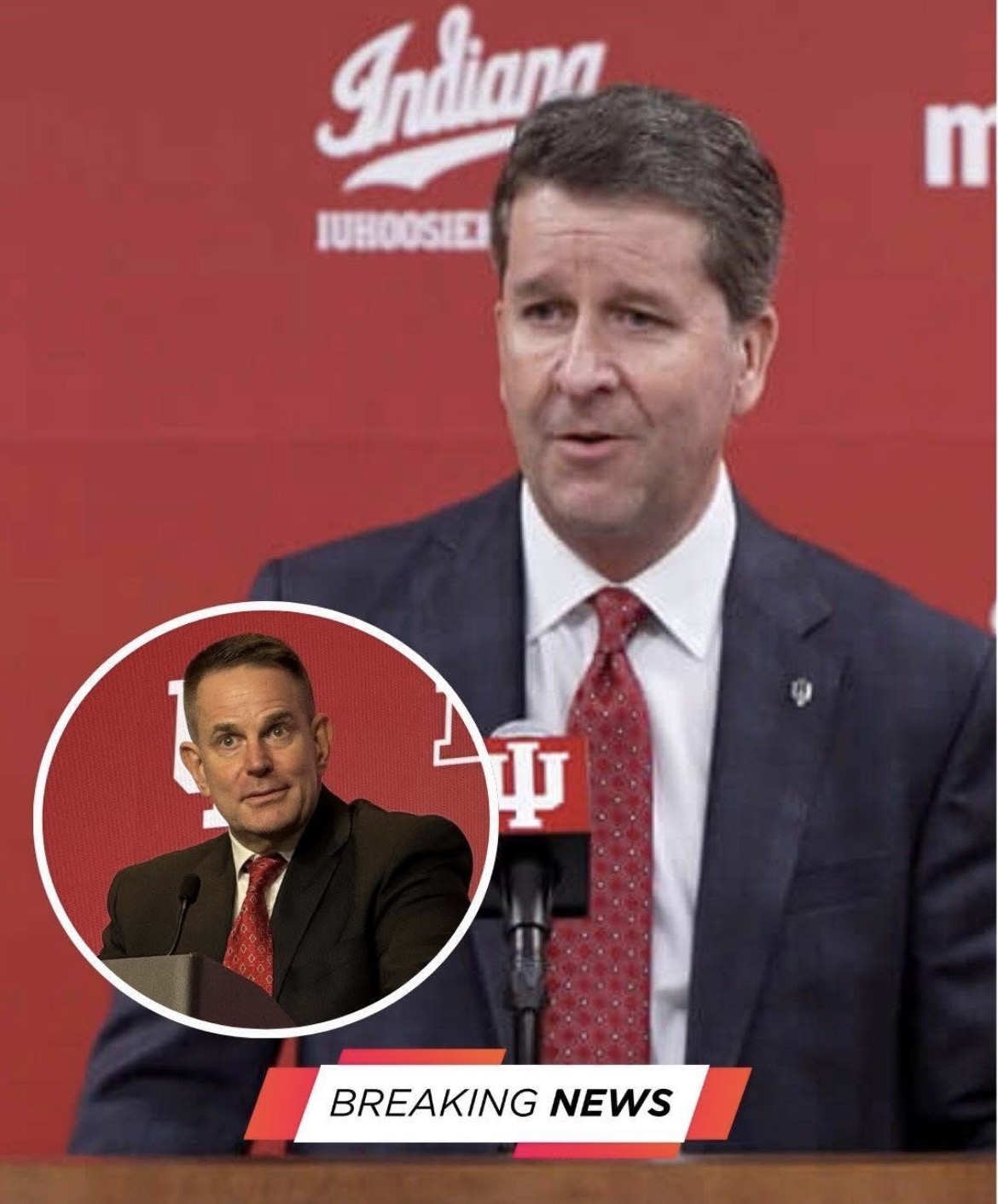
🚨 REPORT: NOT NICK SABAN — THESE ARE THE FOUR COACHES INDIANA AD ATHLETIC DIRECTOR SCOTT DOLSON IS REPORTEDLY TARGETING TO REPLACE CURT CIGNETTI
Indiana football could face a major turning point if Curt Cignetti’s future in Bloomington becomes uncertain, with athletic director Scott Dolson potentially facing one of the most important coaching decisions in the program’s history.
The possibility of replacing Cignetti would immediately generate national attention, particularly given the expectations surrounding Indiana’s football program and the remarkable impact a successful head coach can have on a college football team. Although Nick Saban’s name would naturally dominate headlines in any conversation about elite coaching replacements, the legendary former Alabama coach is not necessarily the direction Indiana would pursue.
Instead, speculation surrounding potential alternatives raises a bigger question: Who could realistically lead the Hoosiers forward if the program ever needed a new head coach?
For now, the identities of the four coaches referenced in the report have not been established by the information available. Nevertheless, the possibility of a coaching search would place Dolson under considerable pressure to identify a candidate capable of sustaining Indiana’s competitive ambitions.
Scott Dolson Would Face a Defining Decision
Replacing a successful head coach is never a straightforward assignment, especially when a program has invested heavily in building a winning culture.
For Dolson, the challenge would extend beyond finding a recognizable name. Indiana would need a coach with a clear football philosophy, strong recruiting relationships, the ability to develop players and the leadership skills necessary to maintain consistency in a demanding Big Ten environment.
The next appointment would also need to satisfy a fan base that increasingly expects Indiana to compete against some of the nation’s strongest programs.
That makes the selection process particularly important. A candidate with an impressive résumé might attract attention, but Indiana would have to determine whether that coach’s methods, personality and long-term plans align with the program’s direction.
Dolson would also need to consider the current roster, recruiting commitments, staff continuity and the potential consequences of a coaching transition.
In modern college football, those factors can influence a team’s immediate results just as significantly as the head coach’s previous accomplishments.
Why Nick Saban Would Be the Obvious Name — But Not Necessarily the Answer
Whenever an established college football program begins searching for a head coach, Saban’s name inevitably enters the conversation.
His championship record at Alabama and his influence on the sport established him as one of the most successful coaches in college football history. His reputation for discipline, preparation, player development and program management would make him an attractive figure in almost any hypothetical coaching discussion.
However, Saban retired from coaching after the 2023 season and subsequently moved into television analysis.
Any suggestion that Indiana could bring him back to the sidelines would require substantial evidence. His legendary résumé alone does not establish that he is interested in returning to coaching or that he would consider the Indiana position.
That distinction matters because a realistic coaching search must focus on candidates who are both qualified and potentially available.
Rather than relying solely on a historic name, Indiana would have to evaluate the broader coaching market and identify individuals capable of delivering results within the program’s financial, recruiting and competitive circumstances.
The Four Candidates Would Need to Meet Indiana’s Expectations
Without verified names attached to the report, it would be premature to identify four specific coaches as Dolson’s targets. Still, the qualities Indiana would need in its next leader are clear.
First, the program would benefit from a coach with a proven record of building a competitive team. Previous success at another school, particularly against strong opposition, would offer useful evidence of that coach’s ability to manage a demanding schedule.
Second, recruiting would be central to the decision. Indiana competes in a conference featuring programs with significant resources and established recruiting pipelines. The next coach would need to identify talent, persuade high-level prospects to commit and develop players after they arrive on campus.
Third, staff management would be essential. A head coach must assemble a capable group of coordinators and position coaches while establishing a consistent identity on both sides of the football.
Finally, Indiana would need someone capable of handling expectations. Winning at a program with a developing national profile presents different challenges from rebuilding a team with limited outside attention. The next coach would need to embrace the pressure rather than allow it to become a distraction.
These criteria would provide a useful framework for evaluating any names that eventually emerge from a credible report.
Maintaining Momentum Would Be a Major Priority
A coaching change can disrupt a program even when the replacement has an impressive background.
Players must adjust to a new system, assistants may leave for other opportunities, and recruits could reconsider their commitments. The transfer portal adds another layer of uncertainty because players have more options when their team’s leadership changes.
For Indiana, preserving continuity would therefore be a major consideration.
The athletic department would need to determine which members of the roster could thrive under a new coaching staff and how to minimize disruption during the transition. Recruiting relationships would also require immediate attention.
A candidate who understands those challenges could give the Hoosiers a better chance of maintaining their competitive position.
However, there would be no guarantee that a new coach could reproduce the results of a predecessor. Even highly regarded candidates face uncertainty when entering a different program, conference and recruiting environment.
What This Could Mean for Indiana Football
The conversation surrounding potential coaching replacements reflects the importance of stability at the top of a college football program.
If Cignetti remains in charge, Indiana’s immediate focus would be on the team’s performance, recruiting and continued development. If circumstances eventually forced the school to consider another head coach, Dolson would have to balance ambition with a careful assessment of the available candidates.
The Hoosiers could pursue an established winner, a rising coach with significant upside or an experienced leader seeking another opportunity. Each route would carry different benefits and risks.
An established coach could offer immediate credibility, while a rising candidate might bring energy, innovative ideas and a longer-term development plan. An experienced coach looking for a fresh start could also present an appealing option if the fit were right.
Ultimately, the best candidate would not necessarily be the biggest name. Indiana would need someone capable of building a sustainable program, recruiting effectively and competing consistently against the Big Ten’s strongest teams.
The Bottom Line
The suggestion that Dolson is evaluating four potential replacements for Cignetti would be a significant development if confirmed. However, the headline alone does not establish that Indiana has begun a coaching search, that Cignetti is leaving or that specific candidates have been contacted.
Until credible reporting identifies the four coaches and provides evidence of Indiana’s interest, those details remain unconfirmed.
For now, Saban’s name may attract attention, but any serious discussion about Indiana’s future should focus on verified candidates, their qualifications and the likelihood that they would actually consider the position.
If a coaching change ever becomes necessary, Dolson’s challenge would be clear: find a leader who can protect the program’s progress, strengthen its recruiting operation and keep Indiana competitive on college football’s biggest stage.