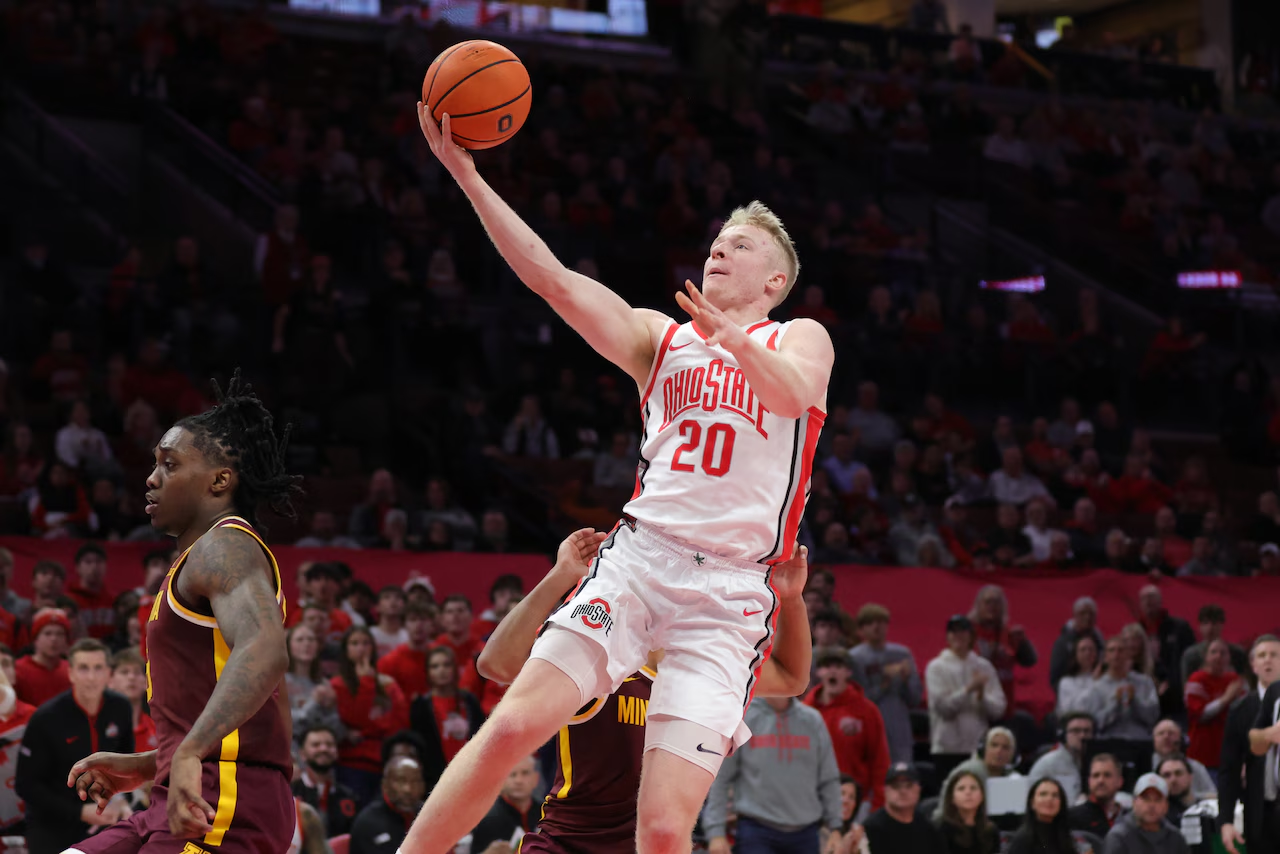
The sense of instability surrounding Ohio State Buckeyes men’s basketball continued to grow this week as the program absorbed yet another wave of transfer portal departures, underscoring a rapidly shifting roster landscape that has become emblematic of the modern era of college basketball. What began as a trickle has now turned into a steady outflow, with three more players reportedly entering the transfer portal, deepening concerns about continuity, development, and the immediate future of the Buckeyes under head coach Jake Diebler.
For a program that has long prided itself on stability and player progression within the highly competitive Big Ten Conference, the latest developments reflect a broader reality across the sport, where roster retention has become as challenging as recruiting itself. The transfer portal, once viewed as a supplementary mechanism for player movement, has now evolved into a central pillar of roster construction, forcing coaching staffs to operate in a near-constant state of evaluation and recalibration.
Ohio State’s situation, however, feels particularly acute. The departure of three additional players—names that had either contributed meaningful minutes or were expected to compete for roles—adds to an already growing list of exits that has left fans and analysts questioning the program’s short-term trajectory. While roster turnover is not uncommon, the volume and timing of these departures place the Buckeyes in a precarious position as they attempt to retool ahead of the upcoming season.
The impact of these exits goes beyond simple numbers. Each player departure represents not only a loss of talent but also a disruption to team chemistry, practice structure, and long-term development plans. In a system where cohesion often determines success as much as individual ability, the constant churn can be destabilizing. For Ohio State, a team that has been striving to reestablish itself as a consistent contender in the Big Ten, this level of turnover presents both a challenge and an opportunity.
From a strategic standpoint, the transfer portal cuts both ways. While the Buckeyes are losing players, they also retain the ability to replenish the roster with experienced talent from other programs. This duality defines the modern college basketball ecosystem. Programs that adapt quickly—identifying fits, managing personalities, and integrating newcomers—can turn roster upheaval into competitive advantage. Those that fail to do so risk falling behind.
Coach Diebler, who stepped into the role with a mandate to inject energy and direction into the program, now faces one of the defining tests of his tenure. Managing departures is as much about communication and culture as it is about basketball. Players enter the portal for a variety of reasons—playing time, fit, development opportunities, or exposure—and each exit tells a story about the program’s internal dynamics. Addressing those underlying factors will be critical if Ohio State hopes to stabilize moving forward.
The timing of these departures also matters. With offseason workouts and roster planning already underway, late portal entries can complicate recruitment strategies. Scholarships that were once accounted for suddenly open up, forcing the staff to pivot quickly in identifying replacements. At the same time, the pool of available players becomes increasingly competitive, with programs across the country vying for the same talent.
For fans, the emotional toll of repeated departures cannot be ignored. College basketball has traditionally thrived on the connection between players and their programs, with multi-year development arcs allowing supporters to invest in athletes’ growth. The transfer portal era, however, has shortened those timelines. Players who once might have stayed to develop now have the option to seek immediate opportunities elsewhere, reshaping the fan experience in the process.
Yet, it would be overly simplistic to frame the situation solely in negative terms. The transfer portal has empowered players in unprecedented ways, giving them agency over their careers and the ability to find environments that best suit their goals. For Ohio State, embracing this reality rather than resisting it will be key. The programs that succeed in this new landscape are those that build flexible systems—both culturally and tactically—that can absorb change without losing identity.
Historically, Ohio State has demonstrated an ability to adapt. The program has navigated coaching changes, roster rebuilds, and shifts in conference dynamics while maintaining a competitive baseline. The current challenge, though, is unique in its scale and speed. The convergence of NIL opportunities, increased player mobility, and heightened competition has created an environment where stability is harder to achieve than ever before.
As the Buckeyes look ahead, the focus will inevitably turn to how they respond. Recruiting—both at the high school level and within the portal—will take center stage. Identifying players who not only possess talent but also align with the program’s culture will be crucial. Equally important will be the development of those who remain, ensuring that the core of the team can provide a foundation upon which new additions can build.
The coaching staff’s ability to communicate a clear vision will also play a significant role. In an era where players have more options than ever, clarity and trust become essential. Prospective transfers will be evaluating not just playing time and exposure but also the stability and direction of the program. For Ohio State, presenting a compelling case—one that balances opportunity with structure—will be key to attracting the right pieces.
From a broader perspective, the Buckeyes’ situation serves as a microcosm of the challenges facing college basketball as a whole. The sport is in the midst of a transformation, with traditional models of team building giving way to more fluid, dynamic approaches. Programs that once relied heavily on multi-year player development must now incorporate elements of rapid roster turnover and immediate impact acquisitions.
In this context, Ohio State’s recent string of departures is not an anomaly but rather part of a larger trend. The difference lies in how the program responds. Will the Buckeyes use this moment as an opportunity to redefine their approach, or will they struggle to keep pace with the evolving landscape? The answer to that question will shape not only the upcoming season but also the program’s long-term trajectory.
For now, the focus remains on the immediate task at hand: rebuilding a roster that can compete in one of the nation’s toughest conferences. The Big Ten has consistently been a battleground of physical, disciplined basketball, and success requires depth, experience, and cohesion. Replacing departing players with individuals who can contribute in those areas will be essential.
At the same time, patience may be required. Roster turnover often brings growing pains, and integrating new players into a cohesive unit takes time. The Buckeyes’ ability to navigate those challenges—balancing short-term results with long-term development—will be a key storyline as the season approaches.
Ultimately, the latest wave of transfer portal exits underscores the reality that college basketball is no longer defined by static rosters and predictable progression. Instead, it is a dynamic, ever-changing environment where adaptability is paramount. For Ohio State, the path forward will depend on its ability to embrace that reality, leveraging the tools available to build a roster capable of competing at the highest level.
As the dust settles on this latest round of departures, one thing is clear: the Buckeyes are at a crossroads. The decisions made in the coming weeks—both in terms of player acquisition and program direction—will have lasting implications. In a sport where change is the only constant, Ohio State’s response will determine whether it can turn a period of uncertainty into a foundation for future success.
Reported Ohio State Players Entering the Transfer Portal (Latest Cycle)
(Note: Dates reflect widely reported entry timelines during the recent offseason cycle and may vary slightly by source)
- Roddy Gayle Jr. — Entered portal: March 2026 (reported late March window)
- Felix Okpara — Entered portal: March 2026 (mid-to-late March)
- Scotty Middleton — Entered portal: April 2026 (early April)
- Bowen Hardman — Entered portal: April 2026
- Zed Key — Entered portal: March 2026
- Eugene Brown III — Entered portal: March 2026
Additionally, the three latest departures referenced in “Buckeye Breakfast” updates were reported in mid-to-late April 2026, continuing the trend of late-cycle roster movement.