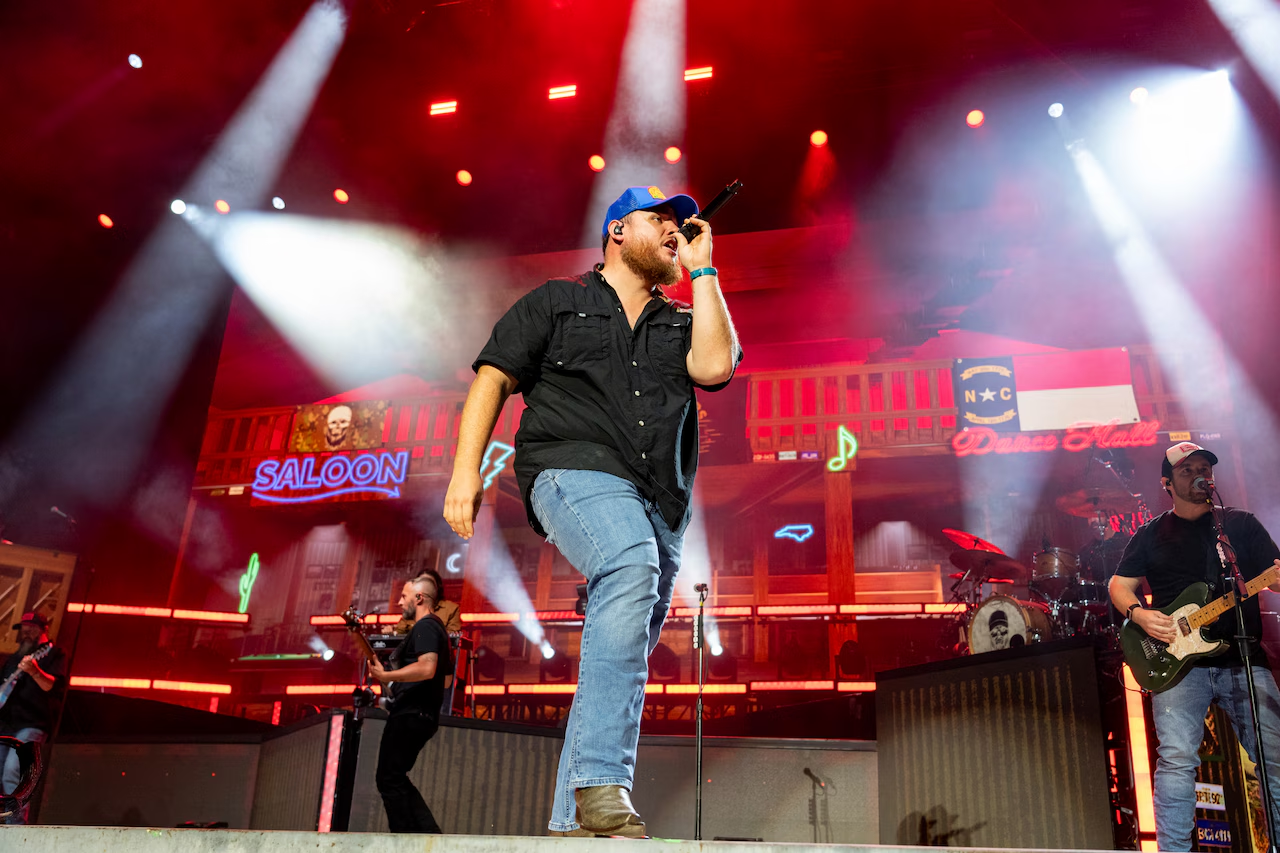
Country music superstar Luke Combs etched his name into the history of one of college football’s most iconic venues this past weekend, delivering a record-breaking performance at Ohio Stadium that drew an unprecedented crowd and created a crossover moment between sports culture and live entertainment. Known widely as the home of the Ohio State Buckeyes football, the stadium—often referred to as “The Horseshoe”—has hosted countless unforgettable Saturdays filled with roaring fans and championship aspirations. Yet on this occasion, it was not touchdowns or tackles that brought history to life, but rather the unmistakable voice of a country music powerhouse.
The concert, which attracted a staggering number of attendees, officially set a new attendance record for Ohio Stadium, surpassing figures previously established by both sporting events and earlier concerts. For a venue steeped in tradition and synonymous with college football excellence, the milestone underscores the growing intersection between sports arenas and large-scale entertainment spectacles. It also highlights the cultural reach of Combs, whose appeal has transcended genre boundaries to draw fans from across the country.
From the early hours of the day, Columbus buzzed with anticipation. Fans clad in a mix of scarlet and gray alongside cowboy boots and denim began gathering around the stadium precinct, turning the surrounding area into a festival-like atmosphere. Tailgating—typically reserved for football Saturdays—took on a musical twist, with portable speakers blaring Combs’ biggest hits as fans shared food, drinks, and stories. The blending of traditions created a unique environment that felt both familiar and entirely new.
Inside the stadium, preparations reflected the magnitude of the event. A massive stage setup dominated one end of the field, complete with towering screens, intricate lighting rigs, and a sound system engineered to carry music to every corner of the 100,000-plus capacity venue. By the time Combs took the stage, the stands were filled to capacity, with fans spilling onto the field area in a sea of energy and anticipation.
When the opening chords rang out, the response was immediate and overwhelming. A deafening roar swept through Ohio Stadium, echoing off the concrete structure in a way usually reserved for game-winning plays or crucial defensive stops. Combs, no stranger to commanding large crowds, appeared visibly moved as he took in the scene—a moment that would later be described as one of the defining highlights of his career.
Throughout the night, he delivered a setlist packed with fan favorites, each song met with singalongs that turned the stadium into a unified chorus. Hits like “Beautiful Crazy,” “Hurricane,” and “Beer Never Broke My Heart” resonated deeply with the audience, creating a connection that blurred the line between performer and crowd. It was not just a concert; it was a shared experience that reinforced the communal spirit often associated with sports.
For Ohio State officials, the event represented a significant achievement in maximizing the potential of their iconic venue. While Ohio Stadium has hosted concerts in the past, none had reached the scale or impact of Combs’ performance. The record-breaking attendance not only set a new benchmark but also demonstrated the viability of using major college football venues for global entertainment events.
Athletic department representatives acknowledged the logistical challenges involved in transforming a football stadium into a concert venue of this magnitude. From protecting the playing surface to ensuring the safety and comfort of tens of thousands of attendees, the operation required meticulous planning and coordination. Yet the success of the event has likely opened the door for future collaborations between sports programs and major artists.
The economic impact on the city of Columbus was also substantial. Hotels, restaurants, and local businesses experienced a surge in activity as fans traveled from across the region and beyond to witness the historic performance. City officials praised the event as a major boost to local tourism and an example of how sports infrastructure can drive broader economic benefits when utilized creatively.
Beyond the numbers, however, the night carried symbolic significance. Ohio Stadium, a venue that has witnessed generations of athletes striving for greatness, became the stage for a different kind of achievement. Combs’ record-breaking performance served as a reminder that the pursuit of excellence is not confined to the field of play. Whether through sport or music, the drive to connect with audiences and create lasting memories remains a universal goal.
Players and coaches associated with Ohio State football also took notice. Several current and former Buckeyes were in attendance, sharing their reactions on social media and expressing admiration for the scale of the event. For many, it was a rare opportunity to experience their home stadium from a completely different perspective—one where the focus shifted from competition to celebration.
The crossover appeal of the event extended beyond traditional fan bases. While country music enthusiasts made up a significant portion of the crowd, the diverse audience included individuals who might not typically attend a country concert but were drawn by the uniqueness of the setting and the magnitude of the occasion. This blending of audiences reflects a broader trend in entertainment, where genre boundaries are increasingly fluid and experiences are defined by their scale and atmosphere rather than strict categorizations.
For Combs, the achievement adds another milestone to an already remarkable career. Having risen from relatively humble beginnings to become one of the most successful artists in modern country music, he has consistently demonstrated an ability to connect with fans on a deeply personal level. The Ohio Stadium performance, however, elevated that connection to a new level, showcasing his ability to command one of the largest stages in the world.
In post-concert remarks, Combs expressed gratitude for the opportunity to perform at such an iconic venue, acknowledging the history and significance of Ohio Stadium within the realm of sports. He emphasized the honor of being able to bring his music to a place that has meant so much to so many people, noting that the experience would remain with him long after the final note had been played.
The success of the event also raises intriguing questions about the future of large-scale concerts in sports venues. As artists continue to seek out bigger stages and more immersive experiences, stadiums like Ohio Stadium offer a unique combination of capacity, infrastructure, and cultural significance. The challenge will lie in balancing these opportunities with the primary function of such venues as homes for athletic competition.
For Ohio State, the record-breaking concert serves as a case study in how to effectively leverage existing assets to create new opportunities. By embracing the potential of Ohio Stadium as more than just a football venue, the university has demonstrated a forward-thinking approach that could inspire similar initiatives across the country.
Fans, meanwhile, are left with memories that will endure for years to come. For those who attended, the night was not just about witnessing a record being broken; it was about being part of a moment that transcended traditional boundaries. It was about standing shoulder to shoulder with tens of thousands of others, united by music in a place usually defined by sport.
As the echoes of the final encore faded and the crowds began to disperse, the significance of what had just occurred became increasingly clear. Ohio Stadium had once again proven its capacity to host history, albeit in a different form than usual. And at the center of it all was Luke Combs, a performer whose journey continues to redefine what is possible in modern entertainment.
In the days that followed, discussions around the event continued to dominate conversations both within and beyond the sports world. Analysts and commentators reflected on the implications of the record-breaking attendance, considering how similar events might shape the future of stadium usage. Fans shared photos and videos across social media, reliving the experience and ensuring that the memory of the night would reach an even wider audience.
Ultimately, the significance of the concert lies not just in the numbers, but in the way it brought people together. In a venue synonymous with competition, the event offered a reminder of the unifying power of shared experiences. Whether through the thrill of a last-second victory or the collective joy of a live performance, Ohio Stadium continues to serve as a place where unforgettable moments are created.
For now, the record stands as a testament to what can be achieved when music and sport intersect on the grandest of stages. And while future events may one day surpass the milestone set by Luke Combs, the impact of this particular night will remain a defining chapter in the history of Ohio Stadium—a moment when the roar of the crowd was driven not by the outcome of a game, but by the power of a song.