The modern landscape of college football has become as much about economics and leverage as it is about touchdowns and trophies, and few recent storylines capture that reality more vividly than the reaction from Ryan Day to a stunning claim by star wide receiver Jeremiah Smith that he could have commanded as much as $10 million in the transfer portal. The comment, which quickly ignited conversation across the sport, has forced a renewed spotlight on the evolving dynamics of player compensation, loyalty, and roster building within powerhouse programs like Ohio State Buckeyes.
Smith, widely regarded as one of the most electrifying young talents in the game, made the remark in a candid setting that suggested his market value, had he chosen to explore opportunities outside Columbus, would have reached unprecedented levels. In an era where Name, Image, and Likeness (NIL) deals have already transformed the collegiate landscape, the figure—$10 million—was not just eye-catching; it was seismic. It immediately sparked debates among fans, analysts, and administrators about whether such valuations are sustainable, realistic, or indicative of a system still finding its footing.
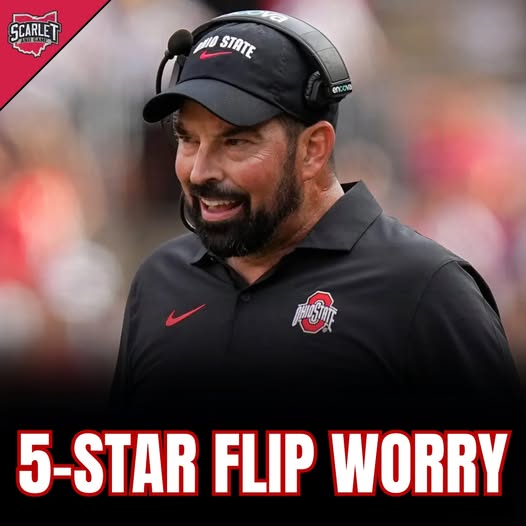
Day, who has carefully navigated the changing terrain of college athletics while maintaining Ohio State’s elite status, responded with a mixture of composure and realism. While he did not outright dismiss Smith’s assertion, he contextualized it within the broader framework of team culture, development, and the responsibilities that come with managing high-profile athletes in a rapidly professionalizing environment. For Day, the focus remained less on hypothetical earnings and more on the tangible benefits of staying within a program built for long-term success.
The coach’s reaction reflected both an understanding of the business side of modern college football and a subtle reminder of the values he wants to uphold within his locker room. Day emphasized that while NIL opportunities are a legitimate and important part of today’s game, they are not the sole determinant of a player’s future. Development, exposure, coaching, and championship contention remain critical factors—elements he believes Ohio State continues to provide at the highest level.
Smith’s statement, whether intended as a reflection of market reality or simply an offhand comment, underscores the extraordinary leverage elite players now possess. Not long ago, the idea of a college athlete commanding eight-figure compensation would have seemed implausible. Today, it is at least part of the conversation. The transfer portal, combined with NIL collectives and booster-driven initiatives, has effectively created a quasi-free agency system where top-tier talent can explore—and monetize—their value in ways previously unimaginable.
Day acknowledged this shift without appearing alarmist. Instead, he framed it as part of the natural evolution of the sport. He noted that conversations around player value are becoming more transparent, even if they sometimes veer into speculative territory. For a program like Ohio State, which consistently recruits at the highest level, managing expectations—both internally and externally—has become a crucial component of leadership.
Behind Day’s measured response lies a deeper challenge faced by coaches across the country: balancing individual opportunity with team cohesion. When a player publicly discusses a potential $10 million valuation, it inevitably raises questions within the locker room. Teammates may begin to assess their own worth, compare situations, or consider alternatives. Maintaining unity in such an environment requires a delicate approach, one that Day has spent years refining.
Sources close to the program suggest that Day has prioritized open communication with his players regarding NIL and transfer portal dynamics. Rather than discouraging discussions about value, he encourages athletes to understand the full picture—what they gain by staying, what they risk by leaving, and how their decisions align with their long-term goals. This approach has helped Ohio State retain key talent despite aggressive recruitment efforts from rival programs and well-funded collectives.
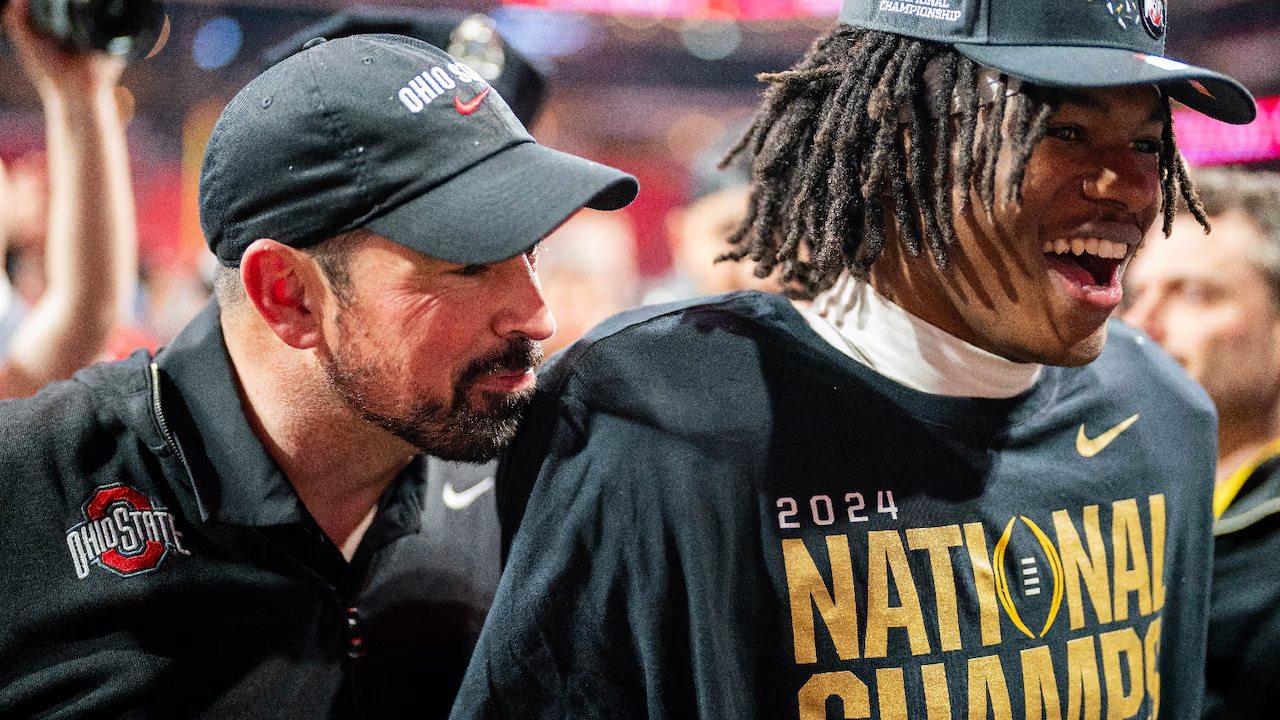
Smith’s situation is particularly compelling because of his trajectory. As a highly touted recruit who quickly demonstrated his impact on the field, he embodies the type of player who would attract massive interest in the portal. His combination of size, speed, and production makes him a potential centerpiece for any offense in the country. That alone lends some credibility to his claim, even if the exact figure remains speculative.
Day did not directly engage with the numerical aspect of Smith’s statement, instead pivoting to a broader discussion about what makes Ohio State an attractive destination. He pointed to the program’s track record of developing NFL-ready talent, its national exposure, and its consistent presence in the College Football Playoff conversation. For Day, those factors represent value that cannot always be quantified in dollar terms.
The reaction from around the college football world has been predictably mixed. Some observers view Smith’s comment as a reflection of the new reality—a sign that players are finally receiving compensation commensurate with their impact. Others worry that such figures, even if hypothetical, could further widen the gap between programs with robust financial backing and those without. The fear is that college football could become increasingly stratified, with a handful of programs dominating the market for elite talent.
Day’s response subtly addressed these concerns without delving into policy debates. He reiterated his belief that the core mission of college athletics—education, development, and competition—remains intact, even as the financial landscape evolves. At the same time, he acknowledged that the system is still in flux, with rules and norms continuing to develop.
One of the more intriguing aspects of this story is how it reflects the changing role of coaches. In addition to their traditional responsibilities, they now serve as de facto general managers, navigating contract-like negotiations, managing budgets (albeit indirectly through collectives), and balancing the competing interests of players, boosters, and administrators. Day’s calm handling of Smith’s comment suggests a coach who understands these complexities and is committed to adapting rather than resisting.
For Ohio State, the stakes are particularly high. As one of the most visible programs in the country, it often sets the tone for how others approach similar situations. Day’s measured response may serve as a template for other coaches facing comparable scenarios—acknowledging player value without allowing it to overshadow team priorities.
Smith, for his part, has not indicated any intention to leave the program. His comment appears to have been more reflective than declarative, offering insight into the type of opportunities that exist in today’s college football ecosystem. Nevertheless, it has sparked a broader conversation about what it means to be a student-athlete in an era where financial considerations are increasingly front and center.
The interplay between individual ambition and collective success will continue to define the sport’s trajectory. Players like Smith, who possess both elite talent and significant marketability, are at the forefront of this transformation. Coaches like Day, meanwhile, must find ways to integrate these realities into a cohesive team environment.
As the season approaches, the focus will inevitably return to on-field performance. For Ohio State, expectations remain sky-high, with championship aspirations driving every decision. How the program navigates the off-field dynamics introduced by NIL and the transfer portal could prove just as critical as its execution between the lines.
Day’s reaction to Smith’s claim ultimately reveals a coach who is neither dismissive nor overly concerned, but rather pragmatic. He understands that the landscape has changed and that players will naturally explore their value. At the same time, he remains steadfast in his belief that Ohio State offers something unique—an environment where talent is not only recognized but fully realized.
In many ways, this episode serves as a microcosm of college football’s current moment. The sport is grappling with unprecedented financial influence, shifting power dynamics, and evolving definitions of loyalty and commitment. Yet, amid all the uncertainty, the fundamental appeal of the game endures: the pursuit of excellence, the thrill of competition, and the bonds formed within a team.
For now, Smith remains a Buckeye, and Day remains focused on guiding his program through both familiar challenges and uncharted territory. Whether or not the $10 million figure ever becomes a reality is almost beside the point. What matters is what it represents—a new era in which players have a voice, a market, and a level of agency that continues to reshape the game.
As the conversation evolves, one thing is clear: stories like this are no longer anomalies but indicators of a broader shift. And in that shifting landscape, the ability to balance opportunity with stability may well determine which programs thrive and which struggle to keep pace.