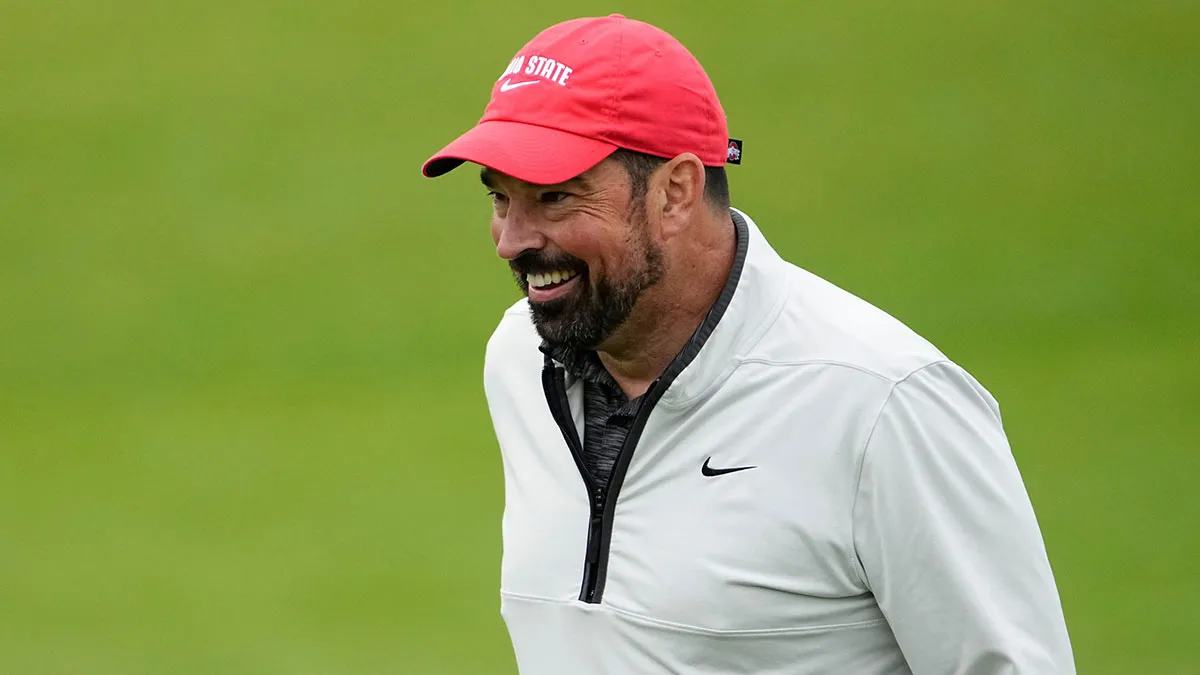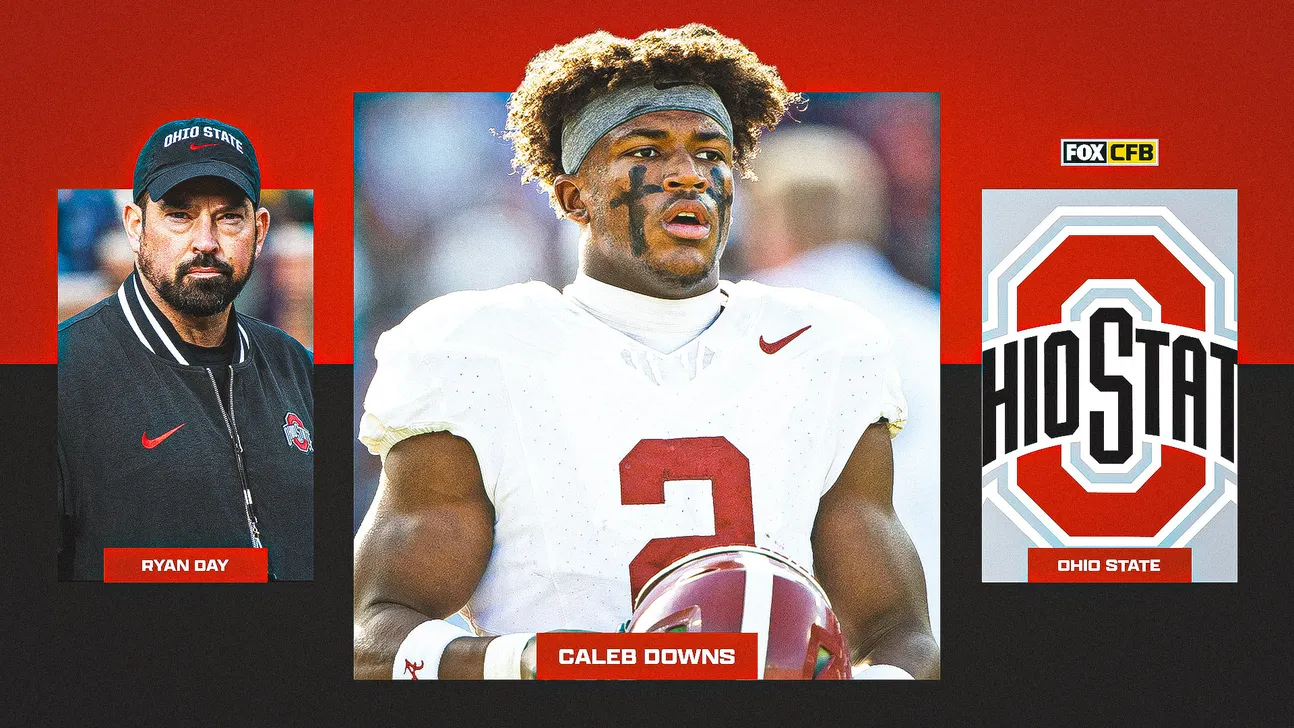
The tension between college football and the professional ranks rarely spills into the open in a way that commands national attention, but Ryan Day ensured that it did this week, delivering a pointed critique of the NFL following the draft selection of former Ohio State Buckeyes football standout Caleb Downs by the Dallas Cowboys. In an era where the transition from college football stardom to professional opportunity is often framed as a seamless progression, Day’s remarks cut against the grain, raising questions not just about Downs’ evaluation but about how elite defensive talent is perceived and valued at the highest level of the sport.
Day, who has overseen one of the most talent-rich programs in college football, did not mince words when discussing Downs’ path to the league. The Buckeyes head coach, known for his measured tone and calculated public statements, spoke with a level of urgency that underscored both his belief in Downs’ abilities and his frustration with what he sees as systemic misjudgment. While he stopped short of directly criticizing any one franchise, the broader message was clear: a player of Downs’ caliber, in his view, should not have faced questions about his draft positioning or overall value.
For those who followed Downs’ collegiate career, Day’s stance is not surprising. Downs emerged as one of the most versatile and instinctive defensive backs in recent memory, anchoring Ohio State’s secondary with a combination of football IQ, athleticism, and leadership that often set him apart from his peers. Whether lining up in deep coverage, stepping into the box against the run, or matching up with elite receivers in space, Downs consistently demonstrated an ability to impact the game in multiple phases. His production, while impressive on paper, only told part of the story; his presence altered opposing game plans and elevated the performance of those around him.
Yet, as the draft process unfolded, there were murmurs—questions about positional value, scheme fit, and even the evolving priorities of NFL defenses. In a league increasingly driven by offensive explosiveness and quarterback-centric strategies, the role of defensive backs has become more nuanced, sometimes leading to discrepancies between collegiate dominance and professional projection. For Day, however, such considerations do not diminish what Downs brings to the table.
In calling out the NFL, Day appeared to challenge the underlying assumptions that guide player evaluation at the professional level. He emphasized that players like Downs, who have proven themselves against top-tier competition in college football’s most demanding environments, deserve a level of respect that transcends draft narratives. His comments suggested a belief that the league, at times, overcomplicates the evaluation process, losing sight of the fundamental qualities that define great football players.
The Cowboys, for their part, may ultimately be the beneficiaries of this perceived oversight. By selecting Downs, Dallas adds a player with the potential to make an immediate impact in a defense that has shown flashes of dominance in recent seasons. The franchise, long known for its ability to identify and develop defensive talent, now faces the task of integrating Downs into a system that could maximize his versatility. If Day’s assessment proves accurate, the Cowboys may have secured one of the steals of the draft.
Within the broader context of college football, Day’s comments also serve as a rallying point for programs that pride themselves on developing NFL-ready talent. Ohio State, with its storied history of producing professional stars, has consistently positioned itself as a pipeline to the league. When a player like Downs faces scrutiny or perceived undervaluation, it reflects not only on the individual but on the program’s reputation as a whole. Day’s willingness to speak out can be seen as both a defense of his player and a statement about the standards his program upholds.
The dynamic between college coaches and NFL decision-makers is complex, shaped by differing priorities and perspectives. College coaches are often advocates for their players, emphasizing character, work ethic, and on-field production. NFL executives, on the other hand, must balance those factors with considerations of roster construction, salary cap implications, and long-term strategy. In this intersection lies the potential for disagreement, and Day’s remarks highlight the friction that can arise when those viewpoints diverge.
For Downs, the situation presents both a challenge and an opportunity. Entering the league with the backing of his college coach and the expectations that come with being a highly regarded prospect, he will have the chance to define his narrative on the field. The NFL has a long history of players using perceived slights as motivation, turning draft-day questions into career-long fuel. If Downs adopts that mindset, the criticism—or perceived lack of appreciation—could serve as a catalyst for his development.
The Cowboys’ defensive scheme, which has evolved in recent years to emphasize speed, versatility, and aggression, appears well-suited to Downs’ skill set. His ability to read plays quickly and react decisively aligns with a system that thrives on creating turnovers and disrupting opposing offenses. Whether deployed as a traditional safety, a hybrid defender, or in specialized packages, Downs offers a level of flexibility that could prove invaluable over the course of a long NFL season.
Day’s critique also touches on a broader conversation about how the NFL evaluates defensive talent in an era dominated by offensive innovation. As passing attacks become more sophisticated and rule changes continue to favor offenses, the role of defensive backs has become increasingly complex. Players are expected to cover more ground, process information more quickly, and adapt to a wide range of situations. In this context, the value of a player like Downs—who excels in multiple areas—should, in theory, be elevated.
However, the draft process often introduces variables that can obscure such evaluations. Combine performances, pro day metrics, and interviews all play a role in shaping perceptions, sometimes leading to discrepancies between on-field performance and draft positioning. Day’s comments suggest a belief that these factors should not overshadow what players have already demonstrated in competitive settings. For him, Downs’ body of work at Ohio State speaks for itself.
The reaction to Day’s statements has been mixed, reflecting the diversity of opinions that characterize the football community. Some analysts have echoed his sentiments, pointing to Downs’ collegiate achievements as evidence that he should have been valued more highly. Others have defended the NFL’s evaluation process, arguing that teams must consider a wide range of factors when making draft decisions. This debate, while unlikely to be resolved definitively, underscores the subjective nature of talent assessment in football.
What is clear, however, is that Day’s willingness to publicly challenge the NFL is indicative of his confidence in Downs and his commitment to his players. In an industry where public criticism of professional leagues is relatively rare, such remarks carry weight, drawing attention to the issues at hand and prompting further discussion. For Ohio State recruits and current players, it also sends a message: their coach will advocate for them, even on the biggest stages.
As Downs prepares to begin his NFL career, the spotlight will be firmly on him. Every snap, every play, and every performance will be scrutinized, not just in the context of his own development but as a reflection of the debate that preceded his entry into the league. If he thrives, it will validate Day’s assertions and potentially influence how similar players are evaluated in the future. If he struggles, it will reinforce the complexities of the transition from college to professional football.
For the Cowboys, the stakes are equally significant. The franchise has invested in a player who comes with both high expectations and a narrative shaped by his coach’s outspoken defense. How they utilize Downs, how they support his growth, and how he fits into their long-term plans will all be critical factors in determining the success of this selection. In a league where the margin for error is slim, such decisions can have lasting implications.
Ultimately, Day’s critique of the NFL over Caleb Downs’ draft experience serves as a reminder that football, at every level, is driven by passionate individuals with deeply held beliefs about the game. It highlights the ongoing dialogue between college and professional football, a relationship that, while collaborative, is not without its tensions. And it places a spotlight on a young player poised to make his mark, carrying with him the confidence of his coach and the opportunity to prove that his value extends far beyond any draft-day narrative.
In the coming seasons, as Downs takes the field in a Cowboys uniform, the echoes of Day’s comments will linger. They will be revisited in moments of success and in times of challenge, serving as a touchstone for discussions about talent evaluation, player development, and the ever-evolving nature of football. Whether one agrees with Day’s assessment or not, his willingness to speak out has ensured that Caleb Downs’ journey to the NFL is not just a story of individual achievement, but a broader commentary on the sport itself.