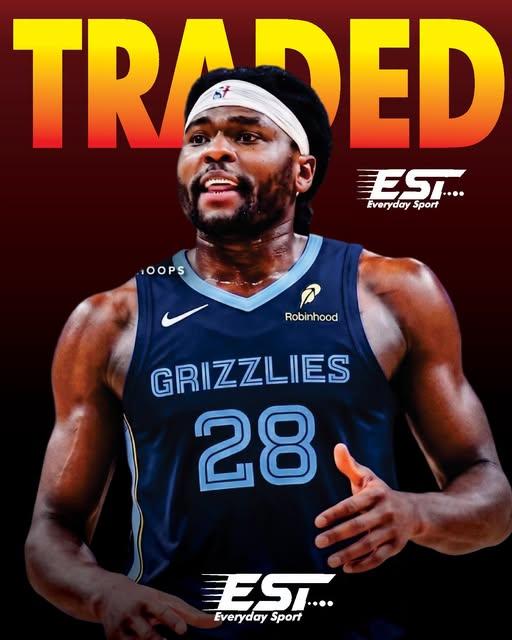
The Oklahoma City Thunder have made the kind of franchise-shifting decision that sends ripples across the NBA landscape only hours after a crushing postseason exit. According to league sources, the Thunder have parted ways with veteran guard Lu Dort following Oklahoma City’s playoff elimination at the hands of the San Antonio Spurs, ending a tenure that spanned one of the most transformative eras in the organization’s rebuild-to-contention timeline.
The move arrives amid growing internal frustration over the Thunder’s offensive inconsistency during the series, particularly from key rotational players expected to complement the team’s young superstar core. Sources familiar with the organization’s thinking indicated that team executives believed significant changes were necessary after the Spurs exposed weaknesses in Oklahoma City’s perimeter execution and half-court efficiency during the postseason matchup.
For many around the league, the decision marks the end of an era for one of the NBA’s most respected developmental success stories. Dort, who entered the league as an undrafted prospect and rapidly became a foundational piece in Oklahoma City, had evolved into a fan favorite, defensive identity-setter and emotional leader inside the Thunder locker room. His departure now raises major questions about the franchise’s offseason strategy and how aggressively Oklahoma City plans to reshape a roster that entered the playoffs with championship aspirations.
The Thunder’s elimination stunned much of the basketball world. Oklahoma City had spent most of the season positioned among the Western Conference elite, fueled by MVP-caliber play from Shai Gilgeous-Alexander and the continued emergence of Chet Holmgren and Jalen Williams. The organization believed it possessed the depth, versatility and defensive discipline necessary for a deep playoff run. Instead, the Spurs controlled critical stretches of the series with superior pace, execution and offensive creativity, exposing vulnerabilities that had lingered beneath Oklahoma City’s regular-season dominance.
Within that context, attention quickly shifted toward several veteran contributors, with Dort emerging as a central figure in internal evaluations. While his defensive intensity remained unquestioned throughout the series, Oklahoma City’s front office reportedly grew concerned about his offensive production and decision-making in key moments. Sources indicated that the organization wanted more consistent floor spacing and secondary scoring alongside Gilgeous-Alexander, particularly in high-pressure postseason possessions where defenses collapsed aggressively into the paint.
Against San Antonio, Dort struggled to find offensive rhythm for extended stretches. The Spurs frequently sagged off him on the perimeter, daring Oklahoma City to beat them from outside while loading additional defenders toward Gilgeous-Alexander’s driving lanes. That tactical approach disrupted the Thunder’s offensive flow and became one of the defining strategic themes of the series.
Several league scouts who observed the matchup noted that San Antonio’s willingness to ignore certain perimeter threats dramatically altered Oklahoma City’s spacing structure. The result was an offense that often appeared compressed and hesitant during critical late-game possessions. For a Thunder team built around pace, drive-and-kick movement and offensive versatility, the stagnation became increasingly alarming as the series progressed.
Dort’s postseason numbers reflected those struggles. Though he continued competing defensively against elite assignments, his offensive inconsistency became difficult to overlook, particularly as Oklahoma City searched for complementary production beyond its primary stars. Team decision-makers reportedly concluded that maintaining the current roster construction could limit the franchise’s championship ceiling moving forward.
The emotional complexity surrounding the move cannot be understated.
Dort represented far more than a rotational player inside the organization. Since arriving in Oklahoma City as an overlooked prospect fighting for a roster spot, he embodied the culture the Thunder sought to establish during their rebuilding years. His relentless defensive effort, toughness and physicality became symbolic of the franchise’s identity under head coach Mark Daigneault.
Teammates routinely praised Dort for setting the competitive tone during practices and games alike. Coaches valued his willingness to defend opposing stars nightly, often taking on physically demanding assignments without complaint. Across the league, opposing players respected his physical strength, lateral quickness and commitment to defensive fundamentals.
There were moments when Dort appeared untouchable within Oklahoma City’s long-term plans.
During previous playoff runs, his defensive performances against elite scorers elevated his national profile. Analysts frequently cited him among the NBA’s premier perimeter defenders, and his development from undrafted guard to cornerstone starter became one of the league’s most celebrated success stories. Fans embraced him precisely because his journey mirrored Oklahoma City’s broader organizational philosophy: development, resilience and internal growth.
But championship contention changes expectations.
What once qualified as admirable developmental progress eventually becomes measured against the highest postseason standards. For Oklahoma City’s leadership group, the Spurs series reportedly accelerated difficult conversations about roster optimization around Gilgeous-Alexander and Holmgren. Sources around the league believe the Thunder are determined to maximize their title window while their young core continues ascending.
That likely means prioritizing shooting, offensive versatility and lineup flexibility at every position.
Executives across the NBA now expect Oklahoma City to be aggressive in exploring offseason opportunities, whether through trades, free agency or internal role restructuring. The Thunder still possess one of the league’s deepest collections of future draft assets, giving them unusual flexibility to pursue major roster upgrades if desired.
League insiders have already begun speculating about potential targets who could better complement Gilgeous-Alexander offensively while maintaining defensive reliability. Oklahoma City’s front office has long emphasized two-way players capable of functioning within positionless systems, and sources expect that philosophy to remain central moving forward.
At the same time, Dort’s market is expected to develop quickly.
Even amid offensive criticism, his reputation as an elite perimeter defender remains strong throughout the league. Multiple playoff-caliber teams are likely to express interest in acquiring a veteran defender capable of guarding premier scorers across multiple positions. Executives value players who embrace difficult defensive assignments, and Dort’s postseason experience only strengthens his appeal despite the disappointing end in Oklahoma City.
Several rival scouts suggested that a change of environment could ultimately benefit both sides. In a different offensive structure, Dort may face less pressure to serve as a secondary scoring option and instead focus more exclusively on defense, transition play and energy contributions. Contending teams seeking toughness and playoff-ready defense could view him as an ideal complementary piece.
Still, the timing of the decision underscores the unforgiving realities of championship pursuit in today’s NBA.
Only months ago, the Thunder were celebrated as one of basketball’s brightest young dynasties in development. Their chemistry, depth and internal growth positioned them as a model organization for sustainable success. Yet postseason basketball often accelerates organizational timelines. Weaknesses become magnified. Rotational questions become existential decisions.
For Oklahoma City, the Spurs series apparently provided enough evidence that adjustments were necessary.
San Antonio’s emergence added another layer of urgency.
The Spurs entered the postseason viewed largely as an ascending young team still ahead of schedule, but their composure throughout the series dramatically shifted league perception. Their ability to dictate tempo, execute defensively and expose Oklahoma City’s spacing concerns revealed a maturity beyond their years. The loss not only ended the Thunder’s season — it challenged assumptions about their readiness to dominate the Western Conference moving forward.
Within Oklahoma City’s front office, sources said there was disappointment not simply in losing, but in how the series unfolded strategically. The Thunder struggled to consistently adapt offensively once San Antonio adjusted defensively. Oklahoma City’s reliance on isolation creation from Gilgeous-Alexander became increasingly pronounced, while role-player production fluctuated game to game.
That inconsistency placed additional pressure on the organization to reevaluate supporting personnel.
Dort ultimately became the most prominent casualty of that reassessment.
The reaction from Thunder fans has already been emotional and divided. Many supporters view Dort as one of the franchise’s emotional pillars and believe his defensive value outweighs offensive limitations. Others understand the organization’s desire to evolve offensively after another disappointing playoff exit. Social media quickly filled with tributes celebrating Dort’s journey from undrafted free agent to respected NBA starter, while debates intensified regarding whether Oklahoma City’s championship ambitions required more dramatic roster changes.
Inside league circles, however, there is widespread understanding of the Thunder’s logic.
Modern postseason basketball increasingly prioritizes spacing, offensive adaptability and lineup versatility. Teams hunt weak shooting threats relentlessly during playoff series, shrinking driving lanes and forcing offenses into uncomfortable adjustments. Oklahoma City’s front office appears determined to avoid recurring postseason limitations by reshaping portions of the supporting cast around its stars.
That calculation is neither sentimental nor personal. It is the harsh arithmetic of contention.
The challenge now becomes balancing improvement without sacrificing the culture that elevated Oklahoma City into contender status in the first place. Dort’s professionalism, toughness and leadership were deeply embedded within the locker room environment. Removing a respected veteran voice always introduces uncertainty, particularly for a relatively young roster navigating championship expectations.
How Gilgeous-Alexander and other core players respond internally could shape the next phase of the franchise’s evolution.
League sources indicated that communication between team leadership and players began shortly after the season-ending loss, with organizational messaging focused on maintaining urgency while continuing to pursue long-term title aspirations. Oklahoma City’s front office reportedly emphasized that difficult roster decisions are inevitable when pursuing championships in an increasingly competitive Western Conference.
The conference landscape itself continues evolving rapidly.
San Antonio’s rise adds another dangerous contender built around elite young talent. Denver remains formidable behind Nikola Jokic. Minnesota’s defensive identity continues strengthening. Dallas, Memphis and Houston all possess ascending rosters capable of postseason disruption. Against that backdrop, Oklahoma City appears unwilling to rely solely on continuity and internal improvement.
Instead, the Thunder are signaling an aggressive commitment to maximizing every competitive advantage.
Parting ways with Dort may only represent the beginning.
League executives expect Oklahoma City to actively explore roster upgrades capable of enhancing playoff shot creation and perimeter shooting. The franchise’s asset flexibility allows it to engage in virtually any major trade conversation this offseason. Whether the Thunder pursue an established star or continue refining depth around their current core remains uncertain, but rival organizations increasingly believe Oklahoma City is entering a more aggressive phase of team building.
For Dort, meanwhile, the next chapter carries significant intrigue.
At just 27 years old, he remains firmly within his prime and possesses a skill set coveted by playoff teams. Defensive specialists with postseason experience rarely remain available long, especially those capable of guarding elite perimeter scorers physically without requiring extensive offensive usage. Coaches around the league continue viewing him as one of basketball’s toughest and most disciplined on-ball defenders.
His departure from Oklahoma City does not erase what he accomplished there.
He helped stabilize the franchise during uncertain rebuilding years. He defended superstars nightly without hesitation. He developed from overlooked prospect into respected veteran through relentless work ethic and perseverance. In many ways, Dort’s journey became inseparable from the Thunder’s own rise back toward contention.
That history ensures his exit will resonate emotionally throughout the organization and fan base alike.
But in the NBA, sentiment rarely outweighs championship calculations for long.
The Thunder believe they are close to title contention. Close enough that every roster spot, every playoff possession and every offensive weakness becomes magnified under scrutiny. Their decision regarding Dort reflects a franchise determined to eliminate vulnerabilities and pursue the next stage of evolution aggressively.
Whether that gamble ultimately elevates Oklahoma City into a true championship powerhouse remains to be seen.
What is already clear, however, is that the Thunder are entering one of the most important offseasons in franchise history — and Lu Dort, one of the defining faces of their rebuild, will no longer be part of it.