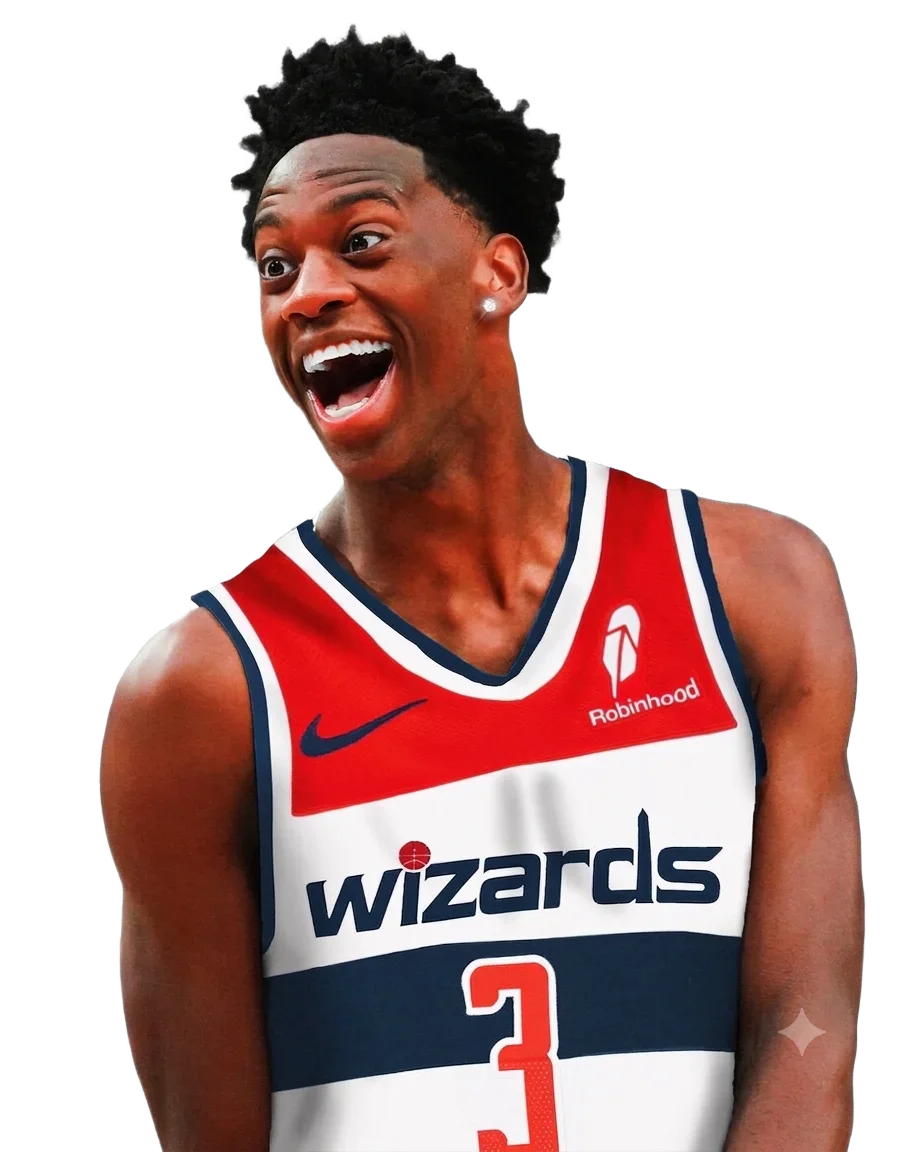
Chris Paul has spent nearly two decades turning order into offense, elevating franchises, extending windows and reshaping expectations everywhere he has gone. Now, at 41 years old and still chasing the one accomplishment that has eluded him throughout a legendary career, the future Hall of Fame point guard is headed to San Antonio.
League sources confirmed Monday that Paul intends to join the Spurs, bringing one of the most accomplished floor generals in NBA history to a franchise entering one of the most fascinating transitional periods in the league. The move pairs one of basketball’s greatest orchestrators with one of its brightest young superstars in Victor Wembanyama, instantly adding intrigue, credibility and postseason expectations to a San Antonio team that believes its rebuild is accelerating far faster than originally anticipated.
For Paul, the decision represents far more than another stop on an already remarkable NBA journey. It is another calculated swing at the championship that has narrowly escaped him despite a résumé packed with All-NBA selections, assist titles, All-Defensive honors and historic leadership credentials. From New Orleans to Los Angeles, Houston, Oklahoma City, Phoenix and Golden State, Paul has consistently transformed teams into contenders or playoff-caliber groups. Yet the Larry O’Brien Trophy remains missing from a career otherwise destined for Springfield.
Now he arrives in San Antonio with a role that may ultimately define the closing chapter of his career: mentor, stabilizer and competitor for a Spurs organization trying to bridge the gap between promising future and immediate relevance.
The fit, on paper, is compelling.
San Antonio spent much of last season searching for consistent structure offensively around Wembanyama, whose generational talent often flashed amid uneven execution and youthful inconsistency. The Spurs possess athleticism, length and upside, but at critical moments lacked the veteran command necessary to organize possessions, control pace and consistently create efficient opportunities late in games. Those are precisely the areas where Paul has built his reputation across 20 NBA seasons.
Even at this stage of his career, Paul remains among the league’s most intelligent offensive conductors. His ability to manipulate defenses, direct teammates into proper spacing and maximize pick-and-roll actions could unlock another level in Wembanyama’s development. The prospect of Paul operating in two-man actions with the 7-foot-4 phenom immediately becomes one of the NBA’s most intriguing partnerships entering next season.
For Wembanyama, the arrival of Paul offers something invaluable for a young superstar still learning how to dominate the league on a nightly basis: a point guard who sees the game several moves ahead.
Paul has long been revered for his precision. Few players in league history have understood timing, angles and decision-making with the same mastery. Throughout his career, elite big men have thrived beside him. Tyson Chandler became an All-Star with Paul orchestrating the Hornets offense. Blake Griffin evolved from athletic marvel into polished offensive weapon during the Lob City era. Deandre Ayton played the best basketball of his career during Phoenix’s run to the 2021 NBA Finals. Even in shorter partnerships, Paul has consistently simplified the game for frontcourt teammates.
Now comes perhaps the most gifted big man he has ever played alongside.
Wembanyama’s combination of length, mobility and perimeter skill creates possibilities unlike anything Paul has previously experienced. The Spurs star can finish above defenders, stretch the floor beyond the arc and create mismatches virtually everywhere on the court. Paul’s patience and surgical passing may help harness those gifts even more effectively, especially in late-game situations where San Antonio often struggled last season.
The Spurs also understand the symbolic importance of this move.
For years, San Antonio built its dynasty around professionalism, accountability and basketball IQ. Gregg Popovich’s championship teams became synonymous with precision and selflessness, traits Paul has embodied throughout his career despite never capturing a title. While the Spurs remain a young roster, adding a veteran of Paul’s stature reinforces the organization’s desire to accelerate its competitive timeline without sacrificing developmental priorities.
League executives have repeatedly noted the impact Paul has on locker rooms and young players. His standards are demanding. His voice carries weight. His preparation has become legendary around the NBA. Those qualities could prove especially important for a Spurs roster still learning how to win consistently at the highest level.
There is also a deeper basketball significance to the move beyond leadership narratives.
San Antonio quietly improved over the second half of last season as Wembanyama grew more comfortable handling offensive responsibility. The Spurs showed flashes of defensive dominance and offensive creativity that suggested a dramatic leap may not be far away. Still, their half-court execution remained inconsistent, especially against experienced teams capable of exploiting mistakes late in games.
Paul directly addresses those concerns.
Even in limited minutes, he remains one of the NBA’s most careful decision-makers. His assist-to-turnover ratios continue to rank among the league’s best, and his ability to dictate tempo remains elite. For a young team prone to rushed possessions and avoidable mistakes, Paul’s presence alone could stabilize entire stretches of games.
And while age has reduced some of his explosiveness, Paul still proved capable of impacting winning basketball during his stint with Golden State. Used in a more flexible role than at previous stages of his career, he embraced adjustments while providing veteran steadiness to a Warriors team navigating injuries and inconsistency. His midrange game remained reliable, his court vision untouched and his competitive fire unmistakable.
The Spurs are betting those qualities translate into meaningful growth for their emerging core.
The move also says something about where San Antonio believes it stands in the Western Conference hierarchy.
The conference remains brutally competitive, with defending champions, established contenders and ascending young teams all crowding the playoff picture. But the Spurs clearly see an opening to accelerate their rise behind Wembanyama, whose rookie and sophomore flashes already convinced many evaluators he could soon become one of the league’s best players regardless of age.
Adding Paul signals a shift from patient rebuilding toward purposeful competition.
That does not necessarily mean championship-or-bust expectations immediately descend upon San Antonio. But it does indicate the organization believes meaningful postseason basketball is now a realistic objective rather than a distant aspiration.
For Paul, the choice of San Antonio reflects both basketball logic and personal ambition.
At this stage, opportunities matter differently. Every season carries increased urgency. Every decision becomes tied to legacy. Paul could have pursued situations prioritizing comfort or familiarity, but the Spurs offer something uniquely compelling: a chance to guide the NBA’s most exciting young talent while still competing in games that matter.
The championship pursuit remains central.
Few players of Paul’s stature have retired without a title despite consistently performing at an elite level. His career has included devastating playoff injuries, heartbreaking collapses and near misses that continue to fuel debates about where he ranks among the greatest point guards in league history.
The closest he came arrived in Phoenix, where he helped lead the Suns to the 2021 NBA Finals before Milwaukee rallied from a 2-0 deficit to win the championship. Injuries also derailed promising postseason runs in Houston alongside James Harden, including the infamous 2018 Western Conference finals against Golden State when a hamstring injury sidelined Paul as the Rockets came within one win of reaching the Finals.
Those moments have lingered over his career narrative.
Yet around the league, Paul’s legacy as one of the greatest pure point guards ever has long been secure. He ranks among the all-time leaders in assists and steals, earned multiple All-NBA First Team selections and maintained elite production deep into his 30s through relentless conditioning and basketball intelligence.
What he seeks now is validation in the only currency sports sometimes unfairly prioritize: championships.
San Antonio may not yet be viewed among the league’s inner-circle contenders, but the organization offers ingredients that matter. Wembanyama already looks capable of becoming a transformative superstar. Popovich remains one of the most respected coaches in basketball history. The Spurs possess cap flexibility, young talent and organizational stability that many franchises cannot match.
For Paul, those factors likely outweighed concerns about age or timeline.
The partnership with Popovich alone adds another fascinating layer. For years, Paul competed against Spurs teams defined by discipline and execution. Now he joins forces with the architect of that culture in what could become one of the final collaborations of two iconic basketball minds.
Popovich has always valued players who think the game at an elite level, and few have done so better than Paul. Their combined experience could create one of the league’s sharpest player-coach dynamics, particularly in guiding a roster still learning situational basketball.
The ripple effects of the move extend beyond X’s and O’s.
National attention around the Spurs will intensify immediately. Wembanyama already commands enormous global interest, but pairing him with Paul adds another layer of watchability and credibility. Television executives, opposing scouts and fans alike will closely monitor how quickly the chemistry develops.
And there is legitimate reason to believe it could happen fast.
Paul has historically adapted quickly to new environments because his game has never relied solely on athleticism. His strengths — vision, leadership, pace control and shot-making intelligence — age more gracefully than explosive scoring styles. That adaptability helped Oklahoma City exceed expectations in 2020 and helped Phoenix transform from lottery team to Finals participant almost overnight.
San Antonio hopes for a similar cultural and competitive boost.
The development of younger guards on the roster may also benefit enormously from Paul’s arrival. Around the league, teammates routinely describe the educational value of simply sharing a backcourt with him. Practices become sharper. Film sessions become more detailed. Offensive reads become clearer.
That mentorship component could become one of the move’s lasting impacts even beyond wins and losses.
Still, expectations will come with scrutiny.
Paul’s durability has become a recurring concern in recent years, particularly deep into seasons. Managing his workload carefully will be critical if San Antonio hopes to maximize his value across an 82-game schedule and potential playoff push. The Spurs will likely prioritize preservation over heavy regular-season usage, allowing Paul to conserve energy for meaningful stretches.
That approach aligns naturally with where he is in his career.
He no longer needs to dominate every possession to influence games. Instead, his value increasingly lies in organization, efficiency and leadership — all areas where San Antonio needed reinforcement.
The broader NBA landscape also makes the timing intriguing.
A league increasingly driven by pace, spacing and athletic versatility still places enormous value on decision-making under pressure. In postseason environments especially, experience and composure remain decisive. Paul brings both in abundance.
And for younger players like Wembanyama, exposure to that level of poise can accelerate development dramatically.
There is a poetic element to this next chapter as well.
Paul entered the league in 2005 as a dynamic young guard tasked with reviving a struggling New Orleans franchise displaced by Hurricane Katrina. Twenty years later, he joins a young San Antonio team built around another transformative talent carrying massive expectations. The roles have changed, but the mission remains familiar: elevate everyone around him.
That has always been Paul’s defining basketball trait.
He makes teammates better. He organizes chaos. He raises standards. Even critics who focus on postseason disappointments rarely dispute his influence on winning basketball.
Now the Spurs are betting that influence can help push them toward contention sooner than expected.
For a franchise searching for its next great era after the Tim Duncan dynasty, the addition of Paul represents more than a veteran signing. It is a statement of intent. San Antonio believes the future is arriving now, and it wants experienced hands helping guide the transition.
As for Paul, the objective remains painfully simple and endlessly difficult.
One more run. One more chance. One final pursuit of the championship that has remained just out of reach across one of the greatest careers the sport has ever seen.