Mark Williams’ Return to Phoenix Signals Suns’ Commitment to Building from the Inside Out
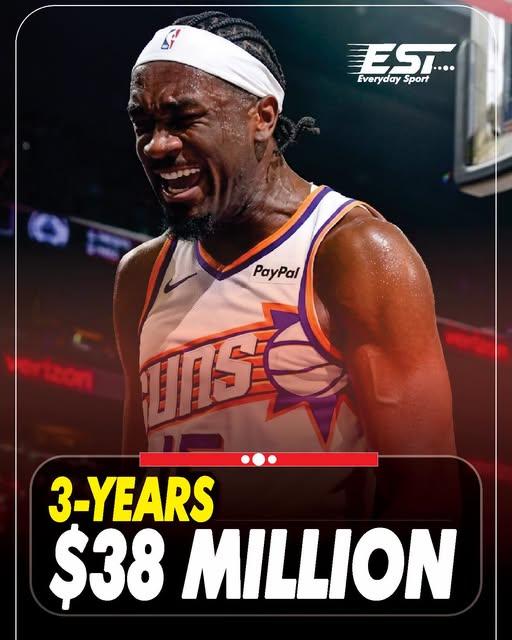
PHOENIX — In the high-stakes chess game of NBA free agency, where splashy signings and blockbuster trades often dominate the headlines, the Phoenix Suns have opted for a quieter but foundational move: retaining their young center Mark Williams on a three-year, $38 million deal. The agreement, first reported by ESPN’s Shams Charania, keeps the 24-year-old big man in the Valley of the Sun as the franchise looks to stabilize its frontcourt and push for contention in a loaded Western Conference.
For a team that has navigated the turbulence of roster turnover, injury woes, and the constant pressure to maximize the prime years of stars like Devin Booker, this re-signing of Williams feels like a deliberate step toward sustainable success rather than a desperate chase for immediate fireworks. At 7-foot-1 with a wingspan that swallows up space in the paint, Williams represents the kind of athletic, rim-protecting presence that modern NBA offenses and defenses crave. His return isn’t just about filling a roster spot; it’s about continuity in a position that has been a revolving door for the Suns in recent memory.
Williams’ journey to this moment has been anything but linear. Selected 15th overall by the Charlotte Hornets in the 2022 NBA Draft out of Duke University, the Norfolk, Virginia native arrived in the league with high expectations. At Duke, he earned ACC Defensive Player of the Year honors in 2022, showcasing the blend of timing, length, and instincts that make him a nightmare for opposing bigs in the post. His college production hinted at a future starter: efficient scoring around the rim, elite rebounding instincts, and the kind of motor that translates to winning basketball.
In his first three seasons with the Hornets, Williams flashed brilliance amid frustration. He played just 43 games as a rookie due to development time and minor nicks, then battled through a slew of injuries in year two that limited him to 19 appearances. By his third season, he was starting to put it together, posting double-double averages and proving he could hold his own against veteran centers. But it was the 2025 draft-day trade that sent him to Phoenix — alongside assets that helped the Hornets rebuild — that truly tested his mettle.
Arriving in Phoenix for the 2025-26 campaign, Williams stepped into a new system, a new culture, and a new set of expectations. The Suns, coming off a season that ended in disappointment, were banking on his youth and upside to anchor the middle. He didn’t disappoint when healthy. Across 60 games, including 55 starts, Williams averaged 11.7 points, 8.0 rebounds, 1.0 assists, 0.9 blocks, and 0.9 steals in 23.6 minutes per night. His field-goal percentage sat at a scorching 64.4%, underscoring his bread-and-butter efficiency in the restricted area.
Those numbers tell only part of the story. Watch the film, and you see a center who has grown into his frame. Williams’ footwork has improved, allowing him to seal defenders effectively on the block or roll hard off screens. His timing on help-side defense has become more instinctive, leading to chase-down blocks and altered shots that disrupt opponents’ rhythm. Rebounding-wise, he battles on both ends, using his length to secure tough caroms in traffic. There were nights when he dominated the glass and protected the rim like a veteran, contributing to double-doubles and providing the kind of second-chance opportunities that fuel Phoenix’s transition game.
Of course, no discussion of Williams’ career is complete without addressing the injury cloud that has followed him. Foot issues, ankle sprains, knee tweaks, and back contusions have sidelined him for significant stretches over the years. In 2025-26 alone, he missed time with foot problems, including a late-season stress reaction that impacted the team’s playoff push. He sat out the final games of the postseason run, a reminder that durability remains the biggest question mark in his development.
The Suns’ medical and training staff have reportedly adjusted their approach with Williams, emphasizing load management and proactive maintenance rather than pushing him through pain. This cautious philosophy likely played a role in his availability for 60 games — a career high — and speaks to the organization’s investment in his long-term health. At just 24, with this new contract locking him in through 2029-30, Phoenix is betting that better management and maturity will help him stay on the floor more consistently.
Financially, the deal strikes a balance. At an average annual value of roughly $12.67 million, it’s a reasonable commitment for a young starter with starter production. It’s fully guaranteed, providing Williams with security while giving the Suns cap flexibility to address other needs in free agency or via trade. Compared to some of the bloated center contracts around the league, this feels prudent — especially for a player who isn’t yet a perennial All-Star but has the tools to grow into one.
What does Williams’ return mean for the broader Suns roster and strategy? Phoenix has been in a state of flux, balancing the need for veteran experience with the infusion of youth. With Williams back, the frontcourt gains stability. Young prospects like Oso Ighodaro and Khaman Maluach — the latter drafted in 2025 — now have a proven veteran to learn from and compete against, creating a competitive depth chart that should push everyone to elevate their game.
This move also aligns with head coach’s vision (and the front office’s) for a more balanced, switchable defense that can still punish teams in the half-court. Williams’ ability to guard one-on-one in space while also dropping back to protect the paint fits the hybrid schemes prevalent in today’s NBA. Offensively, he complements perimeter threats by setting strong screens, finishing lobs, and occasionally stepping out for mid-range jumpers as his game expands. His 77.1% free-throw shooting last season shows progress at the stripe, reducing hack-a concerns in crunch time.
Looking ahead to the 2026-27 season, the Suns will lean on Williams to take another step forward. Increased minutes could see his scoring climb back toward the 15-point mark he approached in Charlotte, especially if the team surrounds him with better spacing. Playoff basketball demands more — higher rebounding totals against physical frontlines, elite rim protection against stars like Nikola Jokic or Anthony Davis, and the mental toughness to battle through fatigue. If Williams can log 65-plus games while maintaining or improving his efficiency, he could emerge as a cornerstone piece alongside Booker and the rest of the core.
Teammates and coaches have praised Williams’ work ethic and coachability since his arrival. He’s described as a quiet leader in the locker room, someone who leads by example with his preparation and film study. In a franchise that values professionalism and buy-in, those intangibles matter as much as the stat sheet. Veterans appreciate his willingness to do the dirty work — boxing out, setting hard screens, and communicating on defense — that often goes unnoticed but wins games.
For Suns fans, this signing brings a sense of relief and optimism. After years of watching big-man experiments and short-term rentals, securing a homegrown talent (via trade) on a team-friendly deal offers hope for sustained competitiveness. The Western Conference remains a gauntlet, with powerhouses like the Denver Nuggets, Minnesota Timberwolves, and others boasting elite frontcourts. Williams won’t single-handedly tilt those matchups, but paired with improved perimeter defense and better health across the roster, he becomes part of a more formidable group.
Beyond the numbers and strategy, Williams’ story resonates on a human level. From McDonald’s All-American to navigating the professional grind of injuries and adaptation, his resilience mirrors the Suns’ own journey. The organization has faced criticism for its win-now moves that sometimes sacrificed future flexibility, but re-signing Williams feels like a bridge between present ambitions and long-term vision. It’s not the sexiest headline, but in the NBA, foundations are built on players like him — reliable, improving, and committed.
As training camp approaches and the Suns fine-tune their roster, all eyes will be on Williams’ foot and overall conditioning. Can he build on last season’s progress? Will the Suns’ depth chart allow him to thrive without overtaxing his body? These questions will define not just his career arc but Phoenix’s ceiling for the foreseeable future.
In agreeing to stay, Williams has expressed excitement about continuing his development in Phoenix, a city that has embraced him and where the fan base craves a return to relevance. For a young man still early in his NBA odyssey, this contract represents validation and opportunity. For the Suns, it’s a vote of confidence in their internal growth strategy.
The basketball world moves fast, and free agency will bring more dominoes to fall. Yet for now, Phoenix has secured one of its key pieces, signaling a clear intent: build smart, stay competitive, and give the big man room to grow. Mark Williams is back in the desert, and with him, the Suns hope to turn potential into production that echoes far beyond this three-year pact.