A Beautiful Gesture: Ohio State Is Finally Giving a Former Coach the Recognition He Always Deserved
COLUMBUS, Ohio — On a sun-drenched afternoon in June 2026, Jim Tressel walked into what he believed was a routine interview with Ohio State athletic director Ross Bjork. Instead, the man known as “The Vest” found himself surrounded by former players, coaches, family, and the weight of Buckeye history. Tears welled as the surprise unfolded: his name would join the exclusive C-Deck Ring of Honor at Ohio Stadium, to be unveiled on Sept. 5 against Ball State.
It was more than a ceremony. It was closure. For a coach who delivered a national championship, restored supremacy in the Michigan rivalry, and embodied Ohio values through sweat equity and sweater vests, the honor arrived as a long-overdue affirmation. In a program defined by legends like Woody Hayes and Paul Brown—the only other coaches in the Ring—Tressel’s enshrinement feels not just right, but restorative.
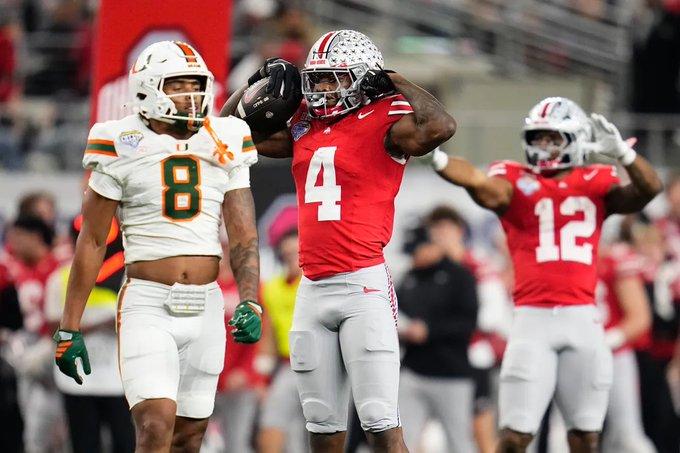
Tressel’s decade in Columbus (2001-10) produced a 106-23 record (officially adjusted due to later NCAA sanctions), six Big Ten titles (or shares thereof), and three BCS National Championship Game appearances. The crown jewel: the 2002 season, when his Buckeyes went 14-0, the first team in modern college football history to finish a season undefeated and untied at that length, capping it with a thrilling double-overtime victory over Miami in the Fiesta Bowl.
That title team wasn’t just dominant; it was resilient. After a rocky start under previous coach John Cooper, Tressel inherited a program hungry for identity. He preached “The Brotherhood,” emphasized academics, and built around a blue-collar ethos that resonated in a state where football is religion. Quarterback Craig Krenzel, running back Maurice Clarett, and a suffocating defense led by Matt Wilhelm and Cie Grant delivered the ultimate prize. The 31-24 overtime win over the defending champion Hurricanes, featuring a game-sealing interception by safety Will Allen, remains etched in Buckeye lore.
The Sweater Vest Era
Tressel arrived from Youngstown State, where he had won four Division I-AA national titles. At Ohio State, he quickly proved he belonged in the big leagues. His teams won at least 10 games in six seasons and reached eight BCS bowls. He produced 67 NFL draft picks, 14 first-rounders, 24 first-team All-Americans, and Heisman winner Troy Smith in 2006.
Advanced metrics from that era underscore the consistency. Tressel’s squads ranked among the national leaders in fewest points allowed multiple times, blending physical run defense with opportunistic passing attacks. In an age before the spread revolution fully took hold, his pro-style offenses still averaged over 30 points per game in championship seasons while controlling the clock effectively.
Against Michigan, the transformation was stark. The Wolverines had owned the rivalry in the 1990s. Tressel, in his introductory press conference, didn’t promise a win—he promised pride. In 2001, his first Buckeye team stunned No. 6 Michigan 31-20 in Ann Arbor. Over the next decade, Ohio State went 9-1 against its archrival (the 2010 win later vacated). That near-perfection restored the psychological edge in one of college football’s fiercest rivalries.
Players speak of Tressel’s influence in near-reverent terms. “He didn’t just coach football,” former offensive lineman Nick Mangold once reflected in interviews. “He coached life. Accountability, preparation, doing things the right way.” Many of his protégés—Smith, Clarett (despite personal struggles), A.J. Hawk, Ted Ginn Jr.—credit him with shaping their post-football trajectories as much as their on-field success.
Off the field, Tressel’s commitment to academics stood out. Eight Academic All-Americans during his tenure highlighted a program balancing gridiron excellence with classroom rigor. His “Team Tressel” initiatives extended that mentorship long after games ended.
The Shadow of Scandal
No retrospective on Tressel’s tenure is complete without addressing the 2010-11 Tattoo-Gate scandal that ultimately led to his resignation. Players, including stars like Terrelle Pryor, traded memorabilia for tattoos at a Columbus parlor owned by a figure under FBI investigation. Tressel knew about the violations as early as April 2010 but did not immediately report them, citing confidentiality concerns tied to an ongoing legal matter.
Ohio State suspended him for the first two games of 2011 and fined him $250,000. The NCAA later imposed broader sanctions: vacated 2010 wins, a postseason ban in 2012, scholarship reductions, and probation. Tressel resigned in May 2011, taking responsibility while many within the program and fan base felt he was scapegoated for player actions in an era when NIL-like benefits existed in gray areas.
In the years since, perspectives have softened. College football has evolved dramatically with conference realignment, massive television deals, and the advent of true Name, Image, and Likeness compensation. What constituted a major violation in 2011 feels quaint compared to today’s transfer portal chaos and seven-figure collectives. Tressel’s fall, some argue, reflected the rigid enforcement of amateurism rules that were already cracking.
Yet Tressel never dwelled publicly on bitterness. Instead, he pivoted to public service. He served as president of Youngstown State, vice president at the University of Akron, and in early 2025 became Ohio’s lieutenant governor under Gov. Mike DeWine. His post-coaching life reinforced the character he preached: service, education, community.
Legacy in Context
Today, as Ohio State under Ryan Day navigates the expanded 12-team College Football Playoff era and Big Ten superpower status alongside Oregon, USC, and others, Tressel’s foundation remains vital. Day has spoken openly about building on the culture established by predecessors. “Coach Tressel understood that coaching is about developing leaders,” Day said in the announcement. “His legacy is measured not just by wins, but by the lives shaped.”
Current Buckeyes echo that. In an era of high turnover via the portal, Tressel’s emphasis on program loyalty and long-term investment feels like a counterbalance. His 2002 team’s chemistry—forged through shared adversity and a clear identity—offers a blueprint as modern rosters turn over rapidly.
Statistically, Tressel’s winning percentage at Ohio State stands among the program’s elite. His ability to recruit and develop talent in the pre-NIL landscape, while maintaining competitive edges in the trenches, highlights a different era of program-building. The 67 NFL Draft selections, including standouts like Hawk (linebacker for the Packers), Mangold (Jets center), and Joey Bosa (though later), underscore sustained professional pipelines.
The Ring of Honor placement alongside Hayes and Brown cements his place in Ohio State pantheon. Hayes, the fiery innovator; Brown, the tactical genius who later revolutionized the pro game; Tressel, the steady steward who revived glory while navigating modern pressures. It’s a fitting trio.
A Gesture That Resonates
The timing of this honor, amid a 2026 season where Ohio State enters with high expectations and a revamped roster, carries symbolic weight. As the Buckeyes chase another title in an increasingly fragmented landscape—with conference champions, at-large bids, and expanded playoffs—the reminder of past excellence grounds the present.
For Buckeye Nation, long loyal despite the scandal’s stain, this feels like validation. Social media erupted with tributes from former players and fans recalling frozen Saturdays, Script Ohio, and Tressel’s calm sideline demeanor. “The Vest” memes resurfaced, alongside genuine appreciation for a coach who delivered results without losing his Midwestern humility.
Tressel’s own words upon the announcement captured the humility: “To be recognized alongside Paul Brown and Woody Hayes is truly humbling. I grew up admiring them… I’m grateful to have been a small part of such a special tradition.”
In an industry often criticized for short memories and transactional relationships, Ohio State’s decision stands as a beautiful gesture indeed. It acknowledges that while no coach is perfect, Tressel’s contributions—112 victories before sanctions, a national title, restored rivalry dominance, and generations of leaders—far outweigh the missteps.
As Sept. 5 approaches, Ohio Stadium will once again roar. The C-Deck will bear Tressel’s name permanently, a visible testament for every recruit, player, and fan passing through the Horseshoe. For a program built on tradition, this recognition reaffirms that the past informs the future.
It reminds us why we love college football: not just the spectacle, but the human stories, the redemption arcs, and the enduring bonds. Jim Tressel gave Ohio State his best years. Now, Ohio State is giving him his due.
In the end, it’s more than signage on a stadium deck. It’s gratitude made concrete. A beautiful gesture for a coach who always deserved it.