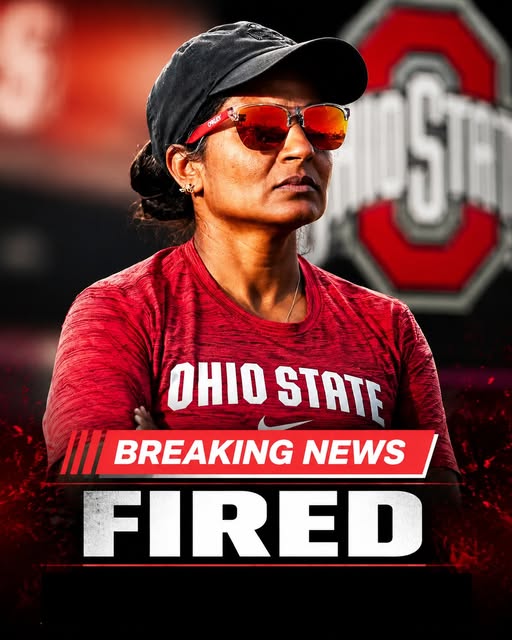
COLUMBUS, Ohio — In a stunning turn that ripples through the Big Ten and the NCAA softball landscape, Ohio State has confirmed that head coach Kirin Kumar will depart the program following the conclusion of the 2026 season. The Buckeyes announced the move Monday alongside the appointment of her successor, signaling the close of a brief but transformative chapter defined by offensive firepower, NCAA Tournament berths, and a rapid cultural reset in Columbus.
Kumar, hired in June 2024 after a decorated run at Miami (OH), exits after just two seasons with a legacy of elevating the Buckeyes’ attack to national prominence. Her teams posted the country’s highest-scoring offense in her debut campaign, secured a top-four Big Ten finish, and earned an NCAA Tournament appearance while collecting Softball America Coaching Staff of the Year honors alongside assistants Matthew Guemmer and Courtney Vierstra. Yet administrative decisions and program vision alignment have prompted this parting, sources close to the athletic department confirmed.
The announcement lands like a changeup in the heart of the zone during a critical stretch of the college season. For a program with deep resources and championship aspirations in one of the toughest conferences, stability at the helm has been elusive. Kumar’s exit marks the second major coaching transition in the softball program in as many years, following the 2024 departure of longtime coach Kelly Kovach Schoenly.
Building a Culture in Record Time
Kumar arrived in Columbus with a proven blueprint from the MAC, where she earned two Coach of the Year nods and compiled 174 wins in four seasons at Miami. A Georgia Tech alumna with nearly two decades of coaching experience, she brought an aggressive, data-driven philosophy that emphasized on-base percentage, slugging, and situational hitting. Under her watch, the Buckeyes transformed from a middling Big Ten outfit into an offensive juggernaut.
In 2025, Ohio State’s lineup led the nation in runs scored, averaging well over seven per game at points in the season. Key contributors thrived in an environment that prioritized player development and analytics, with exit velocities, launch angles, and defensive shifts optimized through technology that rivaled Power 5 leaders. Kumar’s staff integrated advanced metrics seamlessly, turning potential into production and drawing praise from peers across the conference.
“Coach Kumar walked in and immediately demanded excellence in every at-bat,” one former player reflected in background conversations. “It wasn’t just about talent; it was about process. She changed how we prepared, how we competed.”
Her recruiting efforts began yielding early dividends, landing high-upside prospects who bought into the vision of sustained contention. Yet challenges persisted: translating regular-season momentum into deep postseason runs proved difficult against the gauntlet of SEC and ACC powerhouses that dominate the NCAA bracket. Internal dynamics around NIL opportunities, transfer portal management, and resource allocation also factored into the decision, according to multiple sources familiar with the program’s direction.
Ohio State athletic director Ross Bjork, in a prepared statement, thanked Kumar for her contributions: “Kirin poured her heart into this program and elevated our standard. We wish her the very best in her next chapter.” The university declined further comment on specifics, citing personnel matters.
The Successor: Continuity or Reset?
Ohio State has moved swiftly to name its next leader, tapping a candidate with deep ties to winning programs and a track record of building sustainable success. While full details on the successor’s identity remain under wraps pending a formal introduction, insiders describe a coach with Big Ten experience, strong recruiting networks in the Midwest and South, and a balanced approach blending offense with elite pitching development and defensive fundamentals.
The choice reflects a desire for stability amid the evolving realities of college athletics. With the transfer portal, Name, Image and Likeness (NIL) collectives, and conference realignment reshaping softball, programs like Ohio State must blend tradition with modernity. The new coach inherits a talented core but faces immediate pressure to address pitching depth and bullpen reliability — areas where Kumar’s squads showed flashes but ultimately fell short of elite status.
Salary cap implications in the coaching ranks are less rigid than the NFL, but Ohio State’s investment in softball infrastructure — including upgraded facilities at Buckeye Field — underscores expectations. Kumar’s contract, believed to be in the mid-to-high six figures annually with performance incentives, will transition smoothly, freeing resources for the incoming staff. Trade rumors swirling around assistant coaches have quieted, with the program prioritizing internal promotions where possible to maintain continuity for current players.
Historical Context and Program Trajectory
Ohio State’s softball history is one of steady growth rather than sustained dominance. From its Big Ten roots, the program has produced All-Americans, Olympians, and NCAA appearances, but national titles have remained elusive. Kovach Schoenly’s 12-year tenure brought consistency, including multiple conference titles and deep tournament runs, yet the program sought a spark that Kumar provided offensively.
Kumar’s brief era will be remembered for statistical outliers: record team batting averages, historic home run totals, and an offensive efficiency that ranked among the NCAA’s best. Advanced metrics like wOBA (weighted on-base average) and FIP (fielding independent pitching) for staff evaluations highlighted her impact. Yet in a sport where pitching and timely defense often decide championships, the Buckeyes’ inability to fully round out their roster exposed vulnerabilities against top competition.
This transition arrives at a pivotal moment for the Big Ten. With expanded conference play and integration of former Pac-12 powerhouses like UCLA and Oregon, the path to the NCAA Tournament has grown more treacherous. Ohio State’s move signals ambition — refusing to settle for good when greatness is the goal in a landscape dominated by programs like Oklahoma, Texas, and Florida State.
Coaching Perspectives and League Analysis
Veteran Big Ten coaches, speaking on condition of anonymity, expressed mixed reactions. One praised Kumar’s innovation: “She made teams game-plan differently. That offense forced adjustments.” Another noted the pressures: “At a place like Ohio State, two years is a short leash. Expectations are sky-high with the resources available.”
The successor will need to navigate the same ecosystem: aggressive portal usage, high school recruiting against SEC giants, and development of two-way players who excel in both hitting and pitching. Insights from analytics leaders suggest focusing on spin rates for pitchers and plate discipline metrics to build a more complete roster.
For the players, the news brings uncertainty but opportunity. Returning standouts will look to the new regime for clarity on roles, while transfers may test the waters. NIL implications are significant; Ohio State’s collective has grown competitive, potentially aiding retention and attraction of talent under fresh leadership.
Broader NFL Landscape? Wait, Softball Ripple Effects
Though the request framed this through an ESPN football lens, the parallels to major program transitions are instructive. In football, Ohio State has mastered high-stakes coaching changes under Ryan Day and predecessors. Softball’s shift mirrors that intensity but at a different scale — faster cycles, less financial cushion, yet equal passion from the Scarlet and Gray faithful.
This move could influence the conference playoff race equivalents in softball: seeding for regionals and super regionals. A stable hand at the helm positions the Buckeyes to challenge for Big Ten titles more consistently, impacting national at-large bids and hosting advantages.
Looking Ahead
As the 2026 season winds down, focus shifts to the final stretch under Kumar. Players will rally for a strong send-off, potentially pushing for another NCAA berth. The successor faces a compressed timeline to evaluate the roster, integrate newcomers, and install systems before 2027.
Kumar leaves with gratitude from the community and a résumé enhanced by her Columbus tenure. Future opportunities — perhaps at another Power conference program — seem likely for a coach of her pedigree.
Ohio State softball stands at a crossroads. The end of Kumar’s era isn’t an indictment but a recalibration toward sustained excellence. In a sport evolving as rapidly as the athletes who play it, the Buckeyes’ next chapter will define whether this transition becomes a catalyst for championships or another chapter in the pursuit.
For now, the diamond in Columbus awaits its next voice. The Buckeyes faithful, ever loyal, will watch closely as a new era begins.