Urban Meyer has spent much of his career living at the highest altitude of college football. National championships, undefeated seasons, elite recruiting classes and a place in the College Football Hall of Fame established him as one of the defining coaches of his generation.
But the latest chapter of Meyer’s football life has been markedly different.
In May, more than four years after the Jacksonville Jaguars fired him with cause, Meyer lost an arbitration case over the team’s decision not to pay the remaining money associated with his contract. The ruling ended a multimillion-dollar dispute that had lingered since his disastrous 13-game tenure in Jacksonville and left the former coach facing another public reckoning with the most difficult professional episode of his career.
The outcome was significant financially. According to reporting from NBC Sports, the decision saved the Jaguars more than $30 million. The case centered on whether Meyer’s conduct during his time in Jacksonville justified the organization’s decision to fire him for cause. Witnesses included Meyer, former Jaguars kicker Josh Lambo, long snapper Ross Matiscik, punter Logan Cooke and former general manager Trent Baalke.
For Meyer, however, the implications extend beyond the money.
The arbitration ruling represents the latest reminder that the NFL chapter of his career remains inseparable from his legacy, even as he has rebuilt a professional life around college football analysis and broadcasting.
Meyer entered the NFL in 2021 with one of the strongest résumés imaginable. He had won national championships at Florida in 2006 and 2008 and another at Ohio State in 2014. His teams were defined by aggressive recruiting, spread concepts, quarterback development and an ability to turn elite talent into championship-caliber units.
Jacksonville represented a fundamentally different challenge.
The Jaguars had selected Trevor Lawrence with the No. 1 overall pick in 2021 and expected Meyer to provide the structure and development necessary to launch a rebuild. Instead, the experiment collapsed almost immediately.
Jacksonville went 2-11 under Meyer before owner Shad Khan fired him in December 2021. The dismissal came after a series of controversies, including a $300,000 fine for violating NFL offseason workout rules, his decision to remain behind in Cincinnati rather than travel home with the team after a Thursday night game, and Lambo’s allegation that Meyer kicked him during a training-camp practice. Meyer denied the allegation.
The Jaguars ultimately concluded that Meyer’s conduct constituted cause for termination. The arbitration decision upheld that position.
That result effectively closed the financial dispute, but it did not erase the complicated question of how one of the most successful college coaches in modern football struggled so dramatically when he moved to the professional game.
The answer, in part, lies in the structural differences between college football and the NFL.
Meyer’s college teams operated within systems he had spent decades building. He could recruit players who fit his schemes, develop them over multiple seasons and construct an organizational culture around his philosophy. The NFL offered none of those advantages. Players had greater bargaining power, veteran leaders controlled locker-room dynamics and the personnel department operated separately from the coaching staff.
Meyer’s Jacksonville tenure exposed the difficulty of transferring a college management model directly into a professional environment.
Yet his career should not be defined exclusively by those 13 games.
His college résumé remains extraordinary. Meyer won three national championships across Florida and Ohio State and built programs that consistently competed at the highest levels of the sport. He also became a major influence on the modern spread-option era, particularly through the development of mobile quarterbacks and the use of space to create favorable matchups.
At Ohio State, his 2014 championship team went 14-1 and became the first team to win the inaugural College Football Playoff. That season remains one of the strongest examples of Meyer’s ability to construct a roster capable of surviving elite competition.
His fingerprints remain visible throughout college football.
Even after leaving coaching, Meyer has continued to influence the sport through his media work. He returned to FOX’s Big Noon Kickoff after his brief NFL experiment and has increasingly become a prominent voice on the modern game.
In 2026, that role has become particularly visible.
Meyer has offered opinions on quarterback development, coaching changes and the evolving College Football Playoff. He recently discussed Texas quarterback Arch Manning and argued that elite quarterback performance is inseparable from the talent surrounding the position.
He has also spoken extensively about the modern playoff structure, acknowledging that the expanded postseason could have changed the way coaches manage their teams and players.
Perhaps most revealing is the fact that Meyer remains deeply connected to Ohio State and the broader college football community.
In July, he reflected on Ohio State’s 2016 loss to Penn State, a defeat that prevented the Buckeyes from reaching the Big Ten Championship Game. Meyer said he believed a penalty should have been called on the play that ultimately became known as the “Block Six.”
Those moments illustrate the complicated nature of Meyer’s current place in football.
He is no longer a head coach responsible for game plans, depth charts and locker-room management. He is instead an analyst, commentator and elder statesman whose opinions continue to carry weight because of what he accomplished before the NFL.
The personal and professional fallout from Jacksonville, however, remains part of that story.
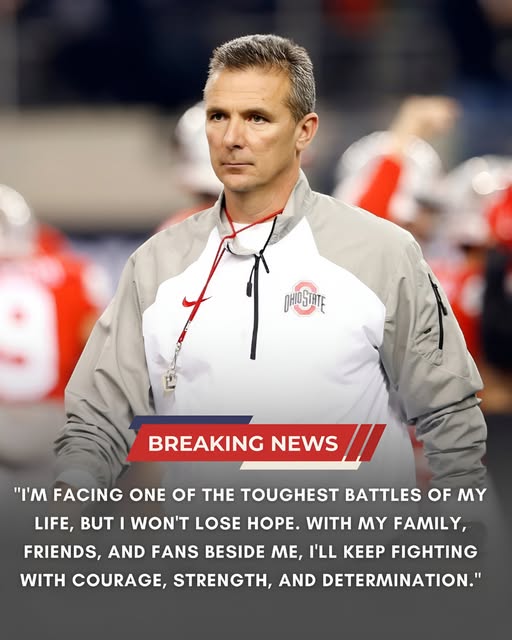
There is no evidence that Meyer is facing a new coaching crisis or that he is currently dealing with a confirmed personal emergency. The available reporting instead points to a difficult professional reckoning surrounding the arbitration decision and the enduring consequences of his Jacksonville tenure.
That distinction matters.
In an era in which social media can turn every difficult moment into a referendum on an individual’s entire career, Meyer’s story deserves more nuance. The NFL failure was real. The controversies were real. The arbitration ruling was real. But so were the championships, the innovations and the decades of success that preceded Jacksonville.
Meyer’s coaching legacy therefore exists in two seemingly contradictory places at once.
One is the college football history book, where three national championships and Hall of Fame recognition secure his place among the sport’s most accomplished coaches. The other is Jacksonville, where his NFL experiment became one of the most dramatic coaching failures of the modern era.
The question now is what comes next.
At 62, Meyer does not appear to be positioning himself for another NFL head-coaching opportunity. His current path is far more closely tied to television, analysis and mentoring within the college football ecosystem.
And perhaps that is where his career can find its most productive final chapter.
Meyer understands football at a granular level. He understands quarterback development, roster construction, offensive spacing, recruiting and the psychological demands of championship competition. Those qualities make him valuable as an analyst even if his NFL tenure permanently changed how his coaching career is viewed.
The arbitration loss may have closed the final financial door on Jacksonville, but it does not have to define the remainder of Meyer’s life in football.
For a coach whose career has always been measured in championships, the most difficult challenge may now be accepting that his legacy cannot be reduced to either the victories or the failures.
The football world has already seen Urban Meyer at his best.
It has also seen him at his worst.
What remains is whether the next chapter can show something different: a veteran coach using the lessons of both experiences to become a more reflective voice in a sport that has changed dramatically since he last stood on an NFL sideline.
For Meyer, that may ultimately prove more meaningful than another coaching job.
The championships are already in the record books. The Jacksonville experience cannot be rewritten.
But the story is not necessarily finished.