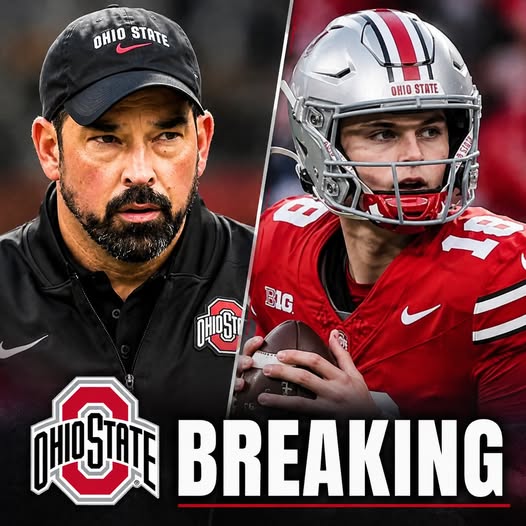
🚨 RYAN DAY FIRES BACK AT CURT CIGNETTI AFTER OHIO STATE’S THRILLING WIN OVER INDIANA
Ohio State Buckeyes head coach Ryan Day is at the center of the conversation after his team’s dramatic 19–15 victory over the Indiana Hoosiers, a result that has sparked debate over officiating, coaching decisions and the intensity of one of college football’s biggest matchups.
Following the hard-fought contest, Indiana head coach Curt Cignetti reportedly expressed frustration with the officiating, raising questions about several decisions that unfolded during the game. Day’s response has added another layer to the discussion, placing the spotlight on two of the Big Ten’s most closely watched programs.
The matchup delivered the kind of drama expected when two competitive teams meet with significant stakes on the line. Ohio State ultimately secured the four-point victory, but Indiana’s performance ensured the result would be discussed well beyond the final whistle.
For the Buckeyes, the win represented an important result against a determined Indiana team that refused to back down. For the Hoosiers, the narrow defeat was a frustrating ending to a contest in which they remained within striking distance until the closing stages.
RYAN DAY AND CURT CIGNETTI AT THE CENTER OF THE CONTROVERSY
Day and Cignetti have developed reputations as demanding coaches who expect their teams to compete with confidence and discipline. Their differing reactions to a close game highlight the emotions that can emerge when the outcome comes down to a handful of critical plays.
Cignetti’s reported complaints about the officiating have drawn attention to the role of referees in determining the flow of a high-stakes college football game. In a contest decided by just four points, individual calls can become major talking points, particularly when they occur during crucial possessions.
However, without the complete details of Day’s reported response, the precise wording and extent of his remarks cannot be independently established from the information available here. What remains clear from the supplied account is that the disagreement has become part of the broader conversation surrounding Ohio State’s victory.
Day’s position as the leader of a program with national championship ambitions means that every major win carries expectations beyond the scoreboard. Ohio State is judged not only on whether it wins but also on how it performs against quality opposition when the pressure rises.
Cignetti, meanwhile, has built Indiana into a team that expects to compete against the Big Ten’s established powers. A narrow loss to Ohio State may be disappointing, but it also demonstrates how competitive the matchup was between the two programs.
OHIO STATE SURVIVES A TOUGH CHALLENGE
The 19–15 final score tells the story of a closely contested game in which neither team had enough separation to make the outcome comfortable. Ohio State did what it needed to do to leave with the victory, while Indiana came up short despite keeping the contest competitive.
For the Buckeyes, escaping with a win against a determined conference opponent can prove valuable as the season progresses. Close games test a team’s composure, execution and ability to respond when the margin for error becomes extremely small.
Ohio State’s ability to finish ahead on the scoreboard ultimately separated the two sides. In college football, however, a victory does not automatically eliminate questions about performance, strategy or controversial moments.
That is particularly true when the opposition believes important decisions did not go its way. Such disagreements can dominate postgame discussions, even when the winning team has already secured the result.
Indiana’s four-point defeat also illustrates how little separates victory from disappointment in competitive matchups. A single successful possession, defensive stop or decisive play can change the narrative surrounding an entire game.
For Cignetti and his coaching staff, the challenge now is to assess what happened, identify areas for improvement and ensure the frustration surrounding the officiating does not overshadow the lessons available from the performance.
OFFICIATING TAKES THE SPOTLIGHT
Officiating controversies are hardly new to college football. With passionate fan bases, intense rivalries and major postseason implications, disputed calls can quickly become the dominant subject after a close contest.
The Ohio State–Indiana game has generated that type of discussion because the final margin was narrow enough to invite scrutiny of the decisive moments.
Nevertheless, evaluating officiating fairly requires examining the specific plays, the applicable rules and any available explanations from the officials or conference. Without that evidence, it would be premature to conclude that a particular decision determined the outcome.
Coaches are naturally protective of their players and programs, especially after a loss that feels within reach. At the same time, winning teams often prefer to focus on their execution rather than become involved in disputes over individual calls.
The difference between those perspectives can create compelling postgame storylines, but the actual details matter. Day’s precise comments and Cignetti’s complete remarks would be necessary to establish exactly where the two coaches disagree.
For now, the controversy adds another dimension to an already competitive matchup and reinforces how closely both programs are being watched.
WHAT THE RESULT MEANS FOR INDIANA
Despite the disappointment of losing 19–15, Indiana can take lessons from a game that remained competitive against Ohio State. The Hoosiers will need to evaluate their execution in critical situations and determine what improvements could help them turn a narrow defeat into a future victory.
Cignetti’s leadership will be important as Indiana works to maintain its focus. His team cannot afford to allow postgame frustration to become a distraction from preparation, development and the challenges ahead.
The loss may also influence how observers assess Indiana’s standing among the Big Ten’s contenders. A close result against a major opponent can offer useful evidence about a team’s competitiveness, although rankings and postseason prospects depend on the wider body of results throughout the season.
For Ohio State, the victory provides an opportunity to build momentum while reviewing the mistakes and difficult situations that made the contest so close.
Ultimately, both programs will be judged by what they do next. Ohio State must continue producing results against strong opposition, while Indiana must demonstrate that it can learn from a narrow defeat and remain competitive throughout the season.
THE BOTTOM LINE
Ryan Day and Curt Cignetti are now linked by a postgame controversy that has placed officiating under the microscope following Ohio State’s 19–15 victory over Indiana.
The Buckeyes earned the result, but the discussion surrounding the game shows that the final score is not always the end of the story. Close contests often produce disagreements, emotional reactions and questions that continue long after the teams leave the field.
Still, the central facts should remain separate from unverified claims: Ohio State won 19–15, Cignetti reportedly questioned the officiating, and Day’s exact response requires confirmation before it can be accurately quoted or characterized in detail.
As the season continues, both teams will have an opportunity to move beyond the controversy and let their performances do the talking. For Ohio State, that means building on the win. For Indiana, it means responding with resilience.
One thing is certain: this matchup has given college football fans plenty to debate, and the conversation surrounding Day, Cignetti and the officiating is unlikely to disappear immediately.