Ohio State Emerges as the Betting Market’s Favorite for the 2026 National Championship
Ohio State has already won one important battle before playing a single snap in 2026.
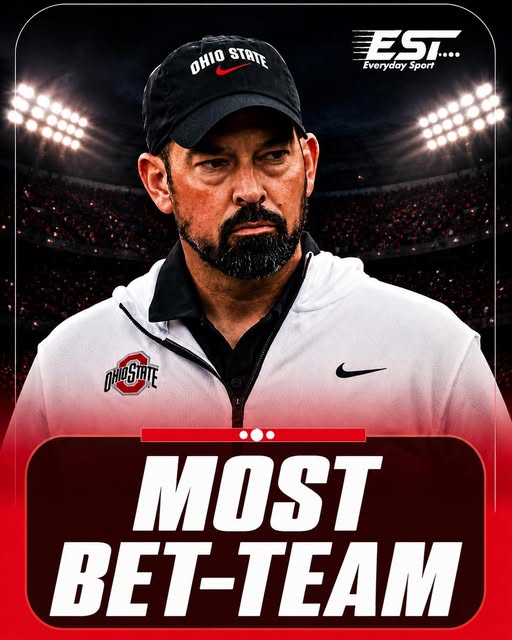
The Buckeyes have emerged as the most-bet team to win the national championship at DraftKings, leading the market in both number of tickets and total money wagered since the release of the first Associated Press Top 25 poll, according to the betting data cited by DraftKings. The development adds another layer of expectation to a program that enters the season as the No. 1 team in the country and faces one of the most demanding schedules in the expanded College Football Playoff era.
The betting interest is notable because Ohio State is not simply attracting the largest volume of casual wagers. The Buckeyes are leading in both tickets and money, suggesting that their appeal extends across the betting market rather than being driven exclusively by a large number of small wagers.
That distinction matters.
Ohio State enters the 2026 season with the combination bettors typically seek when projecting a national champion: elite recruiting talent, proven championship infrastructure, a returning starting quarterback, a premier wide receiver and enough depth to survive the physical demands of a 17-game season.
The AP poll has reinforced that perception. Ohio State received 40 first-place votes to claim the No. 1 position in the preseason rankings, with Oregon second, Georgia third, Notre Dame fourth and Texas fifth. The Buckeyes’ position also gives the Big Ten the top two teams in the country for the first time in 65 years.
But the betting market is not simply reacting to a preseason ranking.
It is reacting to the roster.
Quarterback Julian Sayin returns after a promising 2025 season, giving coach Ryan Day continuity at the most important position on the field. More significantly, Ohio State returns Jeremiah Smith, one of the most dynamic offensive weapons in college football. Smith has already established himself as a centerpiece of the Buckeyes’ offense, and his continued development gives Ohio State a matchup problem that few defenses can solve with conventional coverage.
The 2026 roster also reflects the modern reality of championship-level college football: Ohio State has used recruiting, development and the transfer portal to maintain a roster capable of competing at the highest level. The program’s official roster lists Smith among its returning receivers and features an experienced collection of veterans and transfers across the offensive and defensive units.
The bigger question is whether Ohio State can convert that talent into consistent offensive efficiency when the games become more difficult.
That was the issue that ultimately followed the Buckeyes through the latter stages of the 2025 season. Ohio State finished 12-2, but its season ended with offensive struggles in the Big Ten Championship Game and College Football Playoff. Protection problems and an inability to consistently sustain the offense against elite opponents exposed the difference between being talented enough to dominate the regular season and being complete enough to win the championship.
The program has responded with changes to its offensive structure.
Arthur Smith is now the offensive coordinator, with Tyler Bowen serving as offensive line coach and run-game coordinator and Billy Fessler overseeing the quarterbacks and passing game. That combination points toward an offense expected to become more physical and balanced while preserving the explosive passing elements that have become a defining feature of Ohio State football.
For Day, that evolution could determine whether the Buckeyes remain merely the preseason favorite or become the team still standing in January.
The defensive side presents a different challenge.
Ohio State lost significant production from last year’s unit, including several players who moved on to the NFL. The Buckeyes nevertheless enter the season with considerable defensive talent and a revamped coaching structure led by defensive coordinator Matt Patricia, with Tim Walton serving as co-defensive coordinator and secondary coach.
The transition will be watched closely because championship teams are rarely built on offense alone.
Ohio State’s defense was a major reason the program captured the national championship during the 2024 season, and the standard in Columbus has become exceptionally high. Replacing elite defensive production while integrating new players requires more than individual talent. It requires communication, tackling consistency, third-down execution and the ability to generate pressure without compromising coverage.
Jermaine Mathews Jr. provides one of the team’s most important pieces of experience in that process. After starting all 14 games in 2025 and earning Third Team All-Big Ten recognition, Mathews elected to return for his senior season. He had previously contributed to Ohio State’s 2024 national championship team and enters 2026 as one of the veteran leaders in the secondary.
The schedule leaves little room for a prolonged adjustment period.
Ohio State is scheduled to face Texas, Indiana and Oregon, three programs with legitimate College Football Playoff aspirations. Indiana is particularly intriguing after completing an undefeated 16-0 championship season in 2025 before entering 2026 ranked No. 6 nationally. Oregon, meanwhile, begins the season No. 2 and represents another major Big Ten obstacle.
That schedule makes the Buckeyes’ position at the top of the betting market more complicated than it might initially appear.
A national championship wager is ultimately a projection of what happens months from now, not an evaluation of how a team looks in August. Ohio State must navigate the regular season, the Big Ten Championship race and then potentially three playoff games against teams capable of exploiting any weakness.
The expanded 12-team playoff has changed the calculus. A team no longer needs to be perfect to reach the postseason, but the value of earning a high seed remains enormous because it can provide a substantially more favorable path through the bracket. For Ohio State, the objective will therefore extend beyond simply qualifying.
The Buckeyes need to position themselves to host or receive the most favorable possible postseason route.
That is where the betting market’s enthusiasm becomes particularly interesting.
The fact that Ohio State leads both tickets and money indicates widespread confidence, but betting volume is not a prediction of inevitability. The market can identify perceived value, but it cannot account for every variable that will emerge over a five-month season: injuries, quarterback performance, offensive line cohesion, defensive development and the volatility of conference play.
It also creates a psychological dynamic around the program.
Ohio State will not sneak up on anyone.
Every opponent will have the opportunity to measure itself against the No. 1 team in the country. Every mistake will be amplified. Every close game will generate questions about whether the Buckeyes are living up to their preseason billing.
That pressure is familiar territory for Day.
Since arriving in Columbus, Day has consistently assembled teams capable of competing for championships. Ohio State’s 2024 national title demonstrated that the program can finish the job when its roster, coaching and execution align at the right moment. The challenge now is sustaining that level while adapting to a radically different college football environment shaped by the transfer portal, revenue sharing, expanded postseason access and increasingly aggressive roster management.
There is no NFL-style salary cap governing Ohio State’s roster construction, and therefore no traditional cap implications attached to the Buckeyes’ championship pursuit. Instead, the relevant financial battlefield is the broader college model, where NIL opportunities, revenue sharing and roster resources have become central components of team building.
Ohio State has embraced that reality.
The result is a roster with championship expectations before the first kickoff.
For the Buckeyes, however, the betting numbers will mean very little once the season begins. Tickets and dollars cannot block a pass rush, convert third-and-short or protect Sayin when an elite defense brings pressure.
What they can do is provide a snapshot of national confidence.
Right now, that confidence is overwhelming.
Ohio State is No. 1 in the AP preseason poll. It has one of the nation’s most talented rosters. It returns Sayin and Smith, possesses significant depth and has made changes designed to address the offensive problems that contributed to last season’s postseason disappointment.
And, according to the latest DraftKings betting data cited ahead of the 2026 season, more bettors are backing the Buckeyes to win the national championship than any other team — both in the number of wagers and the amount of money committed.
The prediction will ultimately be settled on the field.
For now, though, the betting market has made its position unmistakable: if the 2026 college football season becomes a referendum on which program is most likely to win it all, Ohio State begins with the strongest vote of confidence.