CHATTANOOGA, Tenn. — In a development that has sent fresh ripples through the NFL community and beyond, a Hamilton County grand jury has formally indicted former New York Jets first-round linebacker Darron Lee on a charge of first-degree murder in the death of his 29-year-old girlfriend, Gabriella Carvalho Perpétuo. Prosecutors have dropped a related tampering-with-evidence count to zero in on the more serious allegation, signaling a sharpened focus as the case hurtles toward trial. Lee, 31, remains held without bond in the Hamilton County Jail, his once-promising athletic trajectory now overshadowed by allegations of premeditated violence that authorities say left Perpétuo with catastrophic injuries inconsistent with any accident.
The indictment, returned in early June 2026, marks a significant escalation since Lee’s arrest in February. Hamilton County District Attorney Coty Wamp has confirmed the state is pursuing a first-degree murder conviction, which carries a potential life sentence in Tennessee. A decision on seeking the death penalty looms in the coming weeks. Lee’s next court appearance, an arraignment where he entered what amounted to a not-guilty plea, has fueled speculation about the defense strategy, especially with the recent hiring of prominent former Hamilton County DA Neal Pinkston to lead his legal team.
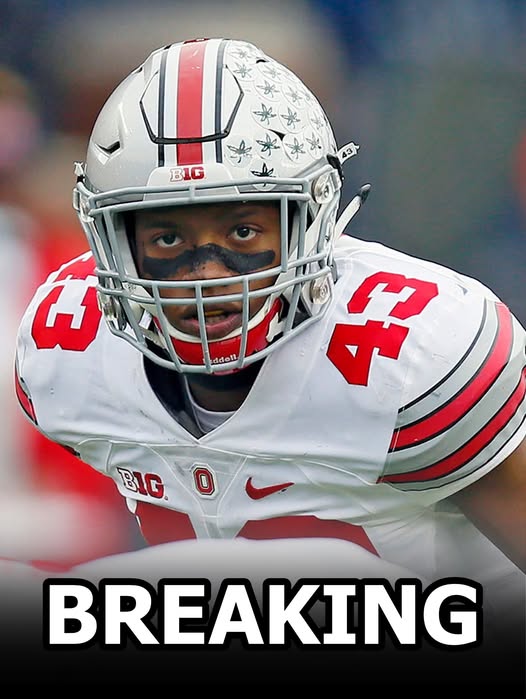
For those who followed Lee’s football career, the news lands with particular weight. A standout at Ohio State and a 2016 first-round pick (No. 20 overall) by the Jets, Lee embodied the explosive athleticism that defines modern NFL linebackers. At 6-foot-1 and 232 pounds, he possessed the speed to cover tight ends in man coverage and the burst to knife through gaps as a blitzer. His college tape at Ohio State, where he contributed to the 2014 national championship team, showcased a player comfortable dropping into coverage or pursuing ball carriers sideline to sideline. NFL scouts raved about his combine performance and instincts.
Yet even in his playing days, glimpses of off-field turbulence emerged. Now, those threads are being woven into a darker narrative by prosecutors.
The Night That Changed Everything
According to court records and testimony from Hamilton County Sheriff’s Office Detective Brian Lockhart, deputies responded to a CPR call at a rented home in Ooltewah, Tennessee, on Feb. 6, 2026. Lee told responders he believed Perpétuo had fallen in the shower due to complications related to narcolepsy and that he had found her unresponsive on the couch. What investigators encountered told a different story.
The medical examiner ruled Perpétuo’s death a homicide caused by multiple blunt force injuries. The autopsy detailed a grim catalog: a broken neck, severe brain trauma, multiple hematomas, bone fractures, stab wounds (including a penetrating wound to the abdomen), significant facial trauma, black eyes with heavy swelling, and large circular human bite marks on her shoulder and thigh. Blood evidence was found throughout the home, alongside signs of attempted cleanup and broken glass in the kitchen. A shattered microwave added to the scene of chaos. Lee’s account, investigators said, did not align with the physical evidence.
Compounding the prosecution’s case is digital evidence presented in earlier hearings. Lee reportedly consulted ChatGPT more than 12 hours before calling authorities, inquiring about injuries like bruising to both eyes and “two stabby looking wounds,” and asking how to seek medical help without involving police. Such details, while not yet fully litigated at trial, have been highlighted as potentially incriminating.
Perpétuo, a 29-year-old from Florida, had been in a relationship with Lee. Family and friends have remembered her privately, but public details remain limited out of respect during the ongoing legal proceedings.
A Pattern of Alleged Violence
The current charges do not exist in isolation. Court records reveal Lee’s history of domestic violence allegations spanning multiple states. In April 2023, Dublin, Ohio, police responded to an incident involving Lee and a female relative (his mother, per some reports). He faced charges of domestic violence and assault after allegedly punching the woman in the face multiple times and pushing her. Lee later pleaded guilty to attempted assault, receiving a $500 fine, probation, and other conditions.
Additional prior incidents involved allegations of assault against the mother of his child and others, including claims of choking and threats. Lee was on probation in Ohio and Florida at the time of Perpétuo’s death. These patterns, prosecutors argue, speak to a troubling cycle. Defense attorneys have previously contested details, but the cumulative record now looms large as the murder case advances.
Lee’s Football Journey: From Buckeye Star to Journeyman
To understand the fall, one must revisit the rise. Born in Chattanooga, Tennessee, on Oct. 18, 1994, Lee starred at New Albany High School in Ohio before becoming a key piece of Urban Meyer’s Ohio State machine. In 2015, as a junior, he recorded strong numbers in tackles, tackles for loss, and sacks, helping the Buckeyes dominate. His combination of size, speed (he ran in the 4.4s range), and football IQ made him a consensus top prospect.
Drafted by the Jets in 2016, Lee started as a rookie and showed flashes, particularly in coverage. Over his career, he appeared in games for the Jets (2016-18), Kansas City Chiefs (2019), Buffalo Bills (2020), and briefly the Las Vegas Raiders. Pro Football Reference credits him with 273 total tackles, 4 sacks, 3 interceptions, and 2 forced fumbles across his NFL tenure. He was a versatile ‘backer in an era increasingly demanding hybrid defenders who could rush the passer, cover slots, and stop the run.
Yet consistency and injuries, alongside off-field issues, limited his trajectory. He never quite became the Pro Bowl-caliber player many projected. By the early 2020s, his NFL days were behind him, transitioning into life after football—a phase where, by all accounts, personal struggles intensified.
Broader Implications for the NFL and Domestic Violence
This case arrives amid the league’s ongoing efforts to address domestic violence and player conduct. The NFL’s personal conduct policy has evolved since high-profile incidents in the 2010s, with commissioner Roger Goodell emphasizing accountability. While Lee is a former player, his story revives uncomfortable questions about vetting, support systems for athletes post-career, and the intersection of fame, physicality, and impulse control.
Experts note that professional football’s inherent violence can sometimes blur lines when transitioning to civilian life, though most players navigate it successfully. Advanced metrics from Lee’s playing days—PFF grades on run defense, coverage snaps, and blitz efficiency—highlighted a talented but not elite contributor. His story adds to a small but tragic list of former players entangled in serious legal issues.
For the Ohio State program, a source of immense pride with its championship pedigree and pipeline to the pros, the association stings. Buckeye alumni and coaches have largely remained silent publicly, focusing on the judicial process, but privately, many express shock given Lee’s on-field discipline.
The Road Ahead: Legal Strategy and Human Cost
With Pinkston, a seasoned former prosecutor, now on board, Lee’s defense is expected to scrutinize the timeline, digital evidence, and forensic details. Questions about intent, premeditation, and alternative explanations will be central. The defense has expressed hope in the case’s direction, per recent statements.
For Perpétuo’s family and loved ones, no legal maneuver can restore what was lost. Advocates for domestic violence survivors see this as another call to examine warning signs—probation violations, prior incidents—and strengthen intervention resources.
As the case proceeds toward trial, likely later in 2026 or 2027, it serves as a stark reminder of the fragility of life and the long shadow cast by unaddressed issues. Darron Lee, once celebrated for game-changing plays on autumn Saturdays and Sundays, now faces the highest stakes in a Tennessee courtroom. The football world watches, not with cheers, but with a somber recognition that the game’s physical and emotional demands do not end when the final whistle blows.
This tragedy underscores broader societal challenges: the need for better mental health support for athletes, robust domestic violence prevention, and accountability that transcends celebrity. In the NFL landscape, where stars are built and broken weekly, Lee’s story is a cautionary tale—one of untapped potential colliding with personal demons, leaving devastation in its wake.