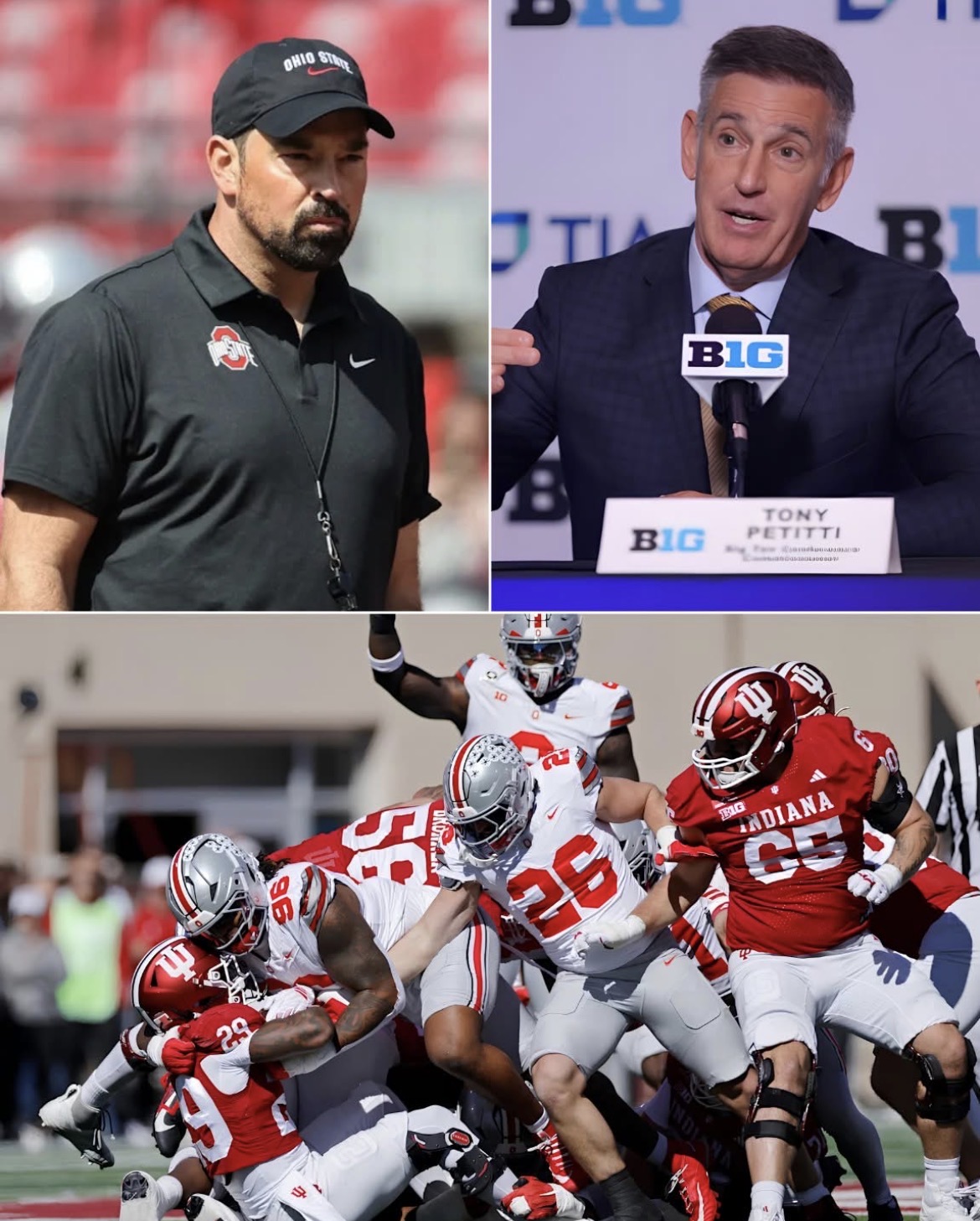
BIG TEN UPDATE: Tony Petitti Faces Growing Questions Over Transparency Following Indiana-Washington Controversy.
The controversy surrounding the Indiana Hoosiers’ dramatic loss to the Washington Huskies has placed the Big Ten’s officiating transparency and accountability procedures under renewed scrutiny, creating another significant challenge for commissioner Tony Petitti as the conference navigates an increasingly demanding college football landscape.
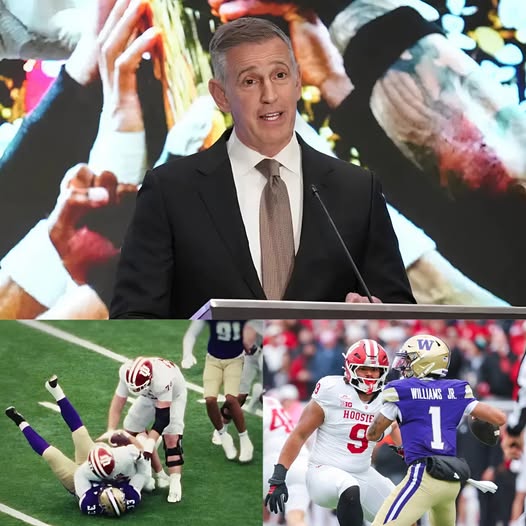
Indiana suffered a heartbreaking 27-24 overtime defeat against Washington on Saturday, Nov. 21, at Husky Stadium in Seattle. The result delivered a significant setback to the Hoosiers’ championship ambitions and immediately generated conversations about the circumstances surrounding the game, the officiating process and the importance of transparency in critical moments.
Although questions have emerged about the conference’s handling of the situation, no independently verified public announcement has established that Petitti has issued a final disciplinary or investigative ruling specifically concerning the Indiana-Washington contest.
That distinction matters, particularly as the Big Ten continues working to strengthen confidence in its officiating operations.
For Petitti, the situation presents another opportunity to demonstrate how seriously the conference takes questions about accountability, communication and the integrity of competition.
Indiana’s Disappointing Defeat Raises Questions
Indiana entered the Washington matchup with significant expectations, knowing that a victory would strengthen its position in the Big Ten Championship race and improve its prospects of defending its national title.
Instead, the Hoosiers left Seattle with a damaging defeat.
Washington delivered an impressive performance, overcoming Indiana in overtime after the two teams finished regulation tied at 24. The Huskies ultimately secured the 27-24 victory, giving their home crowd a memorable result and leaving Indiana facing difficult questions about its postseason position.
The game featured several momentum swings, with both programs having opportunities to take control.
Indiana initially demonstrated its offensive potential, but Washington continued responding whenever the Hoosiers threatened to create separation. The Huskies eventually forced overtime and capitalized on their opportunity to complete the upset.
The decisive sequence came in the extra period. Washington’s defense stopped Indiana’s final scoring opportunity, with Paddy McAteer’s 37-yard field-goal attempt blocked by Drew Azzopardi.
That play sealed the result.
However, the broader conversation surrounding the game has extended beyond the final score. Questions about how officiating decisions are communicated, how replay reviews are handled and what information should be available to viewers have become increasingly important topics throughout college football.
Tony Petitti’s Leadership Under the Spotlight
As Big Ten commissioner, Petitti carries responsibility for overseeing one of college football’s most influential conferences.
His leadership involves more than managing television agreements, conference expansion and commercial partnerships. Maintaining public confidence in the fairness and consistency of competition is equally important.
Officiating controversies can create difficult situations for conference leadership, particularly when coaches, players and supporters seek explanations about decisions made during important games.
The challenge is finding the appropriate balance between protecting the integrity of the officiating process and providing enough information for the public to understand how important decisions are reached.
The Big Ten has already taken steps toward improving transparency.
In September 2026, the conference announced expanded access to replay reviews during television broadcasts of games officiated by Big Ten crews. The initiative was designed to provide viewers with greater insight into the review process, including communication between game officials and replay personnel.
That development followed criticism surrounding the controversial Michigan-Western Michigan finish.
The decision demonstrated that the conference recognized the importance of making replay procedures more visible rather than expecting supporters to accept explanations after controversial situations.
The Replay Transparency Debate
Transparency has become an increasingly important issue in modern college football.
With millions of viewers following games through television and digital platforms, controversial decisions can quickly become national discussions. Supporters expect explanations when important calls influence the outcome of closely contested games.
Replay technology was introduced to help officials correct mistakes and make more accurate decisions.
However, technology alone cannot eliminate controversy. The effectiveness of replay depends on the quality of available footage, the interpretation of the rules and the communication between officials responsible for reviewing important situations.
The Big Ten’s expanded replay initiative represents an attempt to address some of those concerns.
Under the conference’s announced approach, broadcasts can provide access to live communication between the referee and replay official, alongside video footage being examined during the review process.
Such access gives viewers a better understanding of how decisions are evaluated.
It also creates an opportunity for supporters to hear the reasoning behind certain rulings instead of relying exclusively on postgame explanations.
Nevertheless, greater transparency does not guarantee universal agreement. Some decisions will remain subjective, and supporters of opposing teams may interpret the same footage differently.
What matters is whether the conference can demonstrate that its officials consistently follow established procedures.
What the Controversy Means for Indiana
For Indiana, the immediate priority remains recovering from the disappointing defeat and preparing for its remaining regular-season responsibilities.
Curt Cignetti’s team entered the Washington matchup with national championship expectations, but the loss complicated its postseason outlook.
The Hoosiers now face additional pressure to finish the regular season strongly and improve their position in the College Football Playoff conversation.
The defeat also highlighted the importance of execution in decisive moments.
Indiana had opportunities to secure the victory but could not finish the job in overtime. Washington deserves credit for taking advantage of its opportunity and delivering the defensive play that ultimately decided the contest.
Cignetti acknowledged Washington’s performance after the game, recognizing that the Huskies made the crucial play when it mattered most.
For Indiana supporters, however, the disappointment is understandable. Expectations have risen considerably, and every defeat carries additional significance when a program is competing for championships.
The Big Ten’s Next Challenge
The latest discussion surrounding officiating transparency reinforces the importance of consistent communication across the conference.
Petitti and the Big Ten leadership must continue demonstrating that officiating decisions are evaluated through established procedures and that legitimate questions receive appropriate attention.
If the conference announces an official determination concerning the Indiana-Washington game, the details of that decision will be important.
Supporters will want to understand whether the conference reviewed specific incidents, whether any procedural concerns were identified and whether changes to existing officiating protocols are necessary.
Until an official statement or documented ruling becomes available, however, claims about a final decision should be treated cautiously.
One thing is clear: confidence in officiating remains essential to the credibility of college football.
The Big Ten has already recognized that greater transparency can help strengthen that confidence. The challenge now is ensuring that those commitments are consistently reflected in the way games are officiated and reviewed.
For Petitti, the Indiana-Washington aftermath represents another reminder that the conference’s responsibility extends beyond the scoreboard.
And for the Hoosiers, the focus must eventually return to the field, where their remaining performances will determine how their championship aspirations unfold.