Indiana Makes Major Recruiting Statement as Elite Quarterback Lukas Prock Commits to Curt Cignetti’s Hoosiers
Indiana football has continued to build momentum on the recruiting trail, and head coach Curt Cignetti has secured another important piece for the program’s long-term future.
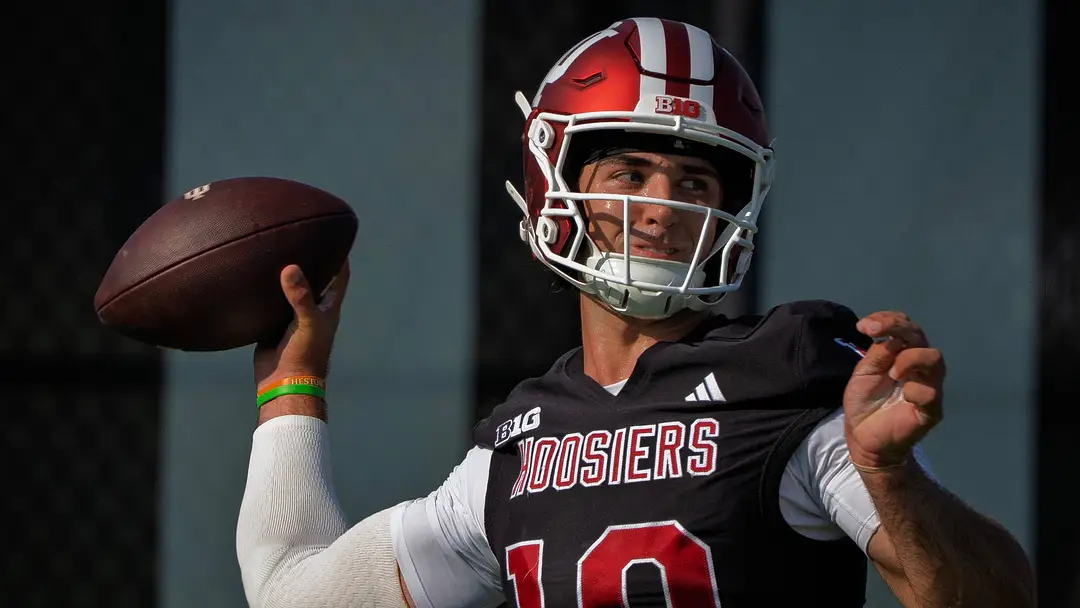
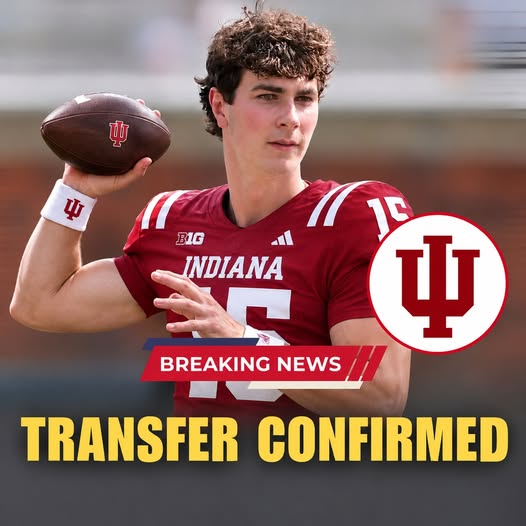
Quarterback Lukas Prock, one of the highly regarded prospects in the 2028 recruiting class, announced his commitment to Indiana on July 23, choosing the Hoosiers over several prominent programs. His decision represented another significant recruiting victory for Cignetti, whose success in Bloomington has helped transform Indiana into a destination capable of competing with established college football powers.
Prock’s commitment came during a particularly productive stretch for the Hoosiers. Just days earlier, Indiana had landed five-star wide receiver Monshun Sales, the nation’s top-ranked receiver in the 2027 class according to 247Sports. Adding a quarterback with Prock’s potential strengthened the impression that Indiana was beginning to translate its success on the field into greater recruiting influence.
For a program that spent decades trying to establish itself among the Big Ten’s most competitive teams, the developments represented a notable change in direction.
Indiana wins an important recruiting battle
Prock selected Indiana from a group of finalists that included Ohio State, Michigan, Notre Dame and Florida. Each program offered a strong football tradition and an opportunity to compete at a high level, making the Hoosiers’ success in the recruitment particularly significant.
The New Jersey prospect had attracted considerable attention before making his decision. He was regarded as one of the leading quarterbacks in the 2028 class and had reportedly received more than 40 scholarship offers.
At the time of his commitment, 247Sports’ composite rankings placed him among the nation’s top 10 quarterbacks and among the top 70 overall prospects in his class. On3’s current recruiting listing also reflects a five-star evaluation, illustrating the level of attention surrounding his development.
Prock’s decision gave Indiana an early foundation for its 2028 recruiting class. Rather than waiting until later in his high school career to make a final choice, he decided that Bloomington offered the environment he wanted as he continued preparing for the next level.
That early commitment could become valuable for the Hoosiers. A quarterback who joins a recruiting class early can help establish relationships with other prospects, strengthen the program’s recruiting pitch and give the coaching staff a central figure around whom to build an offensive group.
A quarterback with impressive production
Prock’s appeal extends beyond his recruiting ranking. His high school production has provided a glimpse of the passing ability that made him an attractive target for major college programs.
During his 2025 season at The Hun School in Princeton, New Jersey, Prock threw for 4,330 yards and 41 touchdowns while completing 73.1% of his passes. He also recorded seven interceptions, demonstrating an ability to produce significant offensive numbers while limiting costly mistakes.
Those figures helped establish him as one of the more productive young quarterbacks in his recruiting class.
His performances also attracted attention because of the level of competition on his schedule. Prock demonstrated an ability to generate explosive plays, distribute the football and consistently move his offense down the field.
At 6-foot-2 and approximately 195 pounds, he has a physical profile that offers room for continued development. His arm talent, accuracy and experience operating a productive passing offense give Indiana an intriguing quarterback prospect to monitor over the coming seasons.
Of course, high school production does not guarantee immediate success at the college level. Prock will still need to adjust to the speed, physical demands and complexity of major-college football. But his early numbers provide a strong starting point for his development.
Cignetti’s rebuilding of Indiana’s recruiting identity
The significance of Prock’s commitment becomes clearer when viewed against the larger transformation taking place under Cignetti.
When Cignetti arrived in Bloomington, Indiana was not traditionally viewed as a program that could consistently win recruiting battles against schools such as Ohio State, Michigan, Notre Dame and Alabama.
That perception has changed considerably.
Cignetti brought a demanding approach, a strong emphasis on player development and a belief that Indiana could compete against the nation’s best. His success on the field has strengthened that message, giving the Hoosiers a more convincing argument when pursuing highly recruited prospects.
The program’s national championship success further elevated its profile. Winning at that level changed the conversation surrounding Indiana football and demonstrated that the Hoosiers could build a team capable of competing for the sport’s biggest prize.
Recruiting victories such as Prock’s commitment suggest that the coaching staff is attempting to turn that breakthrough into sustained success.
The addition of Sales, followed by Prock’s decision, also offered a glimpse of Indiana’s ambitions. The Hoosiers are not simply looking for experienced transfers to fill immediate needs. They are increasingly pursuing talented high school players who can develop within the program and contribute to its future.
That distinction matters. A sustainable championship contender needs more than a collection of short-term solutions. It needs a consistent pipeline of young talent, particularly at positions that influence the direction of an offense.
The quarterback position remains central to Indiana’s future
Quarterback development has been an important part of Indiana’s recent rise.
The program benefited from the performances of Kurtis Rourke before Fernando Mendoza helped lead the Hoosiers to their national championship breakthrough. Those seasons demonstrated the importance of finding quarterbacks who can operate the offense efficiently and deliver in high-pressure situations.
Cignetti and his staff now face the challenge of maintaining that standard.
Prock will have to earn his opportunities, compete with other quarterbacks and learn the system before any expectations about his eventual role can be established. His commitment does not guarantee a starting position, nor does it mean he will immediately become the centerpiece of the offense.
However, securing a highly regarded quarterback early in the recruiting process gives Indiana another opportunity to plan for the future.
It also provides the coaching staff with time to build a relationship with Prock, evaluate his progress and identify the supporting talent needed to maximize his abilities.
For a program seeking to remain among the nation’s leading teams, that long-term planning is essential.
A statement about Indiana’s growing ambitions
Prock’s decision should not be viewed as an isolated recruiting headline. It is another indication of how much Indiana’s position in college football has changed.
The Hoosiers are increasingly competing for prospects who once might have considered Bloomington an unlikely destination. Their ability to attract interest from nationally recognized recruits reflects the combined influence of coaching, player development, on-field results and the opportunity to be part of a rising program.
There is still work ahead. Prock must complete his high school career, continue developing and eventually make the transition to college football. Indiana must also keep strengthening its recruiting classes and maintain the competitive standard established under Cignetti.
But the commitment gives the Hoosiers another reason for optimism.
For Cignetti, the next challenge is turning recruiting momentum into a roster capable of sustaining Indiana’s success. For Prock, the opportunity is to develop into the quarterback the Hoosiers believe he can become.
The commitment does not guarantee championships or immediate playing time. It does, however, reinforce an increasingly important message in Bloomington: Indiana intends to compete for elite talent, and the program believes its future can be built alongside the nation’s best prospects.