🚨 OFFICIATING CONTROVERSY: Controversial Roughing-the-Passer Call Sparks Outrage as Ohio State Survives Indiana
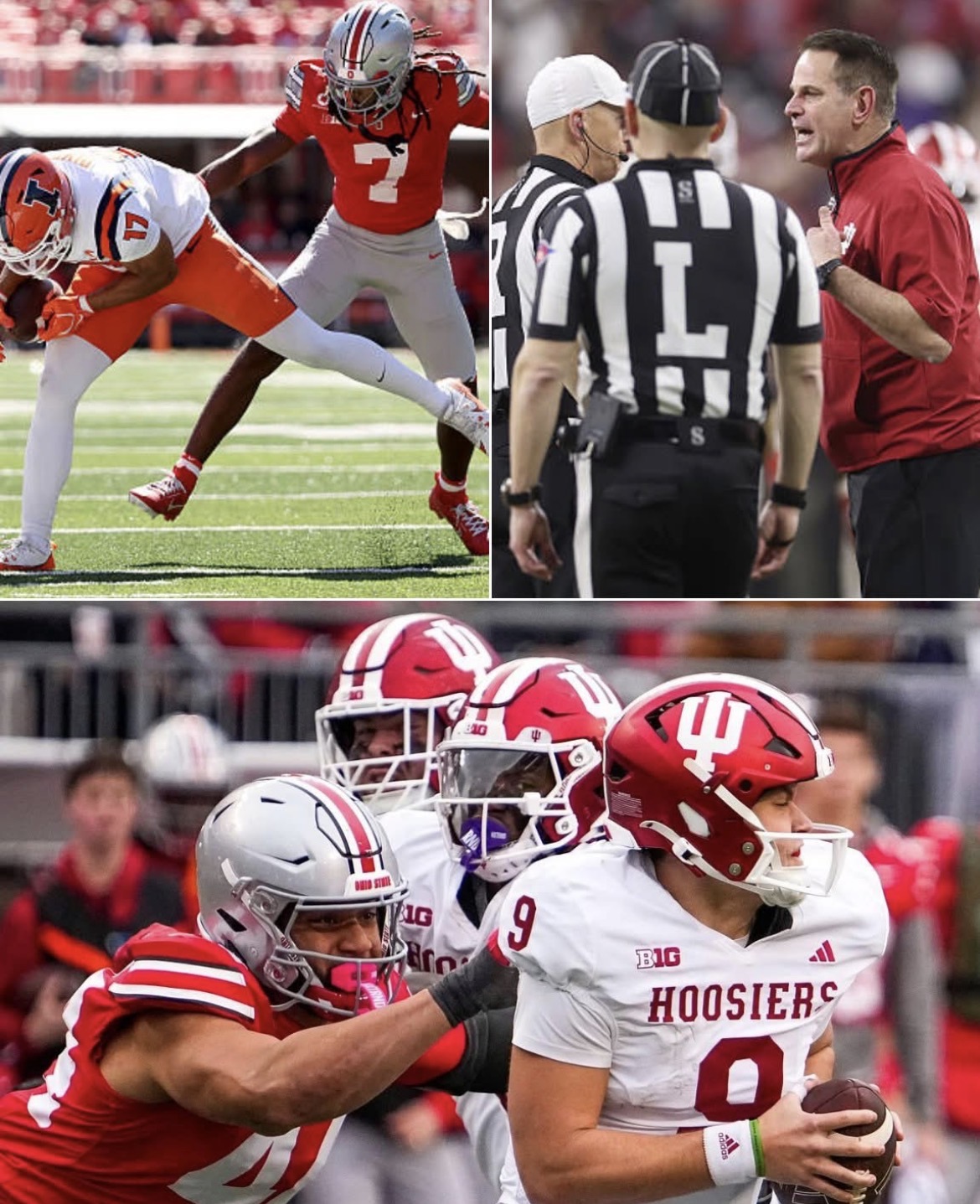
Ohio State’s 19–15 victory over Indiana has been overshadowed by a controversial roughing-the-passer penalty against Jermaine Mathews Jr., sparking outrage among Buckeyes fans and drawing a strong reaction from FOX analyst Joel Klatt.
Ohio State escaped with a hard-fought 19–15 win over Indiana, but the final score has not stopped a growing debate over one of the game’s most controversial officiating decisions.
A disputed roughing-the-passer penalty involving Jermaine Mathews Jr. has become a major talking point among Buckeyes fans, who believe the call threatened to change the outcome of an intensely contested matchup. The controversy gained even more attention following FOX analyst Joel Klatt’s angry reaction to the officials, adding another layer to the discussion surrounding the decision.
For Ohio State, the victory was the ultimate objective. However, the circumstances surrounding the penalty have left fans questioning the consistency of officiating and the influence a single ruling can have in a game decided by just four points.
A Controversial Call Takes Center Stage
In a matchup where every possession carried significant weight, the disputed penalty quickly emerged as one of the defining talking points.
Roughing-the-passer penalties are designed to protect quarterbacks from dangerous or illegal contact. Officials must determine whether a defender’s actions violate the rules, often making split-second decisions in situations involving considerable speed and physical contact.
However, those decisions can become particularly contentious when the consequences are significant.
That was the case in Ohio State’s narrow victory over Indiana. The penalty against Mathews Jr. drew criticism from Buckeyes supporters, who questioned whether the officials had made the correct decision in a crucial moment.
With the game ultimately decided by four points, the call attracted even greater scrutiny. In a contest this close, a penalty can influence field position, extend an opponent’s possession and potentially create additional scoring opportunities.
Although the final result favored Ohio State, the controversy has fueled debate over what might have happened had the officials reached a different conclusion.
Joel Klatt’s Reaction Adds Fuel to the Debate
The controversy received another major boost following FOX analyst Joel Klatt’s angry reaction to the officiating decision.
Klatt’s response brought additional attention to a call that was already generating discussion among Ohio State fans. His reaction also highlighted the frustration that can arise when a penalty becomes a major factor in a tightly contested game.
As one of college football’s prominent television analysts, Klatt’s commentary carries weight among viewers who look to experienced voices for analysis of controversial moments.
His response has helped keep the conversation focused on the officials’ decision and whether the penalty was justified under the applicable rules.
Still, strong reactions from analysts and fans do not automatically establish that a call was incorrect. Evaluating the decision requires examining the play itself, the relevant rule and the available video evidence.
That distinction is important in a sport where high-speed contact can make even experienced officials’ decisions difficult to assess in real time.
Nevertheless, Klatt’s reaction has intensified the debate, ensuring that the disputed penalty remains a central storyline following Ohio State’s victory.
Why the Penalty Matters
In college football, officiating decisions can have an enormous impact on the momentum of a game.
A roughing-the-passer penalty can provide an offense with valuable yardage and, depending on the circumstances, an automatic first down. Such a ruling can keep a drive alive, change field position and give the offense another opportunity to move closer to the end zone.
Those consequences become even more significant when the scoreboard leaves little room for error.
Ohio State’s 19–15 win over Indiana was a four-point contest, meaning that even a single scoring opportunity could have changed the final outcome.
That reality explains why the disputed call has generated such a strong response from Buckeyes supporters.
However, it is equally important to recognize that penalties must be judged according to the rules rather than the eventual score. A call should not be considered incorrect simply because it benefits one team or puts another in a difficult position.
The central question is whether the contact involving Mathews Jr. met the criteria for roughing the passer.
Without a detailed examination of the play and the relevant officiating rule, it would be premature to declare the decision definitively right or wrong.
Ohio State Gets the Win, but Questions Remain
Despite the controversy, Ohio State left the matchup with a 19–15 victory over Indiana.
The narrow result underscored how competitive the contest was, with the Buckeyes doing enough to finish ahead of their opponent. However, the officiating debate has complicated the postgame conversation, shifting attention away from the result and toward the decisions made by the officials.
For Indiana, a four-point defeat leaves little room to ignore moments that potentially affected the game’s trajectory. For Ohio State, the victory remains on the scoreboard, even as its supporters express frustration over a call they believe deserved greater scrutiny.
The controversy also reflects a broader challenge facing college football: maintaining confidence in officiating while making difficult decisions in real time.
Officials are responsible for enforcing complex rules in a sport defined by speed, physicality and split-second judgment. Their decisions will inevitably face scrutiny, particularly when they occur during pivotal moments.
That scrutiny is part of the game, but it also reinforces the importance of consistent rule enforcement and clear explanations when controversial decisions arise.
The Debate Continues
Ultimately, Ohio State secured the 19–15 win, but the roughing-the-passer penalty against Jermaine Mathews Jr. has become one of the most discussed moments surrounding the matchup.
The anger among Buckeyes fans, combined with Joel Klatt’s reaction, has intensified calls for a closer examination of the decision.
Whether the penalty was justified will depend on the specific details of the play and how they align with the rulebook. Until those details are thoroughly assessed, the controversy remains a subject of debate rather than definitive proof of officiating error.
One thing is clear: in a game decided by four points, a disputed penalty can quickly become bigger than the final score.
Ohio State got the victory, but the officiating controversy has ensured that questions about the call will remain part of the postgame discussion.