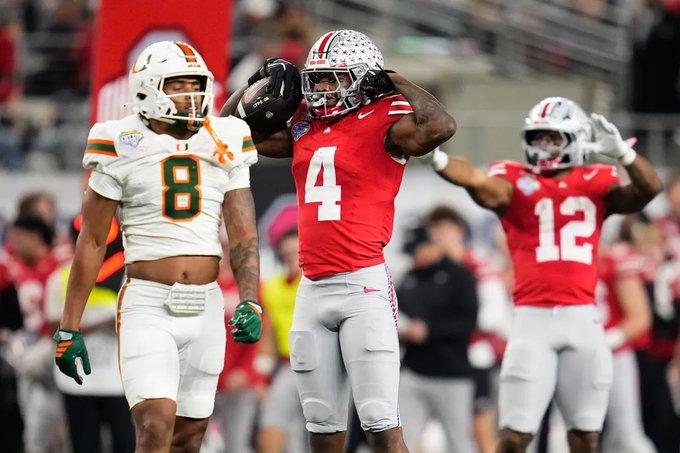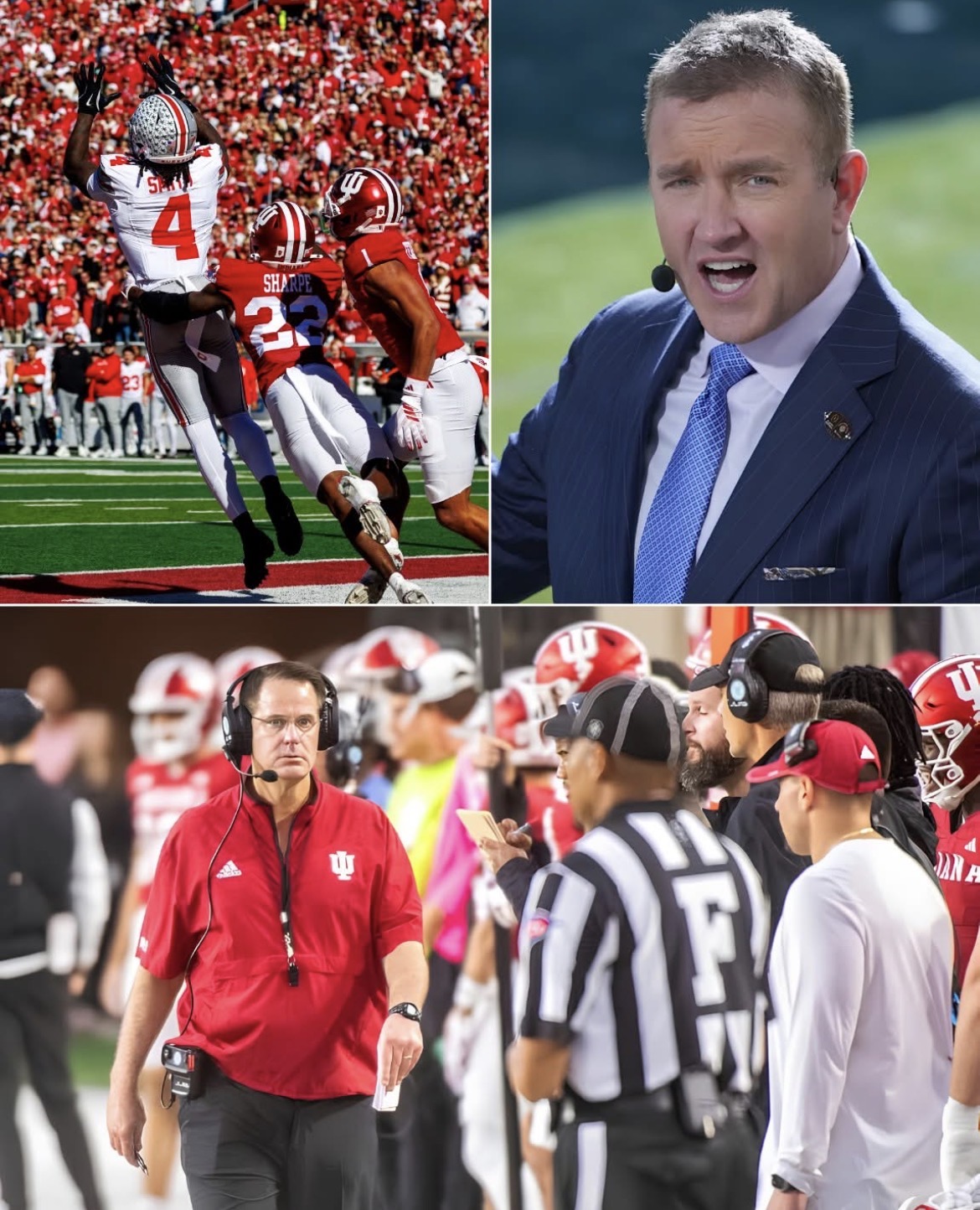
Kirk Herbstreit Sparks Controversy After Questioning Roughing-the-Passer Penalty in Ohio State’s Win Over Indiana
Kirk Herbstreit has sparked debate among college football fans after questioning the roughing-the-passer penalty called against Ohio State defensive back Jermaine Mathews Jr. during the Buckeyes’ narrow 19–15 victory over Indiana. The controversial call has drawn attention to the officiating in a fiercely contested matchup, with Herbstreit’s reaction adding another layer to the discussion surrounding one of the game’s most talked-about moments.
Ohio State escaped with the four-point victory, but the game left plenty for fans, analysts and college football observers to debate. From the intensity of the defensive battle to the significance of individual officiating decisions, the contest delivered drama that extended beyond the final whistle.
At the center of the discussion was the penalty involving Mathews Jr., a play that quickly became a talking point because of its potential impact on the game. Herbstreit’s questioning of the decision caught the attention of Buckeyes supporters and reignited the familiar debate about how roughing-the-passer rules should be interpreted in high-stakes college football games.
Herbstreit’s Reaction Puts Officiating Under the Spotlight
Herbstreit, one of college football’s most recognizable analysts, has spent years evaluating the sport’s biggest games and breaking down the decisions that can influence their outcomes. His reaction to the penalty against Mathews Jr. added credibility to the discussion for viewers who were already questioning the officials’ interpretation of the play.
Roughing-the-passer penalties are designed to protect quarterbacks from dangerous or unnecessary contact after they release the football. However, applying the rule can be difficult when defenders are moving at full speed and have limited time to adjust their momentum.
That challenge becomes even more significant when the game is closely contested and every possession matters.
In Ohio State’s matchup with Indiana, the penalty became a focal point because of the circumstances surrounding the play and the broader importance of the contest. Herbstreit’s questioning of the call encouraged fans to examine whether the officials had made the correct judgment under the circumstances.
Although the available description does not establish the precise details of the contact or the officials’ explanation, the reaction illustrates how quickly a single penalty can become a major storyline in a nationally significant game.
Jermaine Mathews Jr. Becomes Part of the Debate
Mathews Jr. found himself at the center of the controversy after the officials penalized him for roughing the passer. For a defensive player, such a call can be particularly frustrating because defenders must balance aggressive play with the responsibility to avoid prohibited contact.
Defensive backs are expected to play physically, close passing lanes and disrupt opposing offenses. At the same time, they must remain disciplined when pursuing quarterbacks, particularly when a play is reaching its conclusion.
The roughing-the-passer rule requires officials to distinguish between legitimate defensive contact and actions that cross the line. That distinction is not always straightforward, especially when a defender’s momentum carries him toward the quarterback.
When a questionable penalty occurs in a game decided by a small margin, the scrutiny becomes even greater. Supporters of the penalized team may view the decision as an unnecessary disadvantage, while opposing fans may argue that officials must enforce player-safety rules consistently.
In this case, Herbstreit’s reaction helped fuel the discussion surrounding Mathews Jr. and the officiating crew.
Still, without a complete account of the play and the officials’ rationale, it would be premature to conclude that the penalty was definitively incorrect. The central question remains whether the contact met the criteria for roughing the passer under the applicable rules.
Ohio State Holds Off Indiana in a Defensive Battle
Despite the controversy, Ohio State secured a 19–15 victory over Indiana in a game that highlighted the importance of defensive execution and discipline.
The four-point margin left little room for error, placing additional emphasis on the plays that shaped the outcome. In tightly contested football games, a penalty, a missed opportunity or a critical defensive stop can influence the direction of an entire possession.
Ohio State ultimately did enough to emerge victorious, while Indiana was left to reflect on a defeat in which the final score demonstrated how closely the teams competed.
The result also ensured that discussion about the matchup would not be limited to the performances of the players. When a significant officiating decision becomes a major talking point, attention naturally shifts toward the officials’ responsibilities and the consistency with which the rules are enforced.
For Ohio State, the priority was securing the win. For Indiana, the narrow defeat provided another reason for fans to examine the decisive moments that separated the teams.
However, the result should not be reduced to one penalty without a complete assessment of the game. Football outcomes are determined by numerous plays, including offensive execution, defensive adjustments, turnovers, field position and coaching decisions.
The roughing-the-passer call was one part of a larger contest, even as it attracted considerable attention afterward.
Why Roughing-the-Passer Calls Continue to Generate Debate
The controversy surrounding Mathews Jr. reflects a broader challenge facing college football officials.
Quarterback protection remains an important part of the sport, with rules intended to reduce unnecessary contact and limit the risk of injury. Yet defenders must also have a reasonable opportunity to complete legitimate tackles when they cannot avoid contact after committing to a pass rush or pursuit.
That balance can produce disagreement among fans, coaches and analysts.
Some observers believe officials should exercise greater restraint when contact appears incidental or unavoidable. Others argue that player safety must remain the priority, regardless of the score or the stage of the game.
The challenge is ensuring that the same standards are applied consistently.
When similar plays receive different interpretations across games, supporters understandably demand clearer explanations. Consistency helps players understand their responsibilities, gives coaches a clearer framework for teaching technique and allows fans to trust the officiating process.
Herbstreit’s reaction to the Ohio State-Indiana penalty has brought those questions back into focus.
A detailed replay review and an explanation of the specific rule applied would provide a stronger foundation for determining whether the officials made the correct decision. Without that information, much of the debate remains centered on interpretation rather than a definitive ruling.
What the Controversy Means for Ohio State and Indiana
For Ohio State, the immediate takeaway remains a hard-fought 19–15 win. The Buckeyes can point to the result as a successful outcome in a competitive matchup, although the discussion surrounding the penalty may continue to follow the game.
Mathews Jr. and the Ohio State defense will also remain part of the conversation as fans revisit the key moments from the contest.
Indiana, meanwhile, will have to move forward from the narrow loss. While controversial officiating decisions can become an easy focus after a defeat, teams must ultimately evaluate the full performance and identify the areas that need improvement.
The matchup also reinforces the importance of discipline in critical situations. Defensive players must understand how to pursue quarterbacks within the rules, while officials must make accurate decisions under pressure.
For analysts such as Herbstreit, these moments provide an opportunity to examine how the rules are enforced and whether their application serves the game’s competitive and safety objectives.
The Debate Is Far From Over
Herbstreit’s questioning of the roughing-the-passer penalty against Mathews Jr. has added another talking point to Ohio State’s narrow victory over Indiana.
The 19–15 result gave the Buckeyes the win, but the controversy surrounding the call has ensured that the officiating remains part of the postgame discussion.
Ultimately, the key issue is not simply whether fans agree with the penalty. It is whether the decision was consistent with the rules and whether officials can clearly explain the judgment behind it.
Until the play receives a definitive, rule-based assessment, disagreement among college football fans is likely to continue.
One thing is clear: in a game decided by four points, every significant moment receives additional scrutiny. And when an experienced analyst like Herbstreit questions a major penalty, the conversation can extend well beyond the field.
Ohio State leaves with the victory, Indiana is left to regroup, and the debate over the roughing-the-passer call involving Mathews Jr. has become one of the defining talking points from their hard-fought encounter.