Indiana Hoosiers Face Backfield Questions After Washington Defeat as Personnel Decisions Raise Concerns About Offensive Direction.
Indiana’s disappointing defeat against Washington has created another round of questions about the Hoosiers’ offensive approach, particularly regarding their backfield rotation and the decisions surrounding personnel during a critical stretch of the game.
The Hoosiers entered their Nov. 21 matchup against the Washington Huskies looking to strengthen their postseason position and maintain their hopes of defending their national championship. Instead, Indiana suffered a frustrating 27-24 overtime defeat at Husky Stadium, leaving its College Football Playoff aspirations in a significantly more complicated position.
While much of the postgame discussion centered on Indiana’s quarterback situation, missed opportunities and special-teams struggles, the running back rotation also attracted attention.
The Hoosiers have dealt with injuries and inconsistency throughout the season, forcing the coaching staff to make adjustments as it searches for the right combination of players. Against Washington, those challenges were especially noticeable as Indiana attempted to maintain offensive balance against a physical Huskies defense.
Indiana’s offensive struggles become increasingly difficult to ignore
Indiana’s offensive problems were not limited to one position against Washington. The defending national champions struggled to maintain consistency throughout the afternoon, and their inability to sustain drives ultimately contributed to their second loss of the season.
The Hoosiers started aggressively, producing an explosive 74-yard touchdown connection between quarterback Grant Wilson and wide receiver Charlie Becker on their opening offensive play.
Wilson also contributed a rushing touchdown in the first quarter, helping Indiana build an early offensive rhythm.
However, that momentum disappeared as the game progressed.
After scoring 14 points in the opening quarter, Indiana struggled to generate consistent production. The offense experienced several consecutive unsuccessful possessions, leaving the defense under pressure to contain Washington’s attack.
Indiana’s inability to maintain offensive momentum became particularly concerning in the second half.
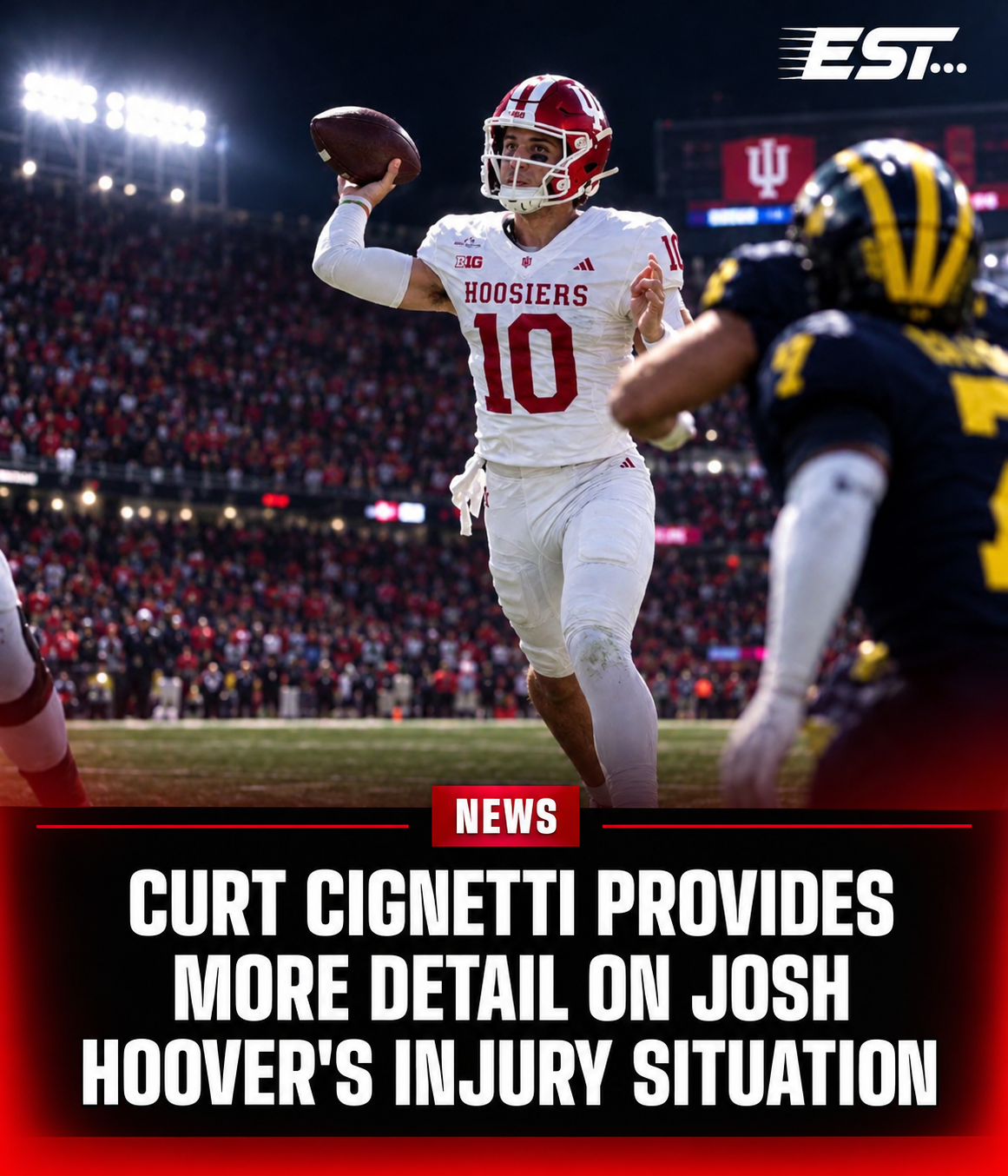
The Hoosiers eventually turned to Josh Hoover at quarterback, replacing Wilson after the offense struggled to find its rhythm. The change provided an immediate spark, but it was not enough to secure the victory.
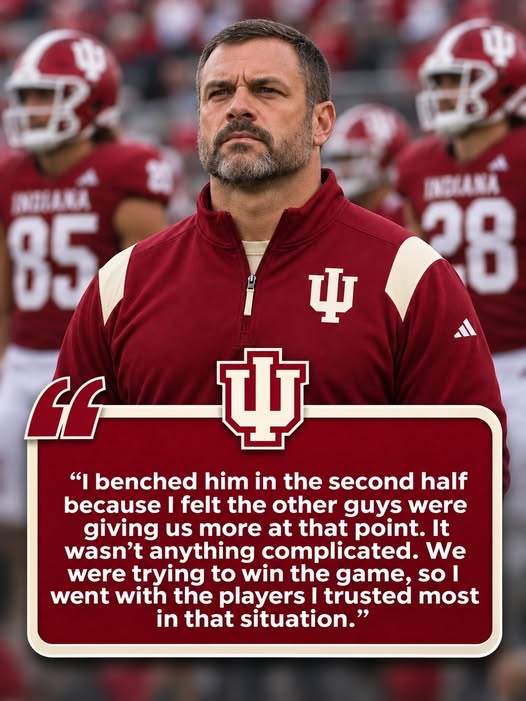
According to Cignetti, the decision came after he sensed that Wilson’s performance had become shaky.
“I went in fully hoping and believing that Grant would do well — make it through the whole game,” Cignetti explained. “We just got a little shaky there — something I sensed. So, Josh came in and made a few plays.”
Indiana Daily Student+1
The quarterback adjustment became one of the defining storylines of Indiana’s defeat.
Running back rotation presents another challenge
Indiana’s backfield has also experienced significant changes because of injuries and competition for playing time.
With junior running back Turbo Richard unavailable because of a shoulder injury, the Hoosiers relied primarily on redshirt senior Lee Beebe Jr. and redshirt sophomore Khobie Martin against Washington.
Beebe delivered one of the more encouraging performances for Indiana’s offense, finishing with 15 carries for 94 yards. His performance included an impressive 42-yard run that demonstrated his ability to create explosive plays.
Martin, meanwhile, experienced a more difficult afternoon.
The redshirt sophomore finished with 39 rushing yards on 12 attempts after producing 82 yards and a touchdown against USC the previous week.
The difference in production highlighted the challenges facing Indiana’s coaching staff as it evaluates the most effective combination of running backs.
Indiana Daily Student+1
For a team attempting to compete for another national championship, establishing consistency in the running game remains an important priority.
A productive ground attack can help control possession, reduce pressure on the quarterback and create opportunities for receivers downfield.
Indiana has demonstrated that potential throughout the season, but injuries and inconsistent offensive execution have made it difficult to maintain that identity.
Washington takes advantage of Indiana’s missed opportunities
While Indiana’s offensive personnel decisions attracted attention, Washington deserves considerable credit for executing when the opportunities presented themselves.
The Huskies entered the matchup determined to challenge the reigning national champions, and they delivered one of their most important performances of the season.
Washington quarterback Demond Williams Jr. immediately established himself as a problem for Indiana’s defense.
His 65-yard touchdown run on the opening possession exposed a weakness that the Hoosiers had been attempting to address throughout the week.
Williams finished with 227 passing yards and 88 rushing yards, accounting for two touchdowns as Washington consistently challenged Indiana’s defensive structure.
The Huskies also received important contributions from their running game and receiving corps, eventually forcing overtime after tying the contest at 24.
Washington then capitalized on its opportunity in the extra period.
After Tyler Robles connected on a 46-yard field goal, the Huskies’ defense prevented Indiana from responding with a touchdown. The Hoosiers subsequently missed a 37-yard field goal attempt, ending their comeback hopes.
The Daily Hoosier+1
Indiana’s championship ambitions face another test
The defeat was particularly damaging because Indiana entered the Washington matchup with significant postseason opportunities still available.
The Hoosiers had established themselves as one of the nation’s strongest programs following their historic 2025 championship campaign. However, the 2026 season has presented a different set of challenges.
At 9-2 following the Washington loss, Indiana no longer controls its postseason destiny in the same way it had before traveling to Seattle.
The upcoming regular-season finale against Purdue now carries enormous importance.
Indiana must address its offensive inconsistencies, evaluate its quarterback situation and determine how to maximize production from its available running backs.
The coaching staff also faces questions about its offensive line, which has been affected by injuries and personnel changes.
Those concerns become increasingly important as the season approaches its conclusion.
The road ahead for the Hoosiers
Indiana cannot afford another performance filled with missed opportunities.
The Hoosiers have enough talent to compete against elite opponents, but their loss to Washington demonstrated that individual playmakers cannot consistently overcome mistakes across multiple phases of the game.
The running back situation will remain worth monitoring, particularly with Richard’s availability uncertain and Martin looking to rebound from a difficult performance.
Beebe’s production against Washington provides an encouraging foundation, but Indiana will need contributions from multiple players to establish a dependable offensive identity.
Ultimately, the biggest question surrounding the Hoosiers is whether their coaching staff can find the right personnel combinations before the postseason picture becomes clearer.
The loss to Washington exposed several weaknesses that Indiana must address immediately.
For a program with national championship expectations, simply being competitive is no longer enough.
The Hoosiers need answers, and their final regular-season matchup against Purdue could provide an important opportunity to find them.