Bo Jackson Emerges as Ohio State’s Ground Game Anchor as Arthur Smith Revives the Run in Columbus
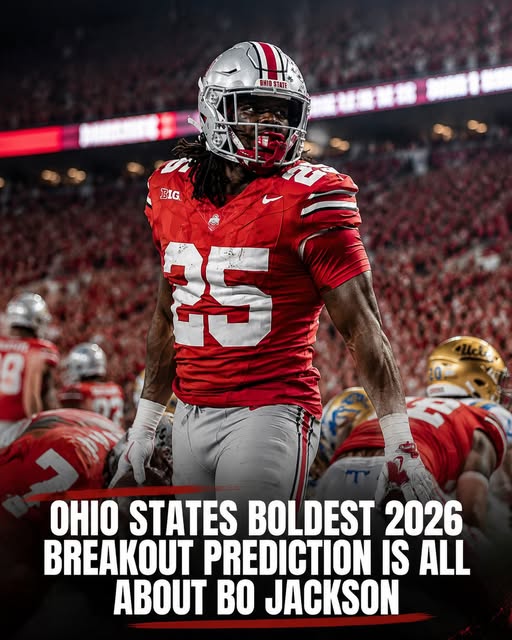
COLUMBUS, Ohio — As fall camp looms for the 2026 season, one name keeps resurfacing in conversations around Ohio State’s offense: Bo Jackson. Not the legendary multi-sport athlete of yesteryear, but the 6-foot, 217-pound sophomore tailback from Cleveland whose breakout freshman campaign already etched him into Buckeye lore. And with new offensive coordinator Arthur Smith — the NFL veteran architect of punishing, identity-driven run schemes — now calling the shots, that buzz carries real weight. Buckeye fans, long accustomed to explosive passing attacks under Ryan Day, may finally get the balanced, downhill offensive identity they’ve craved.
Jackson’s 2025 freshman season was nothing short of remarkable. In a year when Ohio State navigated the departures of star backs TreVeyon Henderson and Quinshon Judkins, the true freshman stepped into the void, rushing for 1,090 yards and six touchdowns on 179 carries (6.1 yards per attempt). He added 19 receptions for 200 yards and another score, becoming just the fifth Buckeye freshman to eclipse 1,000 rushing yards, joining legends like Maurice Clarett (2002), J.K. Dobbins (2017), and Henderson himself. His 117-yard, 22-carry effort in the rivalry game at Michigan stood out as a statement performance.
Those numbers came amid some inconsistency for the unit as a whole. Ohio State’s ground game dipped to around 154 yards per game and a middling 4.5 yards per carry in 2025, ranking outside the top 70 nationally in several key metrics. The passing game, led by quarterback Julian Sayin and playmakers like Jeremiah Smith, often carried the load, but in critical moments — particularly against stout fronts in the Big Ten Championship and playoff scenarios — the run game lacked the physicality and consistency to dictate terms.
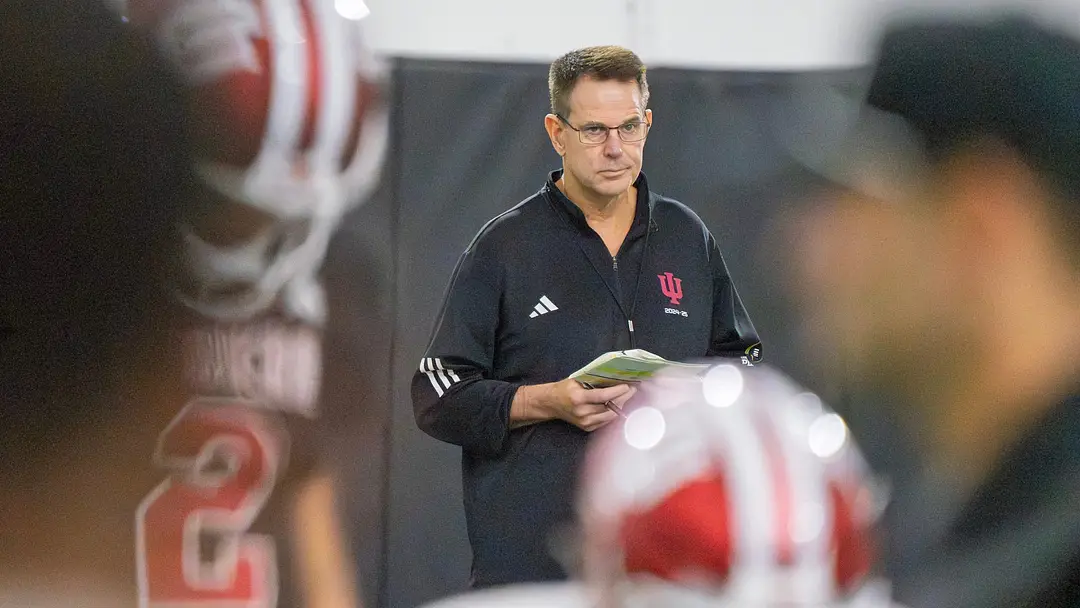
Enter Smith, hired in late January 2026 after stints as Pittsburgh Steelers offensive coordinator (2024-25), Atlanta Falcons head coach (2021-23), and Tennessee Titans OC. A former offensive lineman at North Carolina, Smith brings a reputation as one of the league’s premier run-game minds. He is the only modern-era OC or head coach to produce seven different 1,000-yard-from-scrimmage running backs across a seven-year span, including Derrick Henry during his Titans tenure. His offenses emphasize gap schemes, power runs, tight end involvement, and an offensive line that plays with “tangible violence,” as one observer put it.
For Day, the hire represented a deliberate pivot. After Brian Hartline’s departure to South Florida, the Buckeyes sought not just a play-caller but a coordinator who could complement Day’s aerial expertise with a more physical, balanced attack. Smith’s NFL pedigree — including work with former Buckeyes like Justin Fields and Will Howard in Pittsburgh — and his track record made him the fit. “You don’t go to Ohio State if you don’t welcome those expectations,” Smith said upon arrival, signaling his understanding of the program’s championship-or-bust standard.
Spring practice and early summer reports have reinforced the shift. Emphasis on physical run installs, upgraded offensive line play under run-game coordinator Tyler Bowen, and a commitment to establishing the run early have been themes. Jackson, recovering from shoulder surgery (torn labrum) that limited him in spring, returned stronger at around 220 pounds and has drawn praise for his vision, burst, and leadership in the backfield.
“He’s the name I keep circling for 2026,” one insider perspective echoed in pre-camp analysis. “Ohio State finally looks ready to lean into the run game under Arthur Smith. Buckeye fans have waited a long time for a true centerpiece on the ground. If Jackson takes that next step, this offense could feel a lot different.”
That sentiment captures the anticipation. Jackson’s high school pedigree at Villa Angela-St. Joseph — where he rushed for nearly 1,700 yards and 30 touchdowns as a junior before injury-shortened senior year — suggested star potential. Ranked as a top-10 national running back recruit, he chose Ohio State over Alabama, Georgia, and others. Now, as the clear RB1 entering his sophomore year, he faces elevated expectations in a loaded backfield that includes Isaiah West, Ja’Kobi Jackson (transfer from Florida), Anthony Rogers, and incoming talent.
Historical Context and the Evolution of Ohio State’s Ground Attack
Ohio State football has a rich tradition of elite running backs: Archie Griffin, Eddie George, Ezekiel Elliott, and more recent standouts like Dobbins and Henderson. Yet the modern era under Day has often prioritized tempo, RPO elements, and downfield passing. The 2024 national championship team (under Chip Kelly’s influence) found better balance, but 2025 saw regression on the ground amid personnel turnover and schematic questions.
Smith’s arrival evokes comparisons to successful run-oriented coordinators who elevated programs. His Titans offenses with Henry thrived on outside zone, duo, and power concepts that wore down defenses over four quarters. At Ohio State, with a veteran offensive line bolstered by returning talent and high-end recruits, Smith has the personnel to install a pro-style, gap-heavy scheme that leverages Jackson’s combination of vision, contact balance, and receiving skills out of the backfield.
Advanced metrics from Jackson’s freshman year highlight upside. His 6.1 YPC ranked strong for a rookie workload, with explosive plays (runs of 10+ yards) punctuating games. PFF grades and Next Gen Stats equivalents (where available) showed solid elusiveness and broken tackles. However, areas for growth include pass protection consistency and finishing runs in traffic — facets Smith’s coaching tree excels at developing.
Contract and roster implications add another layer. In the NIL and transfer portal era, Jackson’s decision to stay after portal rumors proved loyalty and belief in the program. “It wasn’t really a hard decision,” he said. “This is where I want to be.” With Ohio State’s deep resources, retaining homegrown talent like Jackson — a Cleveland native — bolsters cultural continuity amid annual portal churn.
Salary cap? Not applicable in college, but roster management parallels exist. Ohio State’s talent accumulation allows multi-back rotations, yet Smith’s history suggests he prefers a featured back who can handle 20+ carries and dictate defensive fronts. Jackson’s workload could climb toward 250+ touches if he proves durable, opening play-action windows for Sayin and alleviating pressure on the passing game.
Coaching Perspectives and Scheme Fit
Running backs coach Carlos Locklyn has raved about the physical mindset Smith imports from his Memphis roots. “That grit, that grind… He has a physical mindset. That’s what I’m excited about.” Spring scrimmages reportedly featured more gap-power concepts, counter trey, and tight end wham blocks — hallmarks of Smith’s playbook.
Quarterback Julian Sayin, entering what could be a Heisman-caliber year, benefits immensely. A more robust run game creates easier reads, better play-action, and manageable third downs. Wide receivers like Jeremiah Smith and Carnell Tate (assuming health) draw lighter boxes, while the offensive line gains confidence mauling fronts rather than constantly pass-protecting.
Defensively, coordinator Matt Patricia’s elite unit (No. 1 in the nation in 2025 by several metrics) gives the offense margin for error. But in the stacked Big Ten — with Oregon, Michigan, Penn State, and others — playoff positioning often hinges on winning the line of scrimmage. Smith’s emphasis on physicality addresses a perceived 2025 shortfall.
Broader Implications for the Big Ten and College Football Landscape
If Jackson takes “that next step” — adding 100-200 pounds of bulked strength, refining patience behind blocks, and elevating in pass pro — Ohio State’s offense could rank among the nation’s most complete. ESPN’s early FPI and Bill Connelly’s SP+ projections already slot the Buckeyes atop the 2026 rankings, fueled by elite defense and returning skill talent. A revitalized run game could push them from contenders to favorites for the expanded College Football Playoff.
For the conference, it signals a potential arms race in schematic evolution. As NIL and portal dynamics reward roster stability, programs investing in proven NFL minds like Smith gain edges in development and identity. Ohio State’s model — blending Day’s offensive creativity with Smith’s ground-and-pound ethos — could set a blueprint.
League-wide, it underscores the value of balance. Pure air-raid or spread-to-run systems have thrived, but hybrid pro-style influences, especially with elite talent, remain potent. Smith’s track record developing diverse backs suggests Jackson won’t be a one-man show; complementary pieces like West and incoming recruits will keep defenses guessing.
Challenges remain. Jackson must stay healthy after the shoulder issue. The offensive line must gel with new schemes. Big Ten road games against physical fronts will test the philosophy immediately. Yet optimism abounds. Preseason chatter positions Jackson as a potential All-Big Ten performer and dark-horse Heisman contender if the ground game clicks.
As one analyst framed it, Buckeye fans have waited for a true centerpiece on the ground. With Smith installing the scheme and Jackson primed for Year 2 ascension, that wait may end in spectacular fashion. The offense won’t just look different — it could feel like a return to Ohio State’s bruising roots, updated for the modern era.
For a program with national title aspirations, that’s the difference between good and great. Jackson circling as the focal point isn’t hype; it’s the foundation for what’s next in Columbus.