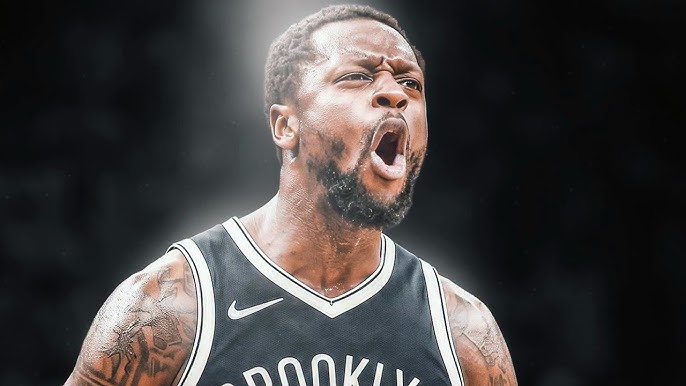
The final buzzer on another disappointing postseason exit had barely stopped echoing through the arena when the NBA world was hit with a stunning announcement. Paul George, one of the defining two-way superstars of his generation, officially announced his retirement from professional basketball following his team’s playoff series loss to the New York Knicks, bringing an emotional close to a remarkable 16-year career that spanned multiple eras of the league and cemented his place among the most respected players of the modern game.
For basketball fans who watched George evolve from a raw prospect into one of the NBA’s premier wing players, the announcement felt like the closing chapter of an entire basketball generation. Drafted in 2010, George entered the league during a transformative period in NBA history, when versatility, perimeter defense, and elite shot creation were becoming more valuable than ever before. Sixteen seasons later, he exits the game as the final active player from that celebrated 2010 NBA Draft class, a group that once symbolized the future of the league and now officially belongs to history.
George’s résumé leaves little room for debate about his impact on the sport. A nine-time NBA All-Star, six-time All-NBA selection, four-time All-Defensive Team honoree, and the 2013 NBA Most Improved Player, George built a career defined by resilience, adaptability, and excellence on both ends of the floor. He was never simply a scorer, nor merely a defender. He became the rare superstar capable of dominating games with graceful offensive brilliance while simultaneously taking on the toughest defensive assignments night after night.
His retirement announcement immediately sparked an outpouring of tributes from players, coaches, executives, and fans around the basketball world. Current stars who grew up watching George praised his influence on the modern wing position, while former teammates reflected on his professionalism and leadership. Social media quickly flooded with highlight reels showcasing the dazzling crossover moves, smooth pull-up jumpers, acrobatic finishes, and clutch playoff moments that defined his career.
What made George’s story especially compelling was the adversity he overcame to reach basketball immortality. Few players in league history have experienced a setback as horrifying as the catastrophic leg injury he suffered during a Team USA scrimmage in 2014. At the time, many feared the injury would permanently derail his career or at least rob him of the athleticism that made him one of the NBA’s brightest young stars. Instead, George returned stronger, smarter, and more determined, eventually reestablishing himself as one of the league’s elite players and becoming a symbol of perseverance throughout professional sports.
Before becoming an NBA superstar, George’s journey began far from the spotlight that follows top-ranked high school prodigies. Coming out of Palmdale, California, he was talented but overlooked compared to many future NBA stars. He committed to Fresno State, where his combination of length, athleticism, and rapidly developing skill set began attracting attention from NBA scouts. Even then, few could have predicted the heights he would eventually reach.
Selected 10th overall by the Indiana Pacers in the 2010 NBA Draft, George entered a franchise searching for a new identity in the post-Reggie Miller era. The Pacers believed they had found a promising young wing player. What they ultimately discovered was a future franchise cornerstone capable of leading the team back into championship contention.
George’s early seasons in Indiana showcased flashes of immense potential, but it was during the 2012-13 campaign that he officially announced himself as one of the NBA’s next great stars. That season, he captured the NBA Most Improved Player award after dramatically elevating every aspect of his game. He emerged as the centerpiece of a tough, defensive-minded Pacers team that became one of the few legitimate challengers to the dominant Miami Heat teams led by LeBron James, Dwyane Wade, and Chris Bosh.
The playoff battles between Indiana and Miami became defining moments of George’s career. Fearless against basketball’s biggest stars, George consistently embraced the challenge of guarding James while simultaneously carrying a major offensive workload. His confidence, shot-making, and composure under pressure earned admiration throughout the league. One unforgettable moment came during the 2013 Eastern Conference Finals when George traded clutch baskets with James in an instant classic that announced his arrival as a true superstar.
Though the Pacers never reached the NBA Finals during George’s tenure, those teams restored the franchise’s relevance and established George as one of the league’s premier two-way forces. His ability to impact games without dominating the ball made him uniquely valuable during an era increasingly centered around versatile wings.
Then came the devastating injury in 2014, a moment so shocking that it transcended basketball itself. During a Team USA exhibition scrimmage in Las Vegas, George suffered a gruesome broken leg that left players visibly shaken on the court. The injury halted what appeared to be a meteoric rise toward superstardom and created uncertainty about his future.
Yet George’s comeback became one of the most inspiring stories in modern sports. Through months of rehabilitation, he maintained unwavering determination. When he returned to the court, he gradually regained not only his athleticism but also his confidence. Over time, he evolved into an even more polished offensive player, developing a deeper scoring arsenal that extended beyond pure explosiveness.
George eventually moved on from Indiana, joining the Oklahoma City Thunder in a blockbuster trade that paired him with Russell Westbrook. In Oklahoma City, George delivered arguably the finest statistical season of his career during the 2018-19 campaign. He finished third in MVP voting while averaging career-best numbers and playing elite defense. Night after night, he looked unstoppable, blending smooth perimeter shooting with aggressive drives and suffocating defense.
His dominant season in Oklahoma City reignited conversations about his place among the league’s elite and further strengthened his legacy as one of the best all-around players of his generation. Even as the Thunder eventually shifted toward rebuilding, George’s impact there remained undeniable.
The next major chapter of his career unfolded with the Los Angeles Clippers, where he joined forces with Kawhi Leonard in one of the most anticipated superstar partnerships in recent NBA history. Expectations soared immediately. The Clippers were viewed by many as championship favorites, and George became central to the franchise’s pursuit of its first NBA title.
His Clippers tenure included both triumph and frustration. Injuries frequently interrupted the team’s championship ambitions, yet George repeatedly delivered in crucial moments. One of his greatest playoff performances came during the 2021 postseason when Leonard went down with injury. George responded by carrying the Clippers to their first-ever Western Conference Finals appearance, producing monster scoring performances while assuming leadership responsibilities under immense pressure.
Throughout his career, George often faced scrutiny that many elite players encounter in the social media era. Critics dissected his playoff shortcomings while sometimes overlooking the consistency, durability, and two-way excellence he brought over more than a decade. But within basketball circles, players and coaches consistently recognized his immense talent and versatility. Many younger stars modeled parts of their games after him, particularly his smooth ball-handling, footwork, and ability to create offense from the wing.
Statistically, George leaves behind a career filled with milestones. He scored more than 18,000 career points, collected thousands of rebounds and assists, and established himself as one of the finest perimeter defenders of his era. His combination of size, agility, and skill made him a matchup nightmare on offense and a defensive weapon capable of guarding multiple positions.
Beyond numbers, George’s influence on basketball style and culture remains significant. He represented the prototype of the modern NBA wing: long, athletic, capable of handling the ball, creating shots, defending elite scorers, and stretching defenses with perimeter shooting. In many ways, George helped shape the blueprint teams now seek when building championship contenders.
The timing of his retirement also carries symbolic weight for the NBA. As the final remaining player from the 2010 draft class, George’s departure officially closes the book on a group that included several influential stars who helped bridge the gap between the Kobe Bryant-LeBron James era and today’s generation led by younger superstars. Basketball moves quickly, and George’s retirement serves as another reminder of how rapidly one era gives way to the next.
In retirement, George leaves the game with the respect of peers and a legacy defined not only by accolades but by perseverance. Many athletes experience career-altering injuries. Few return to elite form afterward. George did exactly that, continuing to perform at an All-Star level for years after his devastating setback. That resilience may ultimately become one of the defining themes of his career.
Fans will remember different moments depending on where they followed his journey. Indiana supporters will remember the fearless young star who challenged Miami’s dynasty. Oklahoma City fans will remember the MVP-caliber brilliance and relentless competitiveness. Clippers fans will remember his leadership during deep playoff runs and his commitment to elevating the franchise to new heights.
There will also be memories impossible to quantify statistically: the effortless smoothness of his jump shot, the elegance of his movement in transition, the defensive possessions where he suffocated opposing scorers, and the calm demeanor he carried even amid enormous pressure. George played the game with a fluid style that made difficult actions appear natural.
As news of his retirement spread, tributes poured in from across the sports world. Former teammates praised his work ethic and professionalism. Opponents acknowledged the challenge of facing him. Coaches highlighted his basketball IQ and willingness to compete on both ends of the floor in an era where many stars conserve energy defensively. Younger players thanked him for inspiring their own development.
While debates about championships and legacy inevitably follow every modern superstar, George’s career stands as a reminder that greatness in basketball is measured in more than rings alone. His longevity, consistency, versatility, and resilience made him one of the defining players of his era. For 16 seasons, he entertained fans with elite basketball while adapting to changing systems, teammates, and expectations.
The NBA now moves forward without one of its most recognizable and respected veterans. Locker rooms will no longer see George preparing meticulously before games. Arenas will no longer erupt as he knocks down deep step-back jumpers or locks down elite scorers in crunch time. A generation of fans that watched him rise from promising young prospect to established superstar now says goodbye to one of basketball’s smoothest performers.
In the end, Paul George exits the game not as a player defined by one moment, one injury, or one playoff result, but as a complete basketball artist whose career embodied resilience, excellence, and evolution. His name will remain woven into NBA history through All-Star appearances, unforgettable playoff battles, elite two-way performances, and one of the most inspiring comebacks the league has ever seen.
And now, with the final member of the 2010 NBA Draft class stepping away from the hardwood, an entire chapter of NBA history officially comes to a close.