Raiders Give Fernando Mendoza First-Team Reps as Rookie QB’s Role Expands Against Texans
HOUSTON — The Las Vegas Raiders are accelerating the development of their most important young player.
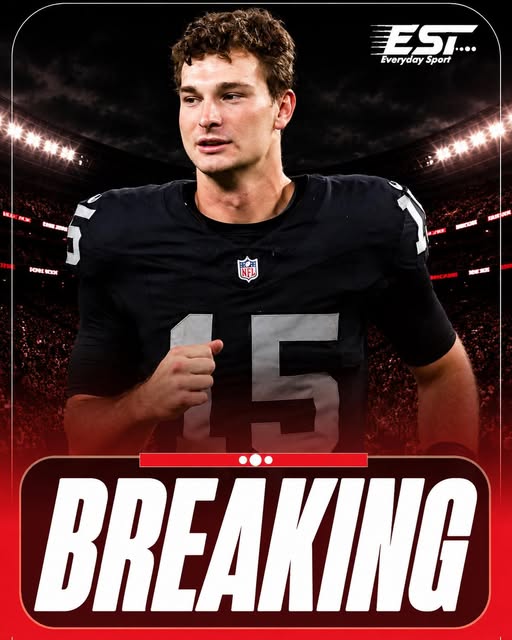
Rookie quarterback Fernando Mendoza took significant first-team reps during Tuesday’s joint practice with the Houston Texans, giving the No. 1 overall pick his most substantial exposure yet to an NFL starting offense and a defense built to challenge quarterbacks at every level. Raiders coach Klint Kubiak said afterward that Mendoza will receive plenty of action Thursday night when Las Vegas faces Houston in its second preseason game.
The significance is less about a preseason depth chart and more about the environment in which Mendoza is being evaluated.
The Raiders did not draft Mendoza first overall to rush him onto the field. They entered training camp with veteran Kirk Cousins positioned to handle the starting job, allowing Mendoza to learn Kubiak’s system without the immediate burden of carrying a rebuilding franchise. But the Raiders also need to know how quickly their rookie can handle the speed, pressure and complexity of NFL football.
Tuesday provided perhaps the clearest test yet.
Mendoza spent the early portion of his Raiders career primarily working with the second team. That changed against Houston, where he operated with the starters and faced a Texans defense featuring established pass rushers and a physical front. The results were mixed, but that was almost beside the point. The value was in forcing Mendoza to process the game against the level of competition he eventually will be expected to defeat.
Houston’s defense repeatedly created pressure, and the Texans generated two defensive touchdowns during the practice. Both Mendoza and Cousins threw interceptions that were returned for scores, underscoring that the session was less a showcase than a genuine stress test.
For Kubiak, that is precisely the purpose of a joint practice.
Mendoza has already demonstrated that the game does not appear to overwhelm him. In his preseason debut against the Arizona Cardinals, he completed 10 of 16 passes for 97 yards and a touchdown while directing four drives. He also showed the poise that had separated him from many of his collegiate peers at Indiana.
The next challenge is determining whether that composure survives when defensive linemen are closing faster, coverages are disguised more effectively and mistakes are punished immediately.
That is where Houston presented a particularly useful measuring stick.
The Texans have one of the NFL’s more formidable defensive fronts, led by edge rusher Will Anderson Jr. and supported by veterans including Danielle Hunter and Jadeveon Clowney. During Tuesday’s session, that group repeatedly disrupted the Raiders’ quarterbacks. For a rookie learning a new offensive system, those repetitions are difficult to replicate on a normal training-camp field.
Mendoza’s opportunity is especially notable because of what the Raiders invested in him.
Las Vegas selected him No. 1 overall in April after a remarkable 2025 season at Indiana. Mendoza completed 72% of his passes for 3,535 yards, 41 touchdowns and six interceptions while leading the Hoosiers to a 16-0 season and their first national championship. He also won the Heisman Trophy and was named Associated Press Player of the Year.
That résumé made Mendoza an unusually accomplished prospect, but it did not eliminate the transition required to play quarterback in the NFL.
His college production came from a system and supporting cast that were tailored to his strengths. In Las Vegas, he is learning an offense designed by Kubiak while competing against veteran players who have already experienced the speed and complexity of professional football.
The Raiders also have financial incentive to develop Mendoza carefully.
His four-year rookie contract is worth a reported $57.27 million and is fully guaranteed, with a fifth-year option attached to the deal. Because he was the first selection, his contract carries substantial financial importance for the franchise, but the rookie wage scale also provides Las Vegas with cost certainty compared with the contracts commanded by established veteran quarterbacks.
That structure gives the Raiders something every franchise wants when developing a quarterback: a potentially elite player under a relatively predictable contract for several seasons.
It also makes the decision surrounding Cousins particularly important.
Kubiak has made clear that he values the presence of a veteran quarterback, and Cousins entered camp as the logical choice to begin the season. That plan has not necessarily changed simply because Mendoza is receiving first-team repetitions. But the rookie’s progress creates an increasingly interesting question for the Raiders: How long should they wait before giving their future quarterback meaningful responsibility if he proves capable of handling it?
There is no reason to force that decision in August.
The Raiders finished 3-14 last season and have undergone a significant organizational reset. Kubiak is in his first season as head coach, and the franchise is trying to establish a new offensive identity around a young core that includes tight end Brock Bowers and running back Ashton Jeanty. The immediate objective is to build a functional offense, not create unnecessary pressure around a quarterback who is still learning.
Yet there is an equally important reason to give Mendoza opportunities with the first unit now.
The Raiders need to know what their offense looks like when its best players are operating together.
Mendoza’s ability to communicate at the line of scrimmage, identify defensive looks and deliver the ball on time will matter more than his preseason statistics. Kubiak’s system requires quarterbacks to make decisions quickly while maintaining rhythm in the passing game. The more first-team work Mendoza receives, the more accurately the coaching staff can evaluate whether he is absorbing those responsibilities.
His early performance has given the staff reason to continue increasing the workload.
Kubiak praised Mendoza after the preseason opener, noting that the rookie had a significant amount placed on his plate and continued to execute despite the faster pace of the game.
That is an important distinction.
A young quarterback can throw a touchdown in August without necessarily proving much. What coaches are looking for is repeatable decision-making: the correct protection, the right pre-snap identification, the proper progression and a willingness to take the checkdown rather than manufacture a big play.
Mendoza’s first-team opportunity against Houston therefore carries more evaluation value than the final preseason statistics will.
It also comes at a useful point in the Raiders’ development.
The team is coming off a 27-14 loss to Arizona in which the offense showed flashes but also exposed the amount of work remaining. Kubiak acknowledged afterward that Las Vegas had considerable growth ahead.
Thursday’s game should provide another opportunity to measure that progress.
For Mendoza, the goal should be simple: play fast without becoming reckless.
He does not need to win the starting job this week. He does not need to justify the No. 1 pick with spectacular throws. And he certainly does not need to turn a preseason game into a referendum on the Raiders’ quarterback future.
He needs to show that the moment continues to slow down for him.
That was one of the defining traits of his championship season at Indiana. He completed 273 of 379 attempts in 2025, produced a 41-to-6 touchdown-to-interception ratio and finished with a 72% completion rate. Those numbers demonstrated extraordinary efficiency, but NFL defenses will test whether that efficiency was the product of transferable quarterback skills or an ideal college environment.
Houston is helping answer that question.
The Texans’ defense is not going to give Mendoza comfortable answers. Anderson and the rest of the front can collapse a pocket quickly, while Houston’s coverage disguises can force young quarterbacks to hold the ball longer than they want.
If Mendoza responds by getting the ball out decisively, protecting possessions and keeping the offense on schedule, the Raiders will have gained something more valuable than a preseason victory.
They will have gained evidence.
For the broader AFC picture, the development of Mendoza could eventually become one of the conference’s more consequential storylines. Las Vegas is not yet in position to be considered a contender, but the franchise now has a quarterback who arrives with the pedigree of a national champion and Heisman winner, a veteran bridge in Cousins and a coaching staff attempting to build a sustainable offensive structure.
The question is not whether Mendoza will eventually become central to the Raiders’ plans.
It is how quickly he can make himself impossible to keep off the field.
Tuesday’s first-team reps were another step in that direction.
And Kubiak’s decision to give him extensive playing time Thursday suggests the Raiders are ready to gather more evidence.
For the No. 1 pick, the preseason is no longer simply about getting comfortable in an NFL uniform.
It is becoming an audition for what comes next.