For more than two decades, LeBron James has operated under a level of scrutiny unlike almost any athlete in modern sports. Every game, every decision, every championship run, and every public comment has been analyzed, debated, praised, and criticized. From the moment he entered the national spotlight as a teenager in Akron, Ohio, the basketball world has measured him against legends, weighed his accomplishments against history, and asked the same question that has followed him throughout his remarkable career: Where does he rank among the greatest players to ever play the game?
Now, LeBron James has offered perhaps the clearest answer yet regarding his own place in basketball history.
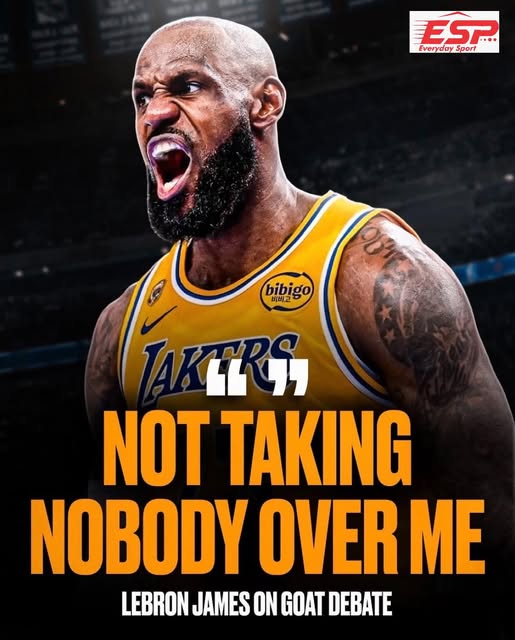
In an interview with Time Magazine, the four-time NBA champion said he considers himself the greatest basketball player of all time, adding another chapter to one of sports’ most enduring debates.
The statement immediately reignited discussions across the basketball landscape, drawing reactions from fans, former players, analysts, and fellow athletes who have spent years arguing the merits of James’ résumé against those of other all-time greats.
For James, however, the belief appears rooted not in arrogance but in reflection. After more than twenty seasons in the NBA, countless milestones, and a career that has rewritten record books, the Los Angeles Lakers superstar appears comfortable acknowledging how he views his own legacy.
The debate over the greatest player of all time has long centered around a handful of iconic names. Michael Jordan remains the benchmark for many basketball purists, with six NBA championships, six Finals MVP awards, and an unmatched cultural impact that transformed the NBA into a global phenomenon. Others point to Kareem Abdul-Jabbar’s longevity, Bill Russell’s championship dominance, Magic Johnson’s revolutionary playmaking, or Wilt Chamberlain’s statistical achievements.
Yet no player has accumulated the combination of longevity, production, versatility, and sustained excellence quite like James.
Since entering the league as the No. 1 overall pick in the 2003 NBA Draft, James has consistently exceeded expectations that many believed were impossible to meet. Dubbed “The Chosen One” before he ever played an NBA game, he entered the league carrying a burden few athletes have experienced.
Most highly touted prospects spend years attempting to justify the hype surrounding them. James spent his career surpassing it.
From his rookie season with the Cleveland Cavaliers to championship runs with the Miami Heat, a historic title return to Cleveland, and later chapters with the Lakers, James has remained among basketball’s elite for an unprecedented length of time.
His accomplishments are staggering.
Four NBA championships.
Four MVP awards.
Multiple Olympic gold medals.
Twenty-plus All-Star selections.
Countless All-NBA honors.
And perhaps most notably, the distinction of becoming the NBA’s all-time leading scorer, surpassing a record many once believed would never be broken.
For supporters of James’ GOAT claim, those achievements represent only part of the story.
What separates James from many of his peers, they argue, is his versatility. Throughout his career, he has effectively played every position on the floor. He has served as a primary scorer, lead playmaker, rebounder, defender, and offensive orchestrator depending on what his team required.
Unlike many stars who dominated in a specific role, James adapted to evolving eras of basketball while continuing to thrive.
He entered the NBA during a period defined by physical defense and post-oriented offenses. He later flourished in the pace-and-space revolution, embraced the three-point era, and continued producing elite numbers well into his late 30s and early 40s.
The ability to remain dominant across multiple generations of players has become a central pillar of the argument in favor of James’ place atop basketball history.
His supporters frequently point to the unprecedented consistency he has maintained throughout his career.
Season after season, James has delivered elite production regardless of roster changes, coaching adjustments, injuries around him, or shifts in league trends.
Few athletes in any sport have remained championship-caliber performers for as long.
The statistical evidence supporting his case is overwhelming.
James ranks among the leaders in virtually every major offensive category. Beyond scoring, he has accumulated assists, rebounds, steals, and playoff records at levels rarely seen from a single player.
His postseason résumé is equally impressive.
Repeated trips to the NBA Finals, numerous playoff game-winning moments, and historic performances on basketball’s biggest stage have helped define his legacy.
Perhaps no achievement resonates more strongly among his supporters than the 2016 NBA Finals.
Trailing 3-1 against the record-setting 73-win Golden State Warriors, James led Cleveland to one of the greatest comebacks in sports history. The Cavaliers became the first team ever to overcome a 3-1 deficit in the NBA Finals, delivering Cleveland its first major professional sports championship in more than five decades.
That series remains one of the strongest arguments for those who place James above every other player.
Yet the GOAT discussion remains deeply divided.
Jordan’s supporters often point to his flawless 6-0 Finals record, his competitive mystique, and his dominance during the 1990s.
To many fans, Jordan represents the gold standard against which all basketball greatness is measured.
His influence extended far beyond the court, helping elevate the NBA into a global entertainment powerhouse while becoming one of the most recognizable athletes in history.
For that reason, comparisons between Jordan and James frequently extend beyond statistics.
They involve questions about eras, competition, team construction, rules, media coverage, and the evolution of the game itself.
The debate often becomes as much philosophical as analytical.
Some value championships above all else.
Others prioritize individual production.
Still others focus on versatility, longevity, peak performance, or overall impact.
Depending on which criteria receive the greatest emphasis, different conclusions emerge.
James has never shied away from discussing legacy, though he has generally approached the topic with measured confidence.
Over the years, he has acknowledged his admiration for basketball legends while also expressing pride in his own accomplishments.
His latest comments to Time Magazine reflect a player who understands both the significance of his career and the scrutiny that accompanies any claim to greatness.
At this stage of his journey, James has little left to prove.
Every season he continues to play adds another layer to an already unprecedented résumé.
Even as younger stars emerge and new championship contenders rise, James remains a relevant force in the league.
His longevity has become one of the defining stories in modern sports.
Few athletes have maintained elite performance deep into their careers. Even fewer have done so while carrying the expectations that James has faced since adolescence.
His impact extends beyond basketball.
James has become one of the most influential athlete-entrepreneurs of his generation, building a business empire while remaining active in philanthropy and community development.
Through educational initiatives, social advocacy efforts, and various business ventures, he has expanded his influence far beyond the court.
That broader impact often enters conversations about his overall legacy.
While the GOAT debate traditionally focuses on basketball accomplishments, some observers consider an athlete’s cultural significance as part of the equation.
In that regard, James has established himself as one of the most influential figures in sports history.
The reaction to his Time Magazine comments was immediate.
Social media platforms erupted with passionate responses from supporters and critics alike.
Former players weighed in.
Analysts revisited historical comparisons.
Fans defended their preferred legends.
The conversation once again demonstrated why the GOAT debate remains one of sports’ most compelling discussions.
What makes the debate so enduring is that there may never be a universally accepted answer.
Basketball spans generations, each with its own stars, styles, challenges, and contexts.
Comparing players from different eras inevitably involves subjective judgment.
Statistics can inform the discussion but rarely settle it.
Championships matter, but they are often influenced by teammates, coaching, injuries, and circumstances beyond a player’s control.
Individual brilliance can be measured, but greatness often transcends numbers.
James’ willingness to declare himself the greatest reflects a confidence earned through years of accomplishment.
Elite athletes frequently possess an unwavering belief in their abilities. Such self-confidence is often necessary to reach historic heights.
For James, acknowledging his own greatness appears less about diminishing others and more about recognizing the body of work he has assembled.
Whether fans agree with him remains another matter.
The arguments will continue.
Jordan supporters will continue citing championships and peak dominance.
James supporters will point to longevity, versatility, and statistical superiority.
Others will advocate for different legends altogether.
What cannot be disputed is that James belongs firmly within the highest tier of basketball history.
The conversation surrounding his place among the game’s immortals is not about whether he deserves inclusion. It is about where he belongs within that exclusive group.
As his career moves toward its eventual conclusion, each additional milestone further strengthens his case.
Every season adds to totals that already appear unreachable.
Every accomplishment expands a legacy that has influenced an entire generation of players.
And every statement like the one he made to Time Magazine ensures that the debate remains alive.
Perhaps that is part of what makes sports so compelling.
Greatness is not merely measured; it is discussed, interpreted, and argued across generations.
LeBron James has spent more than twenty years giving basketball fans reasons to have those conversations.
Now, with his own answer firmly on record, the basketball world is once again left to decide for itself.
Is LeBron James the greatest basketball player of all time?
He certainly believes so.
And after one of the most accomplished careers professional sports has ever seen, his case has never been stronger.