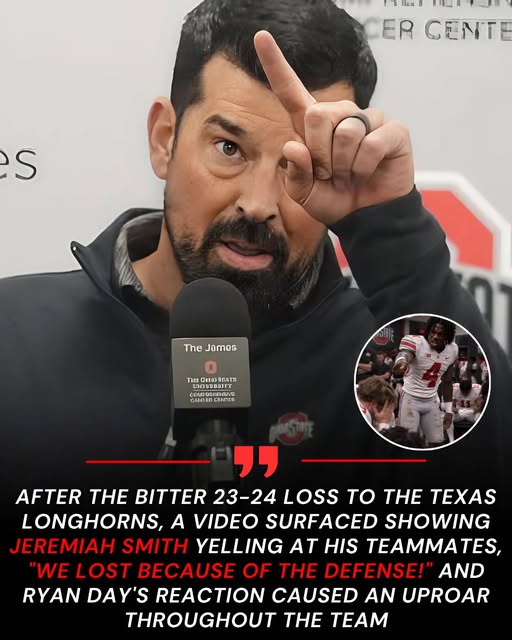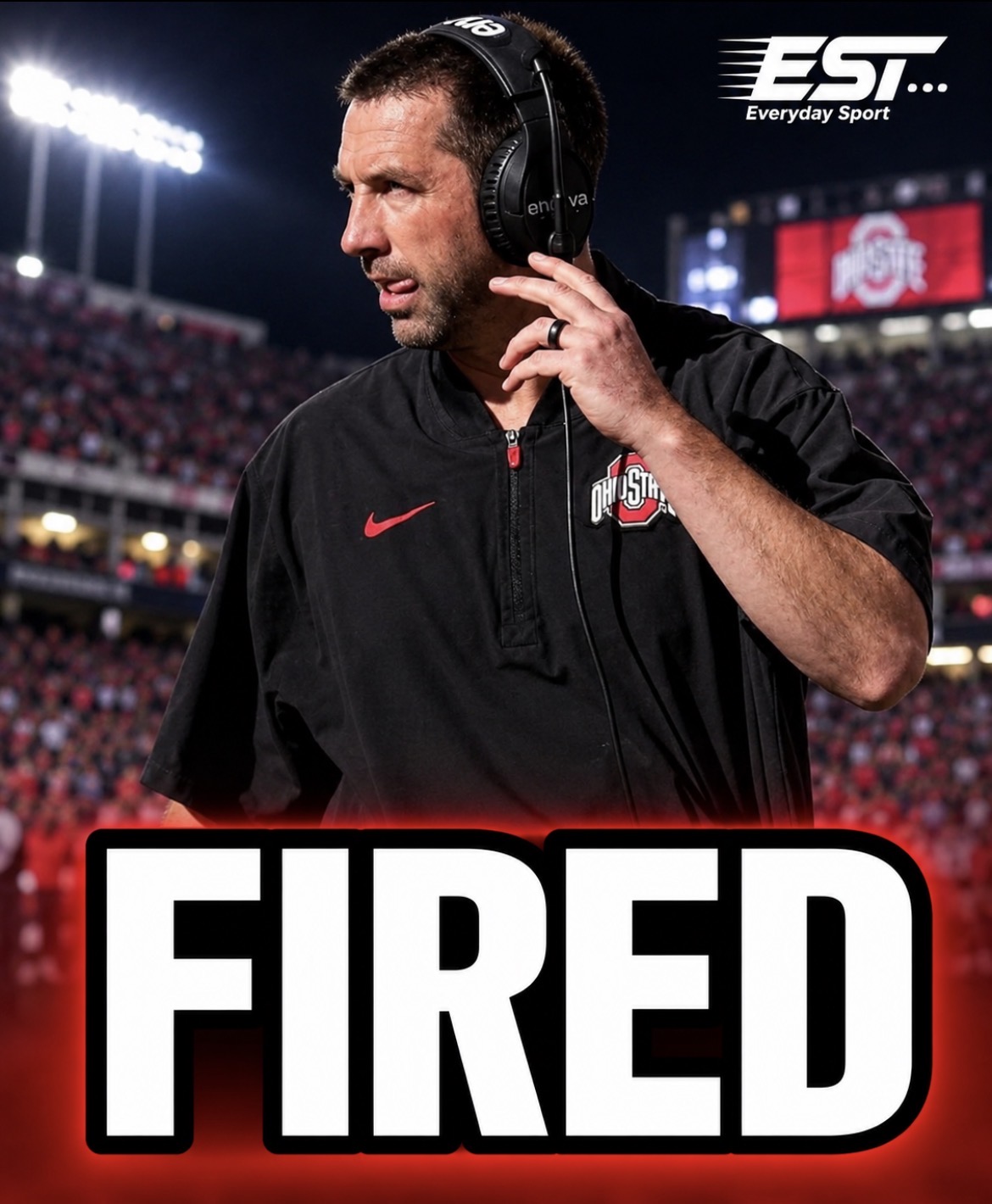
Ohio State’s disappointing season has prompted Ryan Day to make a coaching change. Special teams coordinator Robby Discher is out after just nine games in Columbus, as the Buckeyes look to address another disappointing season and restore their championship standards.
COLUMBUS, Ohio — Changes are beginning at Ohio State.
Following consecutive defeats to USC and Oregon, head coach Ryan Day has made his first significant move on the coaching staff, parting ways with special teams coordinator Robby Discher, according to reports from On3 and 247Sports on Monday, November 9.
The decision comes at a difficult moment for the Buckeyes, who have fallen from the nation’s top championship contenders to a team facing serious questions about its performance, consistency and coaching accountability.
Discher’s departure marks a particularly quick end to his Ohio State tenure. He joined the program during the 2026 offseason after building a strong reputation at Illinois, but the Buckeyes’ special teams struggles continued despite his arrival.
After only nine games, Day has decided that a change is necessary.
And given Ohio State’s expectations, the decision is hardly surprising.
OHIO STATE’S SPECIAL TEAMS STRUGGLES FINALLY CATCH UP WITH DISCHER
Discher arrived in Columbus with an impressive coaching résumé and the expectation that he could solve one of Ohio State’s most persistent problems.
Before joining the Buckeyes, he spent three seasons at Illinois as special teams coordinator and tight ends coach, helping develop one of the more productive special teams units in the Big Ten.
His Illinois teams ranked No. 16 nationally in ESPN’s special teams efficiency metric in 2024 and No. 30 in 2025.
Those results made him an attractive candidate for Day, who wanted to improve a phase of the game that had repeatedly created problems for Ohio State.
However, the results in Columbus did not match expectations.
Instead of providing the improvement the program desperately needed, Ohio State continued experiencing mistakes in returns, penalties, field-goal execution and special teams coverage.
The situation became increasingly difficult to ignore as the season progressed.
According to 247Sports, Ohio State ranked No. 118 nationally in kickoff returns, averaging 25.1 yards per return. The Buckeyes also ranked No. 113 in punt returns, averaging 13.8 yards per return.
Those numbers highlighted the difficulties facing the unit under Discher.
THE USC AND OREGON LOSSES MADE THINGS WORSE
The final stretch of Ohio State’s season appears to have accelerated the decision.
During the Buckeyes’ 30-18 defeat against USC, special teams mistakes became another major storyline.
Ohio State committed three special teams penalties and surrendered a 44-yard punt return, giving USC additional opportunities to control the game.
The performance raised further questions about whether the unit was making meaningful progress.
Then came Saturday’s matchup against Oregon.
Ohio State entered the game hoping to respond after its defeat against USC, but the Buckeyes suffered another painful loss, falling 41-28 at home.
The game began positively for Day’s team.
Ohio State jumped out to a 14-0 first-quarter advantage, giving the home crowd reason to believe the Buckeyes would return to winning form.
However, Oregon completely changed the momentum.
The Ducks scored 38 unanswered points, turning an early deficit into a commanding victory.
One of the most damaging moments involved Oregon’s successful fake punt, which helped extend a drive that eventually resulted in a touchdown.
It was another example of special teams mistakes directly affecting Ohio State’s ability to control a football game.
For a program competing for national championships, those mistakes are unacceptable.
And Discher ultimately paid the price.
RYAN DAY WANTS ACCOUNTABILITY
Following the defeat against Oregon, Day acknowledged that significant evaluation was necessary.
The Ohio State head coach made it clear that accountability would begin with the coaching staff before extending to the players.
“We were able to get no rhythm on offense,” Day said after the loss, according to On3. “That put the defense in some tough situations.”
He also acknowledged the need to evaluate the entire program.
“So I’ve got to evaluate everything. It all starts with the staff and then it goes to the players. There needs to be accountability for all of it.”
Those comments became particularly significant following Monday’s announcement.
Although Day did not publicly announce every detail of the personnel decision, the departure of Discher represents the first major coaching adjustment reported following the disappointing weekend.
It also demonstrates that Day is unwilling to ignore problems simply because the season is already underway.
The Buckeyes have championship expectations, and their performances have not consistently reflected those standards.
DISCHER HAD A STRONG COACHING RESUME BEFORE ARRIVING IN COLUMBUS
What makes the decision particularly interesting is that Discher did not arrive at Ohio State without proven experience.
His coaching career includes stops at several respected college football programs.
He worked at Sam Houston State, Oklahoma State, Toledo, Louisiana, Georgia, Tulane and Illinois before joining the Buckeyes.
In 2014, while working at Oklahoma State, he received FootballScoop’s Special Teams Coordinator of the Year award.
He also contributed to Georgia’s 2021 national championship staff as a special teams quality control coach.
At Tulane, he helped the Green Wave capture the American Athletic Conference championship and Cotton Bowl title in 2022.
His three seasons at Illinois were particularly impressive.
The Fighting Illini produced 24 victories during his tenure from 2023 through 2025, while his special teams units consistently delivered strong performances.
Illinois also developed several All-Big Ten specialists during that period.
That history explains why Ohio State believed he was the right person to improve its special teams operation.
Unfortunately, his experience at Illinois did not translate into the same success in Columbus.
WHAT HAPPENS NEXT FOR OHIO STATE?
Discher’s departure leaves Ohio State with another important coaching responsibility heading into the final stretch of the regular season.
The Buckeyes must determine who will oversee special teams operations moving forward and whether an internal replacement will handle those responsibilities temporarily.
Ohio State already has assistant special teams coordinator Gunner Daniel on its coaching staff, although no replacement arrangement has been officially confirmed.
The larger question is whether this will be the only coaching adjustment Day makes.
Ohio State is now 6-3 overall following its defeats against Texas, USC and Oregon.
For a program that entered the season with national championship ambitions, three losses represent a disappointing outcome.
The Buckeyes have also fallen significantly in the national rankings, dropping to No. 21 in the latest Associated Press poll following their defeat against Oregon.
Day understands the expectations surrounding the program.
He acknowledged after Saturday’s loss that losing three games is unacceptable at Ohio State.
“Your expectation is to win every game here,” Day said. “To lose three games is unacceptable, and I own that.”
Those words carry considerable weight considering the standards established by the Buckeyes over the years.
THREE GAMES REMAIN, AND THE PRESSURE IS MOUNTING
Despite their disappointing record, Ohio State still has football remaining this season.
The Buckeyes have three regular-season games left against Northwestern, Nebraska and Michigan.
Those matchups provide Day with an opportunity to finish the season strongly, restore some confidence and demonstrate that his program can respond to adversity.
However, the pressure will remain significant.
Ohio State supporters expect a program capable of competing for Big Ten championships and national titles. Falling short of those expectations creates questions that cannot simply be ignored.
The coaching staff must find answers, and the special teams department will now be under new leadership.
Discher’s departure is an indication that Day recognizes the need for change.
Whether additional adjustments follow remains to be seen.
For now, one thing is certain: Ryan Day has started making changes in Columbus, and Robby Discher is the first casualty of Ohio State’s disappointing 2026 campaign.
The Buckeyes have three games remaining to prove that their season can still finish on a positive note.
And with Michigan still waiting on the schedule, Day knows there is little room for further disappointment.