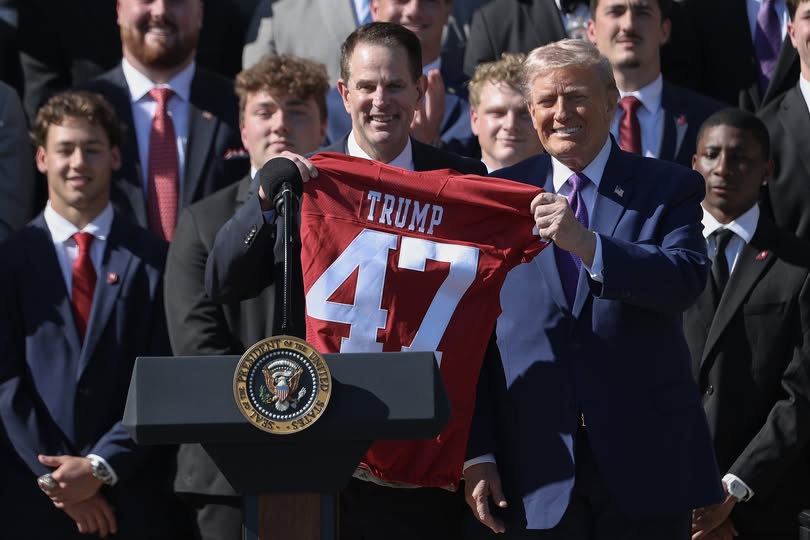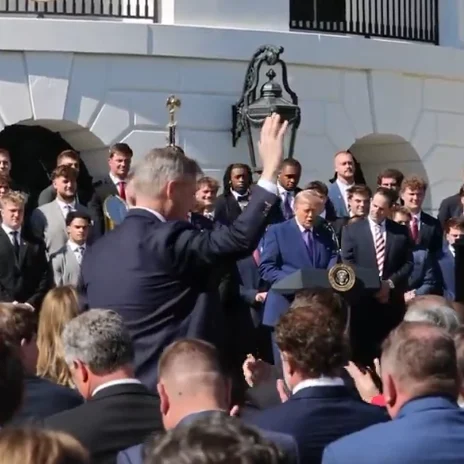
On a sun-drenched Monday afternoon in May, the South Lawn of the White House buzzed with a rare blend of crimson and cream, as the Indiana Hoosiers football team stepped into the heart of American power to be honored as the 2025-26 College Football Playoff National Champions. Sen. Jim Banks, the Indiana Republican whose roots run deep in the Hoosier State, stood shoulder to shoulder with the players, coaches, and President Donald J. Trump, celebrating a triumph that transcended the gridiron and etched a new chapter in college football lore.
It was more than a photo opportunity. For a program long synonymous with futility — the team with the most losses in the history of the sport — this moment represented validation after decades of near-misses, rebuilds, and quiet persistence. The Hoosiers didn’t just win a title; they authored one of the most improbable Cinderella stories in modern American sports, going a perfect 16-0 and claiming Indiana University’s first football national championship with a thrilling 27-21 victory over Miami on January 19 at Hard Rock Stadium.
Banks, visibly moved as he mingled with the players, captured the sentiment in remarks that echoed across social media and local Indiana outlets. “Indiana University’s championship season showed the whole country what Hoosier grit is all about,” he said. “These student-athletes carried themselves with real class all season and made Indiana proud. I was honored to join them and President Trump at the White House to celebrate this historic accomplishment for IU and our state.”
The celebration came nearly four months after that unforgettable night in Miami Gardens, Florida. What began as a hopeful but cautious 2025 campaign under second-year head coach Curt Cignetti exploded into something magical. The Hoosiers, bolstered by transfer quarterback Fernando Mendoza — who would go on to win the Heisman Trophy — steamrolled through the Big Ten, finishing the regular season undefeated before navigating the expanded 12-team playoff with poise and power. They dismantled top competition, including a dominant semifinal win over Oregon, and then survived a classic title-game duel against a talented Miami squad playing on its home turf.
Mendoza, the 6-foot-5 signal-caller with a cannon arm and the heart of a lion, emerged as the undeniable face of the program. In the national championship game, with the score tight and the stakes at their peak, he delivered one of the most iconic plays in recent memory: a fourth-down touchdown run that showcased not just physicality but the fearless mentality Cignetti had instilled in the group. Trailing late, Miami mounted a desperate drive, only for Indiana defensive back Jamari Sharpe to seal the victory with a game-clinching interception. The final horn sounded, and pandemonium erupted on the Indiana sideline — players who had bought into a culture shift now stood as champions.
Cignetti, the veteran coach who arrived in Bloomington with a reputation for turning programs around, has repeatedly downplayed individual credit while praising his players’ buy-in. In post-championship interviews and pressers, he spoke of standards, toughness, and the relentless preparation that turned skeptics into believers. “We’re 16-0, national champions at Indiana University, which I know a lot of people thought was never possible,” he said in the immediate aftermath. His staff, including offensive coordinators who helped maximize Mendoza’s talents, built a balanced attack that blended explosive passing with a physical run game and a defense capable of making game-altering stops.
For Indiana fans, long accustomed to basketball glory while football languished, this season felt like cosmic justice. Memorial Stadium in Bloomington, once a quieter venue on autumn Saturdays, became a fortress. Road wins against traditional powers, blowouts that announced their arrival, and gritty victories that tested their resolve all culminated in that perfect record — a first in the modern playoff era for any program. The Hoosiers became the first new national champion in decades, proving that in the evolving landscape of college athletics, with Name, Image and Likeness deals, transfer portals, and expanded playoffs, opportunity exists for those bold enough to seize it.
The White House visit carried layers of significance. College football national champions have made this pilgrimage for generations, a tradition that blends sport with civic recognition. But for Indiana, a state often overshadowed in national conversations, it carried extra weight. Politicians from both sides of the aisle, though predominantly Hoosier Republicans on this day, turned out to bask in the reflected glory. President Trump, addressing the team directly, marveled at the achievement and shared light moments, including calling out Banks as “my friend for a long time.” The players, many of them wearing national championship gear, soaked it in — some future NFL draft picks already eyeing the next level, others simply cherishing a moment few Hoosiers ever imagined.
Banks’ involvement was personal. As a senator representing Indiana, he has championed the state’s institutions, and this championship provided a powerful platform. His social media posts from the event showed him grinning alongside players, coaches, and the president, a visual reminder that sports can unite communities across divides. For Hoosier faithful back home — from Bloomington to Fort Wayne, Indianapolis to South Bend — seeing their team on the White House lawn felt like a full-circle moment after years of rebuilding under previous regimes.
The road to this pinnacle was anything but linear. Indiana football’s historical struggles are well-documented: decades of losing seasons, coaching carousel turns, and the shadow of Big Ten blue-bloods like Ohio State and Michigan. Even as basketball icons like Bob Knight and the “Hoosiers” movie legacy defined the state’s athletic identity, football fans clung to occasional bright spots — a rare bowl win here, an upset there. Cignetti’s arrival marked a philosophical shift. He emphasized culture, player development, and aggressive recruiting through the portal. Mendoza’s commitment proved pivotal, but so did the collective belief that permeated the roster.
Throughout the 2025 season, the Hoosiers faced doubt at every turn. Early rankings had them outside the top 25 in some preseason polls. Analysts questioned whether their previous-year progress was sustainable. Yet game after game, they answered. Big Ten road tests became statement victories. By the time conference championship week arrived, they had secured their spot in the expanded playoff and, remarkably, a shot at perfection.
The playoff run itself was cinematic. High-stakes matchups tested their depth and composure. Against Oregon in the semifinal, Mendoza threw for multiple touchdowns in a blowout that silenced any remaining doubters. Then came Miami — a rematch vibe in hostile territory, with the Hurricanes boasting speed and talent capable of ending the fairytale. Instead, Indiana’s offensive line controlled the trenches, receivers made contested catches, and the defense rose in critical moments. That 27-21 final score doesn’t fully capture the drama: lead changes, fourth-down gambles, and a championship-clinching defensive stand that will be replayed for years.
Fernando Mendoza’s Heisman campaign was the stuff of legend. Statistically dominant, he also displayed intangibles — leadership, resilience, and a competitive fire that teammates repeatedly highlighted. Cignetti has called him one of the most special players he’s ever coached. For a quarterback who transferred in with high expectations, delivering a title and individual hardware in his first full season with the program cemented his place in IU lore alongside greats from other sports.
Beyond the stars, the team’s depth shone through. Contributors on both sides of the ball — from offensive linemen who paved the way to defensive standouts like those who forced turnovers in the title game — embodied the “next man up” mentality. Special teams didn’t falter in big moments. Walk-ons and veterans alike bought into the system. This wasn’t a team reliant on one or two phenoms; it was a complete unit forged through months of grueling preparation.
The cultural impact in Indiana cannot be overstated. Local businesses saw spikes in merchandise sales. Schools across the state reported increased youth football participation. The “Hoosier grit” phrase, once a basketball staple, now belongs equally to the gridiron. Alumni gatherings, watch parties, and parades back in Bloomington turned into celebrations of identity. For a state that prides itself on toughness and underdog spirit, this team became a mirror.
As the White House event wound down, players posed for photos, signed autographs for staff, and reflected on the journey. Many will return for another run in 2026, hungry to defend the crown. Others head to the NFL, carrying the championship pedigree into professional careers. Coach Cignetti, ever the pragmatist, has already turned his focus to sustaining excellence, knowing the expectations have permanently shifted in Bloomington.
Sen. Banks’ presence that day served as a bridge between politics, sport, and state pride. In a polarized era, few things unite quite like a championship team. His words and actions underscored a simple truth: when Indiana wins, the entire state feels it. The senator’s embrace of the moment reflected genuine joy for constituents who had waited generations for this day.
Looking ahead, the Hoosiers enter a new chapter as marked favorites rather than surprise contenders. The transfer portal, NIL landscape, and conference realignment will continue evolving college football, but Indiana has proven it belongs at the summit. The 2025 season will be remembered not just for the record or the trophy, but for rewriting a program’s narrative from perennial also-ran to trailblazer.
As the champions departed Washington, the crimson-clad group carried more than rings and banners. They carried proof that belief, when paired with execution, can overcome history’s weight. For Curt Cignetti, Fernando Mendoza, Sen. Jim Banks, and every Hoosier fan, May 11, 2026, wasn’t merely a celebration — it was confirmation that the end of an era of disappointment had given way to a dynasty’s first sunrise.
In the end, that’s what championship seasons deliver: moments larger than the game itself. On the White House lawn, amid handshakes and cheers, Indiana football stood tall — undefeated, undisputed, and forever etched in the annals of college football greatness. Hoosier Nation, your champions have arrived.