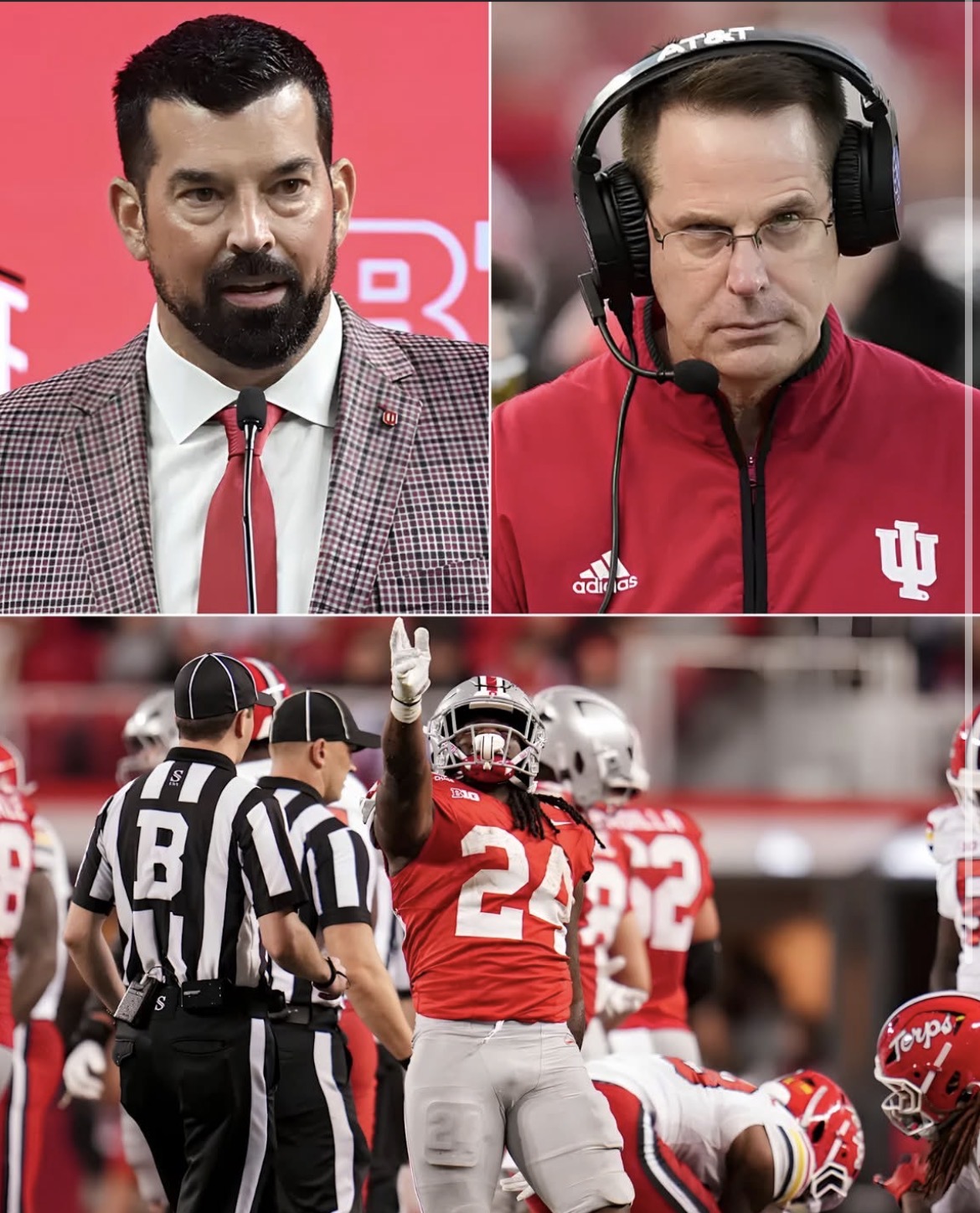
RYAN DAY FIRES BACK AT OFFICIATING CONTROVERSY AFTER OHIO STATE’S NARROW WIN OVER INDIANA
Ohio State’s 19–15 victory over Indiana has sparked a debate about officiating, with Ryan Day calling on the Big Ten to improve after several disputed calls threatened to influence the outcome.
Ohio State Buckeyes head coach Ryan Day is demanding better officiating from the Big Ten following his team’s hard-fought 19–15 victory over the Indiana Hoosiers, adding another chapter to a controversial contest that came down to the final moments.
Despite securing a crucial conference win on October 17, Day made it clear that the Buckeyes were unhappy with several officiating decisions. His comments have intensified the conversation surrounding the game, raising questions about consistency, accountability and the impact of refereeing on major college football matchups.
Ryan Day Sends a Strong Message to the Big Ten
Day addressed the officiating controversy during Ohio State’s bye-week media availability, revealing that the Buckeyes had submitted multiple plays from their victory over Indiana for review by conference officials.
According to Day, Ohio State regularly reviews questionable calls with the Big Ten, but the number of plays submitted following the Indiana game reflected the team’s frustration.
“Quite honestly, there was accountability taken, but sometimes you feel like it’s a day late and a dollar short,” Day said, explaining that even when officials acknowledge mistakes afterward, the consequences on the field cannot be reversed.
Day also acknowledged that officials work hard and want to get decisions right. However, he stressed that accountability after a game is not enough when a questionable decision can significantly affect the result.
The Ohio State coach made it clear that he intends to continue communicating with conference leadership about officiating standards.
His message was direct: teams need accurate decisions when the game is being played, not simply explanations after the final whistle.
Jeremiah Smith’s Treatment Becomes a Major Talking Point
One of Day’s biggest concerns involved star wide receiver Jeremiah Smith, who faced tight coverage throughout the contest.
Smith finished with four receptions for 68 yards, including a 38-yard touchdown reception that helped Ohio State establish a 19–7 lead in the fourth quarter.
However, Day believed several earlier plays involving the talented receiver should have resulted in defensive pass interference penalties.
On two separate occasions, Ohio State believed Indiana defenders made illegal contact before the football arrived. Neither play resulted in a pass interference call, and one sequence ended with an interception.
Day argued that Smith’s size and strength should not influence how officials enforce the rules.
The coach’s position was straightforward: if a defender commits a foul against a receiver, the same standard should apply regardless of the player’s physical attributes.
Ohio State’s frustration was particularly understandable from its perspective because Smith is one of the team’s most important offensive weapons. When opposing defenses concentrate on limiting his impact, missed calls can become especially significant.
Day said the Buckeyes had communicated their concerns to the Big Ten and wanted the conference to address the issue moving forward.
Still, the disputed plays were only part of a larger contest that featured defensive pressure, costly mistakes and a dramatic finish.
How Indiana Nearly Stole the Victory
The matchup between Ohio State and Indiana carried considerable significance before kickoff.
The Buckeyes entered the game looking to avenge their loss to Indiana in the previous season’s Big Ten Championship Game. Indiana, meanwhile, wanted to protect its impressive winning streak and establish itself against one of the nation’s premier programs.
The game delivered the intensity expected from a matchup between two highly ranked teams.
Ohio State opened the scoring with a field goal before Indiana responded with a seven-yard touchdown run by Turbo Richard. The Buckeyes regained the lead just before halftime when quarterback Julian Sayin connected with Bo Jackson for a two-yard touchdown.
A third-quarter field goal extended Ohio State’s advantage to 13–7.
The decisive moment appeared to arrive early in the fourth quarter, when Sayin found Smith for a 38-yard touchdown. The score pushed the Buckeyes ahead 19–7 and put Indiana under pressure to respond.
The Hoosiers refused to surrender.
Quarterback Josh Hoover orchestrated a 75-yard scoring drive, connecting with Nick Marsh for a 19-yard touchdown. Indiana converted the two-point attempt, cutting Ohio State’s lead to 19–15 with 10:30 remaining.
Indiana’s defense subsequently gave the offense another opportunity to complete the comeback.
With just over a minute remaining, the Hoosiers reached a fourth-and-four situation at Ohio State’s 27-yard line. Hoover threw toward Marsh in the end zone, and the receiver appeared to have a chance to deliver a stunning go-ahead touchdown.
However, Marsh’s left foot landed out of bounds, making the pass incomplete.
Ohio State took possession and ran out the clock to secure the four-point victory.
The Controversial Calls That Fueled the Debate
The closing stages added another layer to the officiating discussion.
During Indiana’s final offensive drive, Ohio State defensive back Jermaine Mathews Jr. was penalized for roughing the passer after a hit on Hoover. Officials initially flagged the play for targeting, but the targeting ruling was overturned following a review. The roughing-the-passer penalty remained, giving Indiana additional yardage.
The decision became one of the most discussed moments of the game, with some observers questioning whether the contact warranted a penalty.
Ohio State also highlighted other plays, including a holding penalty that negated a significant run and the absence of pass interference calls on throws intended for Smith.
Day subsequently said the Buckeyes submitted more than 10 examples of plays they wanted the conference to examine.
Importantly, the controversy was not limited to one team. Indiana also benefited from some decisions, while Ohio State committed penalties of its own. The game’s official statistics recorded seven penalties for 50 yards against Ohio State and four for 42 yards against Indiana.
The broader question is whether officials applied the rules consistently during a game in which every possession carried substantial consequences.
For Day, the answer required further review and better decisions in future contests.
What This Means for Ohio State and Indiana
The result strengthened Ohio State’s position in the Big Ten race while handing Indiana a painful defeat after a late comeback attempt.
For Day, the challenge now extends beyond celebrating the victory. He must ensure that his team remains focused while pressing conference officials for improvements.
The Buckeyes also faced a significant personnel concern after Sayin injured his right arm during the game. Day subsequently indicated that the quarterback would miss time, creating additional questions for Ohio State’s offense.
Indiana, meanwhile, can take encouragement from its ability to challenge Ohio State until the final play. Although the Hoosiers fell short, their late offensive drive demonstrated how close they came to turning the game around.
Head coach Curt Cignetti and his players will have to address the missed opportunities that prevented them from completing the comeback, while the coaching staff continues preparing for the remainder of the season.
Ultimately, Ohio State’s 19–15 victory will be remembered for more than its final score. The disputed penalties, Smith’s contested receptions and Marsh’s out-of-bounds finish have made the matchup a significant talking point across college football.
Day’s comments underline a central issue for the sport: accountability matters, but correcting mistakes after a game cannot change what happened on the field.
The bottom line: Ryan Day is calling for more consistent officiating from the Big Ten after Ohio State’s narrow win over Indiana. While the Buckeyes escaped Bloomington with the victory, the controversy surrounding the game continues to raise questions about how officiating decisions can shape the outcome of college football’s biggest matchups.