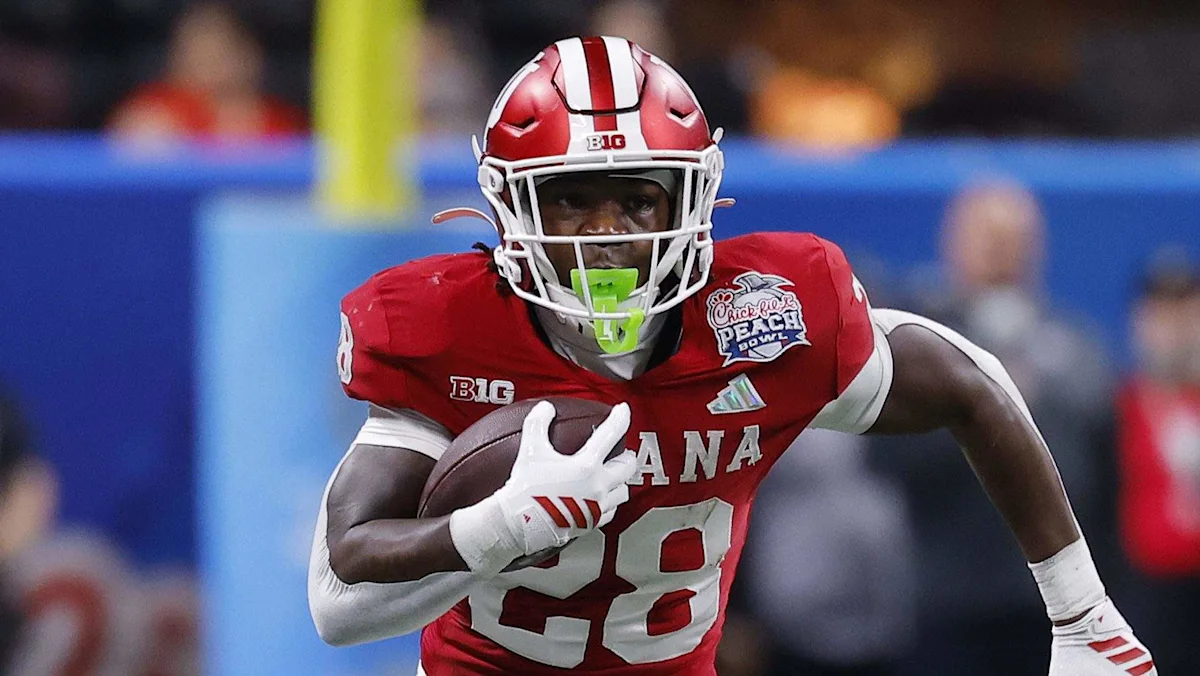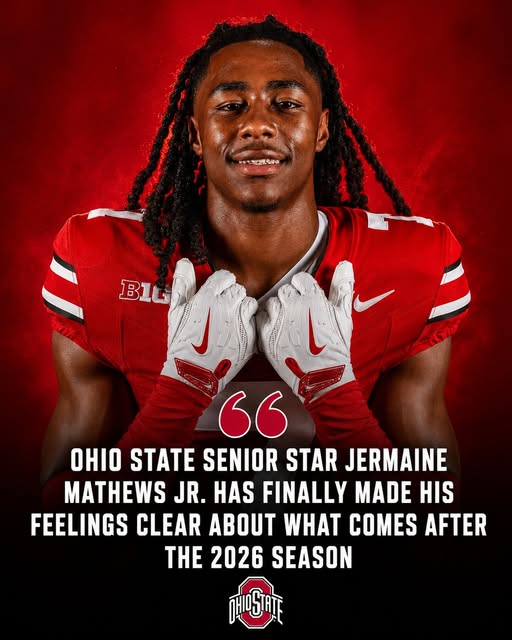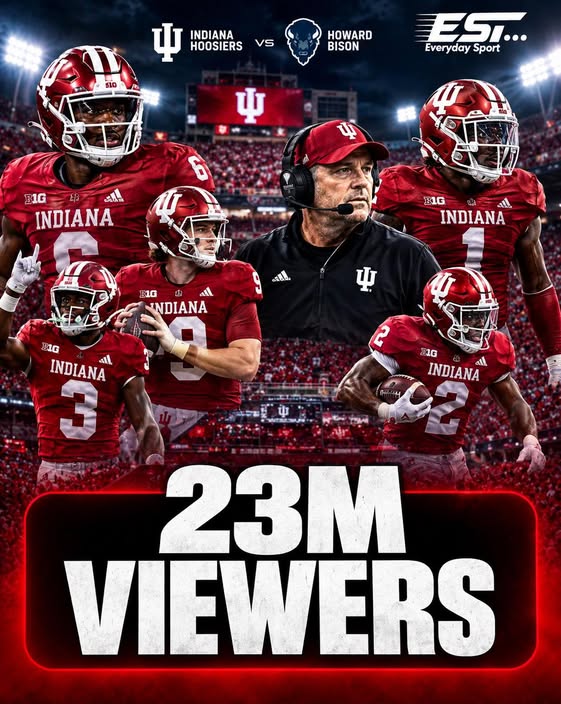
Indiana football continues to command national attention, but the latest numbers surrounding the Hoosiers’ Week 2 matchup with Howard require some context.
The Hoosiers entered Saturday’s game carrying the weight of a defending national champion and one of the country’s longest active winning streaks. They left Memorial Stadium with another emphatic victory, dismantling Howard 55-0 and improving to 2-0 on the season.
The result itself was hardly a surprise. The way Indiana handled the afternoon, however, reinforced why Curt Cignetti’s program remains one of the biggest stories in college football.
Indiana dominated from the opening possession, building a 20-0 advantage after the first quarter before adding three more touchdowns in the second. By halftime, the Hoosiers had turned the game into a rout, leading 41-0.
Indiana ultimately finished with a 55-0 shutout in front of an announced crowd of 54,376 at Memorial Stadium. Howard’s offense never found the end zone, while the Hoosiers’ defense consistently disrupted the Bison throughout the afternoon.
Quarterback Josh Hoover helped establish the tone early. After making his Indiana debut in the season opener, Hoover again directed an efficient attack before giving way to the team’s depth as the margin continued to grow.
Wide receiver Charlie Becker was among the offensive standouts, continuing his early-season production with three touchdown receptions. The running game also provided plenty of firepower, with Indiana leaning on its depth and physicality as the game progressed.
The defense was equally impressive.
Indiana recorded five sacks and 12 tackles for loss, while Rolijah Hardy added a pick-six as the Hoosiers completely shut down Howard. The performance represented a significant defensive response after Indiana had allowed 16 points against North Texas in the season opener.
But while Indiana’s performance generated plenty of discussion across the college football landscape, claims that the Howard game attracted 23 million television viewers and became ESPN’s most-watched regular-season game in a decade are not supported by the currently available ratings reports.
That distinction belongs to another Big Ten-related matchup from the same weekend.
Ohio State’s showdown with Texas drew an average audience of 14.0 million viewers on ABC, according to ESPN PR, with the audience peaking at 16.4 million. The game was the most-watched regular-season college football game on ESPN networks since Michigan and Ohio State in 2016. It also established a Week 2 viewership record.
The significance of those numbers was amplified by what happened on the field.
Ohio State entered its meeting with Texas ranked No. 1 and appeared to be in control after building a 23-3 lead. Texas then produced a stunning fourth-quarter comeback, scoring 21 unanswered points to win 24-23.
The combination of a top-five matchup, a national championship-caliber storyline and a dramatic fourth-quarter finish helped make Ohio State-Texas the television centerpiece of the weekend.
Indiana-Howard followed a very different script.
Rather than a competitive game that came down to the final possession, the Hoosiers seized control almost immediately and never allowed Howard back into the contest. Indiana’s dominance meant that Cignetti could rotate players and give valuable snaps to members of his roster who might otherwise have had limited opportunities.
That development may prove important as the season progresses.
Indiana’s schedule becomes significantly more demanding once Big Ten play arrives. The Hoosiers are scheduled to face Ohio State later in the season, along with Michigan, USC, Nebraska, Rutgers, Northwestern and other conference opponents.
For Cignetti, Saturday’s performance was less about making a statement through the final score and more about correcting the issues that appeared during the opener.
Indiana entered the Howard matchup after defeating North Texas 52-16. Although the Hoosiers controlled the game, Cignetti and his staff still had areas to address, particularly with offensive decision-making and consistency.
Against Howard, Indiana’s defense looked considerably sharper.
The Hoosiers consistently created negative plays, generated pressure and forced Howard into difficult situations. The result was Indiana’s first shutout of the 2026 season and another indication that the program has substantial depth across the roster.
Hoover also continued to settle into his role as the starting quarterback.
The transfer quarterback arrived at Indiana with considerable expectations following Fernando Mendoza’s departure, and his first two games have given the Hoosiers a strong foundation at the position. Against Howard, Indiana did not need Hoover to carry the offense for four quarters because the running game and defense had already created overwhelming separation.
That balance could become increasingly important when Indiana begins facing ranked Big Ten opponents.
The Hoosiers are currently positioned among the nation’s top teams, and their 17-game winning streak entering the Howard matchup reflected the momentum Cignetti’s program has built. The 55-0 victory extended that run to 18 consecutive wins.
Still, television numbers and on-field dominance should be viewed separately.
Indiana’s victory was unquestionably one of the weekend’s most decisive performances. But the available ratings data does not establish that Indiana-Howard reached 23 million viewers, nor does it show the game surpassing Ohio State-Texas in ESPN’s regular-season audience rankings.
What is clear is that the Big Ten continues to occupy a significant portion of the national college football conversation.
Ohio State-Texas delivered a massive television audience and a dramatic finish. Indiana, meanwhile, continued its march through the 2026 season with another dominant performance from a program that has quickly become one of the sport’s most recognizable contenders.
For Cignetti, the bigger test is still ahead.
Indiana’s 55-0 win over Howard may not have produced the reported television record, but it accomplished something more directly relevant to the Hoosiers’ season: Indiana protected its winning streak, improved to 2-0, developed its depth and entered the next stage of its schedule with considerable momentum.
And as the competition intensifies, the Hoosiers will have an opportunity to prove whether the dominance displayed against Howard can translate against the nation’s strongest teams.
The next chapter begins with Western Kentucky before Indiana turns toward the Big Ten portion of its schedule.
The numbers may have been overstated in the original report, but the message from Bloomington remains unmistakable: Indiana is still rolling.