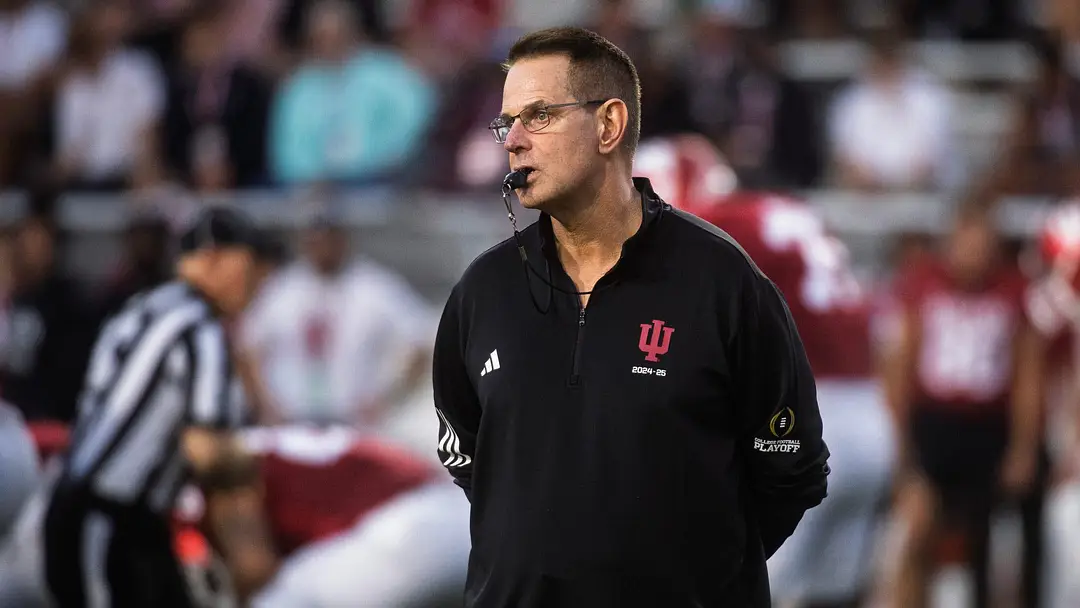
As the summer recruiting calendar begins to heat up across college football, the momentum surrounding Curt Cignetti and the Indiana Hoosiers football continues to grow at a pace few around the Big Ten expected just a year ago. What started as cautious optimism following Cignetti’s arrival in Bloomington has rapidly transformed into legitimate recruiting buzz, and with official visit season now underway, Indiana appears positioned to capitalize in a major way.
The Hoosiers are no longer simply trying to keep pace in the conference. They are actively battling established powers for talent, building relationships with nationally recognized prospects, and selling recruits on a program that suddenly feels energized, organized and increasingly dangerous. Sources close to the program indicate Indiana’s staff has identified several priority targets capable of becoming foundational pieces for the future, and among them, three names continue to surface as the most likely commitments during the upcoming stretch of official visits.
For a program that has historically struggled to win recruiting battles against the likes of Ohio State Buckeyes football, Michigan Wolverines football and Penn State Nittany Lions football, this moment represents something larger than a few potential verbal pledges. It represents proof that Indiana’s pitch under Cignetti is beginning to resonate nationally.
The first prospect generating significant confidence around Bloomington is four-star defensive lineman Cameron Brooks, a physically imposing edge rusher whose recruitment has accelerated dramatically over the past several months. Brooks has quietly become one of Indiana’s most important defensive targets in the 2026 cycle, and multiple recruiting insiders believe the Hoosiers have positioned themselves near the top of his list heading into his official visit.
What makes Brooks such a priority for Indiana is not simply his talent, but the immediate fit within Cignetti’s evolving defensive identity. At 6-foot-4 with explosive first-step quickness and the versatility to line up in multiple fronts, Brooks fits the mold of the aggressive, disruptive defender Indiana wants to build around moving forward. The Hoosiers’ staff has emphasized development, early playing opportunity and defensive creativity in conversations with the standout prospect, and those messages appear to be landing effectively.
Perhaps more importantly, Brooks has reportedly developed a strong connection with Indiana’s coaching staff on a personal level. In modern recruiting, relationships often outweigh facilities or conference prestige, and Indiana has leaned heavily into authenticity throughout the process. Recruits consistently describe Cignetti’s approach as direct, transparent and refreshingly confident, a combination that has helped Indiana gain traction with prospects who may not have previously considered Bloomington a serious destination.
The second name generating growing momentum for the Hoosiers is highly regarded wide receiver Jaylen McCoy, whose speed and playmaking ability have made him one of the more intriguing offensive targets on Indiana’s board. McCoy represents the kind of dynamic athlete Indiana must secure if the program hopes to elevate its offensive ceiling within the Big Ten.
Indiana’s pitch to McCoy centers around opportunity. The Hoosiers believe they can sell immediate involvement within an offense expected to become far more aggressive under Cignetti’s direction. Coaches have reportedly highlighted the program’s willingness to utilize versatile playmakers in space, allowing athletes like McCoy to impact games early through multiple alignments and packages.
For recruits evaluating programs in the NIL era, development and exposure remain critical, but so does belief in the offensive vision. Indiana’s staff has made a concerted effort to convince offensive recruits that the Hoosiers are no longer content playing conservative football against conference heavyweights. Instead, the message is clear: Indiana intends to become faster, more explosive and more difficult to defend.
McCoy’s official visit could prove pivotal because momentum appears to be shifting. Programs from across the Midwest have continued pushing aggressively for the talented receiver, but Indiana has quietly emerged as a serious contender capable of pulling off what would once have been viewed as a recruiting upset. Sources indicate the atmosphere around Bloomington during official visit weekends could play a significant role in solidifying that momentum.
That atmosphere matters more than ever. Official visits are no longer just campus tours. They are carefully orchestrated experiences designed to immerse recruits in the culture, energy and long-term vision of a program. Indiana understands that reality, and by all accounts, the staff has invested heavily in presenting a united and ambitious identity to incoming visitors.
The third prospect drawing substantial attention is offensive lineman Tyler Bennett, a massive trench prospect whose recruitment could ultimately symbolize Indiana’s progress under Cignetti better than any other commitment. Bennett has attracted interest from multiple Power Four programs, yet the Hoosiers have remained firmly in contention because of their consistent communication and developmental pitch.
Offensive line recruiting remains one of the clearest indicators of program credibility. Elite linemen rarely commit to programs they do not trust to compete physically at a high level, and Bennett’s continued interest suggests Indiana is earning respect in recruiting circles that previously overlooked the Hoosiers.
Cignetti’s staff has emphasized toughness, discipline and long-term NFL development throughout Bennett’s recruitment. Those themes mirror the identity Cignetti established during previous coaching stops, where physicality and structure became defining characteristics of his teams. Indiana believes Bennett could become a cornerstone piece capable of stabilizing the offensive front for years.
Recruiting analysts have also pointed to another key factor benefiting Indiana during this stretch: momentum itself. Success in recruiting often builds exponentially. Once prospects begin viewing a program as ascending, additional targets become more willing to listen seriously. Indiana is beginning to experience that phenomenon.
The Hoosiers’ recent recruiting efforts have generated increasing chatter across regional high school programs, and recruits are paying attention to the energy surrounding the staff. While Indiana may not yet possess the national recruiting cachet of traditional Big Ten powers, perception inside the industry is beginning to shift. Cignetti has brought urgency and clarity to the program, and recruits appear intrigued by the possibility of becoming part of something transformational rather than simply joining an established powerhouse.
That distinction matters in today’s recruiting landscape. Many prospects want more than depth-chart anonymity at blue-blood programs. They want opportunity, visibility and a chance to help shape a winning culture. Indiana’s coaching staff has aggressively leaned into that message, portraying Bloomington as a place where elite recruits can leave a genuine legacy.
Cignetti himself remains central to the recruiting momentum. Known throughout coaching circles for his confidence and program-building track record, he has quickly altered the perception of Indiana football internally and externally. Recruits and parents alike have responded positively to his reputation for accountability and development.
Unlike coaches who rely heavily on salesmanship alone, Cignetti’s credibility stems from consistent results throughout his career. That track record allows Indiana to present a compelling argument to recruits skeptical about the program’s historical limitations. The message is simple but effective: the past does not dictate the future.
Official visit season now becomes the critical proving ground for whether that message can convert into commitments. The Hoosiers understand that recruiting victories during the summer could significantly alter both roster depth and national perception heading into future seasons. Landing multiple high-profile prospects would not only strengthen the roster but also send a message across the conference that Indiana intends to compete aggressively for talent moving forward.
There is also an undeniable strategic urgency surrounding this recruiting cycle. The expanded influence of NIL collectives, the transfer portal and accelerated roster movement have fundamentally changed how programs build teams. Coaches can no longer rely solely on gradual development over multiple recruiting cycles. Momentum must be created quickly and sustained consistently.
Indiana’s staff appears fully aware of that reality. Recruiting efforts have become more organized, more visible and more aggressive under Cignetti’s leadership. Staff members have prioritized relationship-building while simultaneously emphasizing the program’s long-term vision. Recruits visiting Bloomington are hearing a unified message about culture, opportunity and future competitiveness.
The timing could not be more important for the Hoosiers. The Big Ten continues evolving into one of the most competitive and financially powerful conferences in college football. Programs incapable of elevating their recruiting operations risk falling further behind. Indiana understands that remaining stagnant is no longer an option.
What separates the current moment from previous recruiting surges at Indiana is the sense that the program’s confidence is no longer manufactured. There is genuine belief inside the building that the Hoosiers can compete for talent traditionally viewed as unattainable. Coaches are recruiting with conviction rather than caution, and that mindset shift often becomes contagious.
Players notice confidence. Families notice organization. High school coaches notice consistency. Indiana appears to be checking those boxes more effectively than it has in years.
The importance of these upcoming official visits extends beyond immediate commitments as well. Even prospects who leave Bloomington without publicly committing could become long-term recruiting battles extending into the fall. Positive impressions during official visit season frequently shape future decisions, especially when programs continue winning on the field.
That creates another layer of pressure — and opportunity — for Indiana. Recruiting momentum becomes far easier to sustain when paired with visible progress during the season. Should the Hoosiers demonstrate competitiveness on Saturdays while simultaneously hosting high-profile recruits, the program’s upward trajectory could accelerate even faster.
Around the Big Ten, opposing staffs are already taking notice. Indiana may still face skepticism nationally, but internally, rival programs understand the Hoosiers are recruiting with a level of aggression and organization that feels different from previous eras.
For now, however, attention remains fixed on Brooks, McCoy and Bennett. Each prospect represents a different positional need, a different recruiting battle and a different opportunity for Indiana to validate its evolving identity. Collectively, they symbolize a broader reality: the Hoosiers are no longer recruiting merely to survive in the conference. They are recruiting to build something sustainable.
Whether all three ultimately commit remains uncertain. Official visit season can shift rapidly, and recruiting momentum changes constantly in the modern era. Yet what appears undeniable is that Indiana has positioned itself squarely in the conversation for multiple impact players — a reality that seemed unlikely not long ago.
In college football, perception changes slowly until suddenly it changes all at once. Programs spend years attempting to establish credibility before one recruiting cycle, one coaching hire or one breakthrough season alters the narrative entirely. Indiana believes it may be approaching that kind of inflection point under Cignetti.
The energy surrounding Bloomington continues growing. Recruits are listening. Official visits are arriving. And for perhaps the first time in recent memory, Indiana football enters the summer not as a program hoping to be noticed, but as one expecting to make noise.