The glow of a national championship appearance should have been enough to change everything for Indiana Hoosiers football. In modern college football, winning changes perception, and perception changes recruiting. Programs that crash the playoff party are supposed to ride the momentum into the homes of elite high school prospects, stacking top-10 classes and reshaping their future overnight. That has been the blueprint followed by nearly every breakthrough contender of the College Football Playoff era.
But in Bloomington, the story unfolding behind the scenes is far more complicated.
Despite one of the most remarkable seasons in program history and a stunning run that elevated Indiana from Big Ten afterthought to national championship contender, the Hoosiers’ recruiting rankings remain surprisingly modest compared to the sport’s traditional powers. Fans expected fireworks after the breakthrough campaign. Instead, recruiting services continue to place Indiana well behind conference giants like Ohio State Buckeyes football, Michigan Wolverines football, Penn State Nittany Lions football and even several programs that never came close to the College Football Playoff conversation.
The disconnect has left many around college football asking the same question: How can a national championship-caliber program still struggle to recruit at an elite level?
According to sources close to the program and several recruiting analysts around the Big Ten, the answer is layered, strategic and, in many ways, intentional.
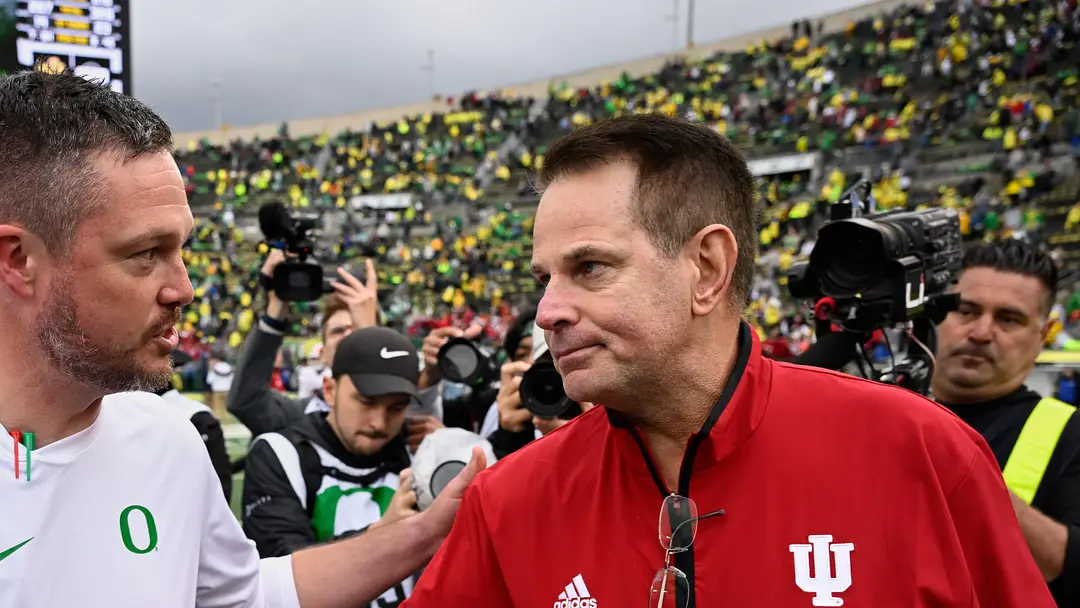
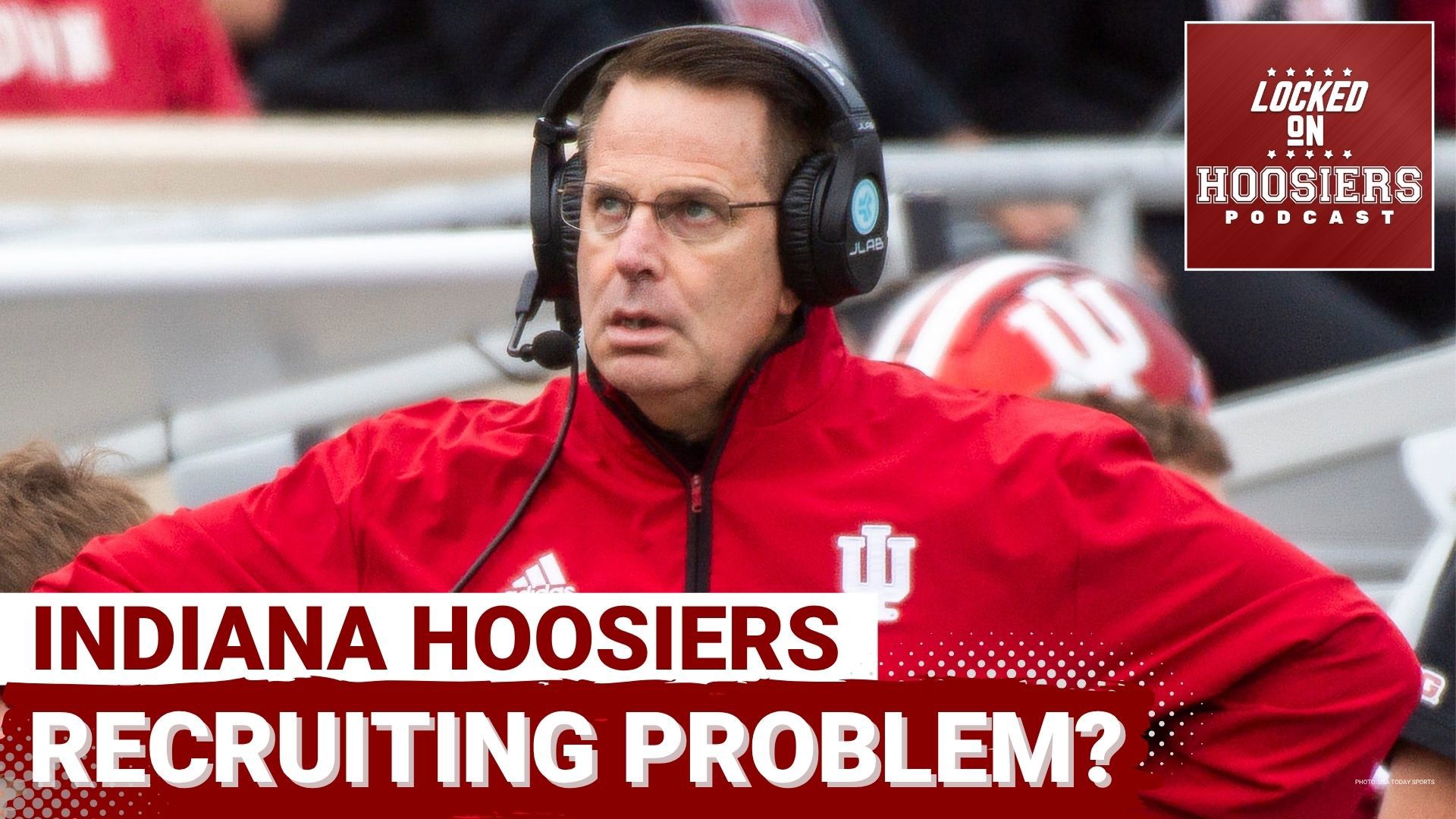
At the center of it all is head coach Curt Cignetti, whose approach to roster building differs dramatically from the recruiting philosophies dominating the modern sport. While blue-blood programs continue chasing five-star prospects and social media splash commitments, Cignetti has built Indiana’s rise through evaluation, development and aggressive transfer portal targeting rather than relying solely on traditional high school recruiting rankings.
That philosophy may explain why the Hoosiers continue winning games while finishing outside the nation’s recruiting elite.
Inside the program, there is little panic about the rankings themselves. In fact, multiple staff members believe the public obsession with recruiting stars often fails to reflect how college football rosters are truly constructed in the NIL and transfer portal era. Indiana’s staff views roster retention, portal fit and culture evaluation as more valuable than simply landing the highest-rated recruiting class.
It is a mindset that has frustrated some fans but also produced results few thought possible just a few seasons ago.
“When you watch Indiana closely, you realize they’re recruiting differently,” one longtime Big Ten recruiting analyst told ESPN. “They’re not trying to out-sign Georgia or Ohio State for five-star kids. They know that battle. Instead, they’re targeting players who fit exactly what they want schematically and culturally. They’re willing to take lower-ranked guys they believe can become stars.”
That philosophy became obvious throughout Indiana’s championship run.
The roster was filled with overlooked prospects, transfer additions and players who developed far beyond their original recruiting evaluations. While other playoff contenders flexed classes stacked with national top-100 talent, Indiana leaned on experience, continuity and player development. The coaching staff consistently identified undervalued athletes who fit specific needs rather than chasing rankings headlines.
For Cignetti, that approach is not accidental. It is foundational.
Long before arriving at Indiana, Cignetti built a reputation as one of the sharpest evaluators in college football. At previous stops, he repeatedly won with rosters lacking elite recruiting pedigree. His belief has remained consistent: player development matters more than recruiting hype.
That belief intensified after the explosion of NIL deals fundamentally changed the recruiting landscape.
Programs with massive financial backing now dominate many elite recruitments, turning high school recruiting into bidding wars few schools can consistently win. Indiana, while significantly improved in NIL support, still does not operate financially at the level of SEC giants or the wealthiest Big Ten powers. Sources say the Hoosiers have instead prioritized sustainable spending focused on roster retention and targeted portal acquisitions rather than exhausting resources on a handful of five-star high school battles.
It is a practical strategy, but one that naturally impacts recruiting rankings.
Most major recruiting rankings heavily emphasize high school commitments. Transfer portal additions, especially veteran contributors, often receive far less weight in overall class evaluations. Indiana’s staff understands this dynamic and appears largely unconcerned by it internally.
The numbers, however, still create perception problems externally.
Recruits notice rankings. Fans obsess over them. Rival coaches weaponize them in negative recruiting conversations. Even after a championship appearance, Indiana still faces skepticism from elite prospects who wonder whether the Hoosiers can sustain success long term.
That skepticism reflects decades of football history.
Indiana has traditionally been viewed as a basketball-first institution, a program overshadowed inside its own conference by powerhouse brands with richer football traditions. One magical season, even one ending in a national title appearance, does not instantly erase generations of perception.
Recruiting insiders say many elite prospects still see Indiana as a “prove-it-again” program rather than a permanent national contender.
“That’s the hardest jump in college football,” another recruiting source explained. “Winning once gets attention. Winning consistently changes recruiting. Kids need to believe the success is sustainable before you start consistently pulling elite top-10 classes.”
There are also geographic realities working against Indiana.
The Hoosiers recruit in one of the most competitive territories in America. The Midwest remains heavily controlled by programs like Ohio State, Michigan, Notre Dame and Penn State, all of whom possess stronger recruiting histories, larger national brands and deeper NIL networks. Breaking into that hierarchy requires years of sustained dominance, not just one breakthrough run.
And yet, despite those challenges, Indiana continues landing players the coaching staff believes fit its long-term blueprint.
Internally, coaches reportedly place enormous emphasis on football intelligence, adaptability and toughness over raw recruiting ranking metrics. Several prospects with higher recruiting profiles have allegedly been passed over because the staff questioned how they would fit culturally inside the locker room.
That emphasis on culture became one of the defining traits of Indiana’s championship season.
Players repeatedly described the locker room as unusually connected, disciplined and selfless. Coaches privately believe maintaining that chemistry is more important than winning recruiting press conferences in February.
There is another reason the rankings remain lower than expected: Indiana has become increasingly selective with scholarship numbers.
In the transfer portal era, roster management has become more fluid than ever before. Programs now save scholarships specifically for post-spring transfer opportunities and experienced veteran additions. Indiana’s staff has aggressively embraced that model, often leaving spots open rather than filling every scholarship slot with high school signees.
The result is smaller recruiting classes that naturally rank lower nationally in cumulative scoring systems.
Some analysts argue Indiana’s recruiting rankings are therefore misleading because they fail to account for efficiency and fit. A smaller class with highly targeted additions can still outperform larger, higher-ranked classes lacking cohesion.
That theory gained credibility throughout Indiana’s remarkable season.
The Hoosiers routinely defeated teams loaded with more celebrated recruits. They won with discipline, execution and experience rather than overwhelming recruiting talent advantages. Opposing coaches quietly acknowledged that Indiana looked far more developed and connected than many rosters filled with blue-chip prospects.
Still, the next challenge may be the hardest yet.
Success changes expectations.
Indiana is no longer hunting from the shadows. The Hoosiers are now being evaluated as a legitimate contender, which means every recruiting cycle will be scrutinized more intensely. Fans who once celebrated bowl eligibility now expect playoff appearances. The recruiting rankings, fairly or unfairly, will become part of that conversation.
Can Indiana continue competing for championships without top-five recruiting classes?
History suggests it is difficult.
Modern national champions typically possess elite talent depth accumulated through multiple highly ranked recruiting cycles. Development matters, but raw athletic ceiling still determines championships at the highest level. Eventually, even the best coaching staffs need difference-makers capable of matching up against the sport’s premier athletes.
That reality places enormous pressure on Indiana’s evaluation system.
The Hoosiers must continue identifying hidden talent while maximizing portal opportunities at an elite level. Any slip in development or retention could expose the limitations of recruiting outside the national elite.
Yet there is also evidence college football may be changing faster than traditional recruiting models can track.
The transfer portal has created unprecedented roster mobility. Veteran experience often outweighs freshman upside. Older, developed players can transform programs overnight. Indiana’s rise itself became proof of that new reality.
Cignetti appears fully committed to exploiting that market inefficiency.
Instead of obsessing over signing day rankings, Indiana has focused on building an adaptable roster ecosystem. Coaches prioritize finding experienced contributors, retaining locker room leaders and identifying developmental players overlooked by larger programs. It is less glamorous than chasing five-star headlines, but potentially more sustainable for a program without endless financial advantages.
That approach has also resonated with certain recruits who value opportunity over branding.
Several recent Indiana commits cited early playing time, developmental trust and coaching relationships as major reasons for choosing the Hoosiers over more established programs. The staff’s reputation for maximizing overlooked talent has quietly become a recruiting pitch of its own.
And perhaps that is the biggest twist in Indiana’s recruiting story.
The low rankings may not represent failure at all. They may represent a program intentionally building differently than the rest of college football.
In an era dominated by NIL spending wars, transfer chaos and nonstop social media recruiting battles, Indiana has chosen a more calculated path. The Hoosiers are betting that evaluation, development and culture can still compete with raw recruiting star power.
Whether that formula can sustain championship contention remains one of the most fascinating questions in the sport.
What is undeniable, however, is that Indiana has already changed its national perception dramatically. A program once dismissed as irrelevant now finds itself dissected under the microscope of championship expectations. The recruiting rankings only matter now because Indiana finally matters nationally.
That alone represents a seismic shift.
For years, the Hoosiers fought simply for recognition. Now, after a national championship run, every recruiting cycle becomes headline news, every commitment becomes debate material and every ranking becomes evidence in larger arguments about the future of the program.
Inside the building, though, the message reportedly remains unchanged.
Win development. Win culture. Win retention. Win evaluation.
The rankings, according to those around the program, will take care of themselves eventually.
Or maybe they won’t.
And maybe Indiana no longer cares.