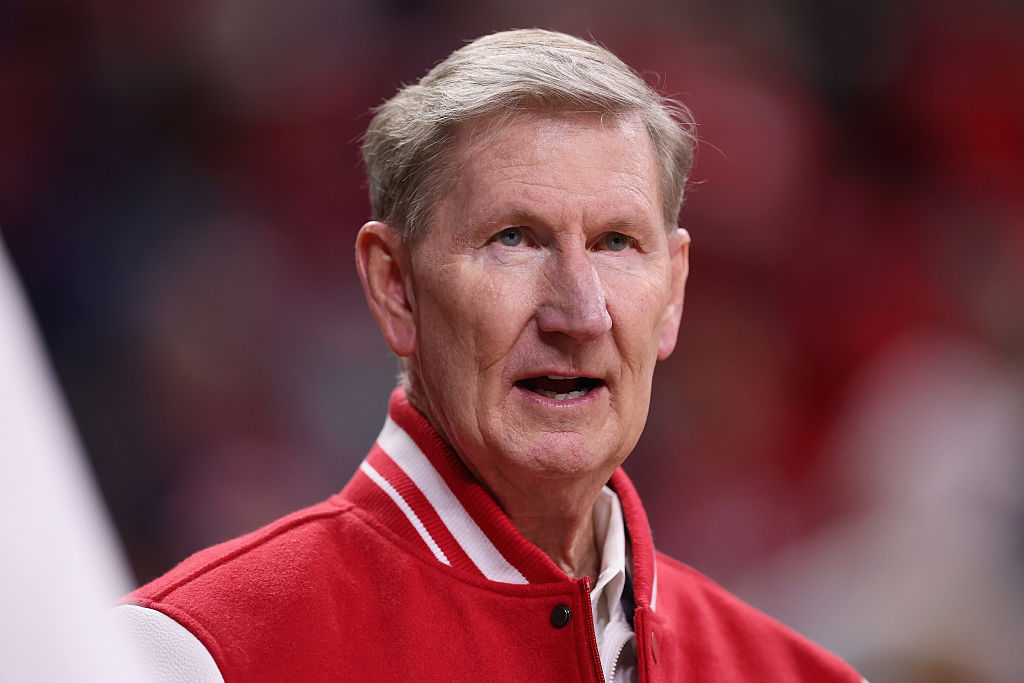
A newly released investigative report from Ohio State University has concluded that former president Ted Carter improperly used his position to benefit Krisanthe Vlachos, a woman with whom he was involved in what the university described as an “inappropriate relationship.”
The 47-page report, made public this week along with thousands of supporting documents, outlines the findings of an internal probe into the circumstances surrounding Carter’s sudden resignation last month. Investigators determined that Carter repeatedly prioritized personal interests over the university’s, leveraging his authority to secure opportunities and resources for Vlachos in ways that violated institutional policy and ethical standards.
According to the report, Carter attempted to help Vlachos obtain employment at the university, secure workspace, access staff and technical assistance for her podcast, and gain support for a proposed app and other business ventures. At least 14 university employees reportedly received requests from Carter to assist her.
The findings also indicate that Carter’s actions may have breached Ohio ethics laws. The report cites the state’s definition of conflict of interest, which bars public officials from engaging in decisions that directly benefit themselves or close associates. It further references provisions of the Ohio Revised Code prohibiting the use of public office to obtain anything of value that could improperly influence official duties.
The university has shared the report with several state agencies, including the Ohio Inspector General, the Ohio Ethics Commission, the Ohio Auditor of State, and the Ohio Attorney General. While the report suggests Carter’s conduct may warrant further review, no charges or additional actions had been announced as of Thursday.
Investigators found that Carter connected Vlachos with numerous organizations, including JobsOhio, Anduril Industries, the Ohio National Guard, the Ohio Department of Veterans Services, Student Veterans of America, and Vet Mentor AI. The report noted that these efforts risked damaging the university’s credibility and relationships with external partners.
Despite Carter’s persistence, investigators concluded that internal processes ultimately prevented Vlachos from securing a formal role or funding from the university. Staff across departments consistently determined that her proposals—including an app called Operation Forward—lacked feasibility and offered no clear benefit to the institution.
The report also details efforts by Carter to conceal the nature of his involvement with Vlachos. He frequently used personal email accounts, arranged private meetings, and avoided transparency in scheduling and documentation. In some instances, investigators found he misrepresented the purpose of travel or expenses tied to her.
One example involved a personal trip that Carter later reclassified as official business to seek reimbursement. Another instance cited a university-funded dinner where Carter initially denied authorizing payment after questions were raised. The report concluded that some of these actions violated university expenditure policies.
Carter and Vlachos reportedly met in March 2023 at a professional forum in Washington, D.C., while he was still serving as president of the University of Nebraska. Their relationship continued after he assumed leadership at Ohio State in January 2024, a role in which he earned nearly $1.19 million annually before resigning in March.
Over the course of his tenure, Carter and Vlachos had dozens of meetings and took multiple trips together. While no inappropriate public behavior was documented, investigators emphasized that the underlying relationship influenced his professional decisions.
The report also examined Vlachos’ podcast, “The Callout,” which focused on connecting military veterans with job opportunities. Produced in part with assistance from WOSU, the program struggled to gain traction and was described by some participants as unprofessional and lacking audience engagement.
Carter appeared in several episodes and helped facilitate external funding, including a contract with JobsOhio. However, stakeholders involved in the project expressed concerns about its direction and execution.
Beyond the podcast, Carter aggressively promoted Vlachos’ app concept, connecting her with university officials, corporate partners, and potential donors. Investigators found that he overstated donor interest and, in some cases, made claims about support that could not be verified. One high-profile example involved billionaire Les Wexner, whose representatives confirmed he had no involvement with the project.
The investigation was launched on March 8 at the request of Board of Trustees Chair John W. Zeiger, one day after Carter’s resignation. It was conducted by the university’s Office of Compliance and Integrity alongside its Internal Audit department. Investigators reviewed extensive records, including emails, financial documents, travel logs, and conducted 60 interviews.
Carter declined to participate in the investigation through his attorney, and Vlachos did not respond to requests for comment.
In its conclusion, the report emphasized that while Carter’s conduct raised serious ethical concerns, institutional safeguards and employee diligence prevented misuse of university resources. It also issued several recommendations, including strengthening oversight of presidential expenditures, revising ethics training for senior leaders, and reinforcing accountability standards.
University officials described the findings as deeply troubling but underscored confidence in internal systems that ultimately blocked improper actions from succeeding.