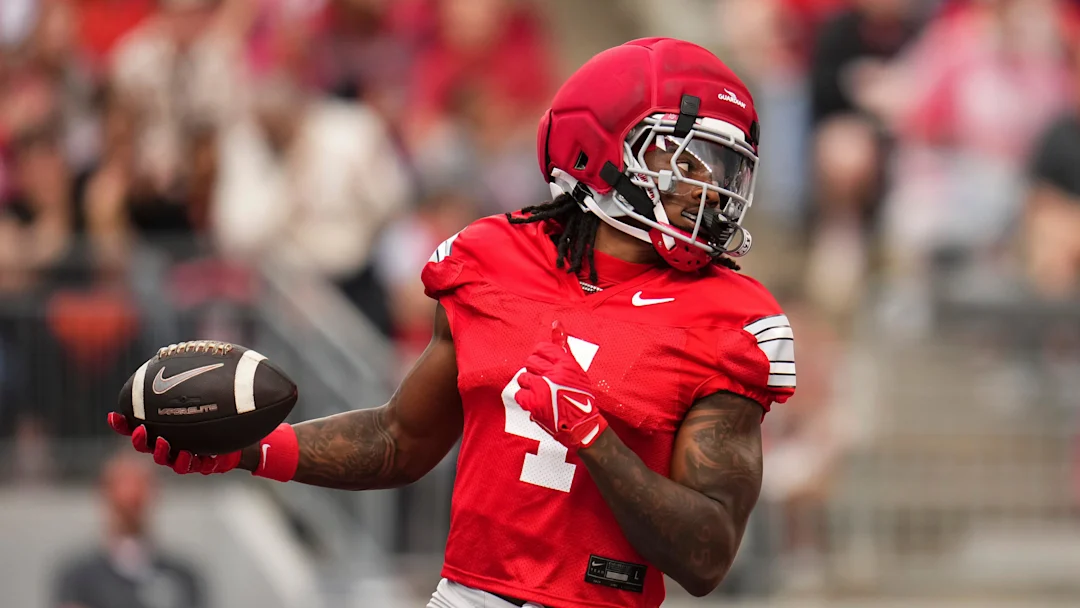
COLUMBUS, Ohio — The conversation around college football’s elite programs often shifts from year to year, shaped by recruiting cycles, transfer portal movement, playoff results and the constant churn of coaching staffs. Yet for Ohio State Buckeyes, head coach Ryan Day believes the present moment represents something more stable, more intentional, and more powerful than the usual peaks and valleys that define the sport.
Speaking with a measured confidence that has become increasingly characteristic of his tenure, Day outlined why he believes Ohio State is operating at what he called the “peak of its powers,” a phrase that reflects both internal conviction and external validation after multiple seasons of sustained success in the Big Ten and national championship contention. While the Buckeyes have long been considered one of the premier brands in college football, Day’s assessment points to a deeper evolution within the program—one that goes beyond talent alone and into the structural foundations of how the team is built, developed, and maintained.
At the heart of his reasoning is continuity. In an era when roster volatility has become the norm, Ohio State has managed to maintain a rare level of consistency in its coaching staff, strength program, and recruiting operations. Day emphasized that stability as a critical differentiator, noting that the program’s ability to retain key assistants while also integrating new ideas has created a balance that many of its competitors struggle to replicate. Rather than relying on cyclical rebuilds, Ohio State has instead constructed what he views as a sustained competitive environment, where expectations remain high regardless of roster turnover.
That continuity extends to player development, which Day identified as the program’s most important internal metric. While recruiting rankings have consistently placed Ohio State near the top nationally, he stressed that talent acquisition alone no longer defines success in the modern game. Instead, the emphasis has shifted toward maximizing that talent once it arrives in Columbus. The Buckeyes’ ability to develop players at multiple positions—particularly at quarterback, wide receiver, and along the defensive front—has allowed them to maintain a pipeline of NFL-ready athletes even as starters depart each season.
Quarterback play, in particular, has become a defining feature of the program’s identity under Day. As a former quarterbacks coach himself, he has overseen the development of multiple high-profile signal-callers, and his system continues to attract elite recruits who see Ohio State as a direct pathway to professional football. But beyond recruitment, Day highlighted the internal competition and daily structure that push quarterbacks to evolve rapidly once they enter the program. That competitive environment, he suggested, is a key reason why Ohio State rarely experiences significant drop-off at the sport’s most important position.
Offensively, the Buckeyes remain one of the most dynamic teams in the country, blending traditional power elements with modern spread concepts that stress defenses horizontally and vertically. Day pointed out that adaptability has been essential in maintaining that edge. Rather than adhering rigidly to a single identity, Ohio State has embraced evolution, adjusting its schemes to fit personnel while maintaining core principles of tempo, spacing, and explosiveness. That flexibility, he argued, is a major reason the program has remained among the nation’s top scoring offenses year after year.
Defensively, Ohio State’s resurgence has been equally important in shaping Day’s belief about the program’s current standing. After periods of inconsistency in past seasons, the Buckeyes have invested heavily in defensive identity, emphasizing physicality, discipline, and versatility. The result has been a unit capable of matching up against both pass-heavy Big Ten opponents and more balanced national contenders. Day credited the defensive staff’s ability to adapt game plans week to week while maintaining a strong foundational philosophy as a key development in the program’s overall rise.
Recruiting remains the lifeblood of Ohio State’s success, and Day was candid about its importance in sustaining the program’s elite status. The Buckeyes continue to recruit at a national level, drawing top talent not only from Ohio but also from across the Midwest, the South, and increasingly, the West Coast. According to Day’s perspective, what separates Ohio State from other programs is not just its ability to land highly ranked prospects, but its success in integrating those players into a culture that demands immediate contribution while still allowing for long-term development.
That culture, as Day described it, is built on accountability and clarity. Players are expected to meet high standards from the moment they arrive, but they are also provided with a structured path to improvement. Strength and conditioning programs, film study habits, and leadership development initiatives all play a role in shaping athletes who are prepared not just for college competition, but for the professional level that many of them aspire to reach. The NFL pipeline remains a powerful recruiting tool, but Day emphasized that it is the daily habits, not just the outcomes, that sustain that pipeline.
Another factor contributing to Ohio State’s current level of performance is what Day described as competitive depth. Unlike programs that rely heavily on a limited number of stars, the Buckeyes have built a roster capable of rotating talent without significant drop-off in execution. That depth has been particularly important in managing injuries and navigating the increasingly demanding college football schedule. It also fosters internal competition, which Day believes elevates performance across the board.
The Big Ten landscape has also shifted in recent years, with new conference additions and evolving playoff implications reshaping how programs prepare and compete. Ohio State, however, has remained a constant at the top of the standings. Day acknowledged that maintaining dominance in such an environment requires constant recalibration, particularly as opposing programs invest heavily in closing the gap. Yet he maintained that Ohio State’s internal standards remain the primary driver of its success, rather than external pressures or rival movements.
A significant part of that internal standard revolves around player leadership. Day highlighted the importance of veteran players setting the tone for younger teammates, especially in maintaining consistency throughout the season. Leadership, in his view, is not assigned but earned through performance and daily habits. The presence of experienced contributors who understand the expectations of the program has helped stabilize the roster during transitional periods, ensuring that Ohio State rarely experiences extended slumps in performance.
Facilities and institutional support also play a role in the program’s sustained excellence. Ohio State’s investment in training infrastructure, nutrition programs, and sports science has positioned it among the most well-resourced programs in the country. Day acknowledged that while facilities alone do not win games, they provide a competitive advantage in preparation and recovery, allowing players to maximize their physical and mental readiness throughout the season.
Perhaps most importantly, Day pointed to mindset as the defining factor in Ohio State’s current trajectory. He described a collective understanding within the program that success is not measured solely by regular-season performance or conference titles, but by the ability to compete for and win national championships. That expectation, he suggested, shapes everything from offseason training to in-game decision-making. It is a standard that has been internalized across the roster, creating a culture where anything less than elite performance is viewed as insufficient.
The pressure that comes with such expectations is significant, but Day has consistently framed it as a privilege rather than a burden. Coaching at Ohio State means operating under constant scrutiny, with national attention following every result. Yet he believes that environment is precisely what fuels the program’s competitiveness. Players are not only aware of the expectations—they are recruited into them, trained within them, and ultimately measured against them.
As the Buckeyes continue to position themselves for another postseason run, the question of sustainability inevitably arises. College football’s modern landscape, shaped by transfer movement and expanding playoff formats, makes long-term dominance increasingly difficult. Yet Day’s perspective suggests that Ohio State’s foundation is designed specifically to withstand those pressures. Through recruiting, development, culture, and institutional support, the program has constructed a model that prioritizes continuity in a sport defined by change.
For now, the results appear to support his assessment. Ohio State remains firmly entrenched among the national elite, with a roster capable of competing with any team in the country and a coaching staff experienced in navigating the sport’s highest stakes. Whether that translates into championships will ultimately define how this era is remembered. But in Day’s view, the conditions for success are not only present—they are at their strongest point yet.
If Ohio State is indeed at the peak of its powers, as its head coach believes, it is not the product of a single breakthrough season or a singular class of recruits. Instead, it is the culmination of sustained investment in structure, identity, and expectation. And in a sport where margins are increasingly thin, that combination may be the most powerful advantage of all.