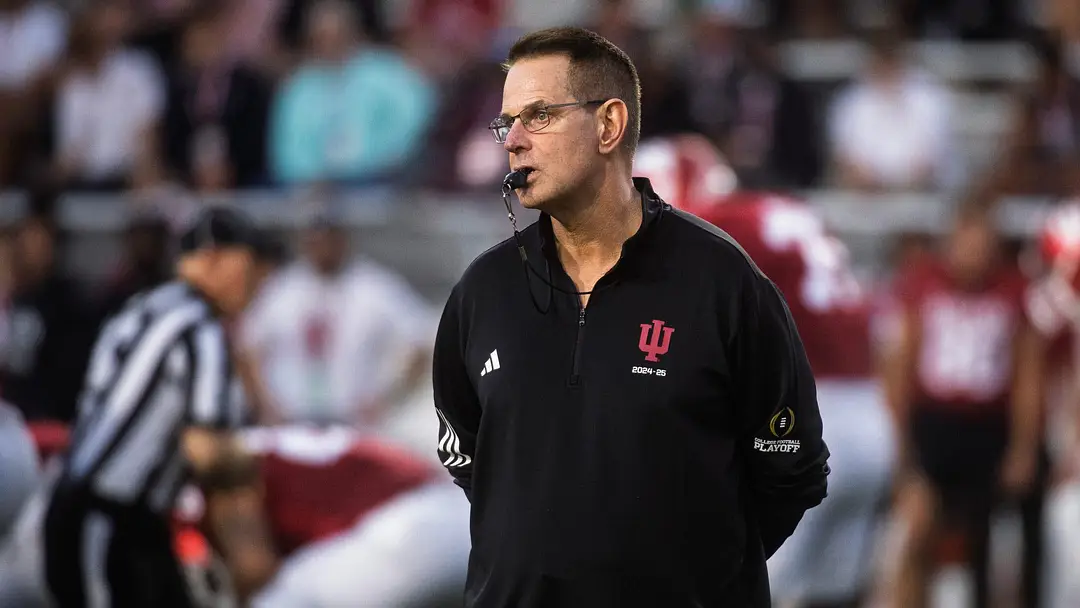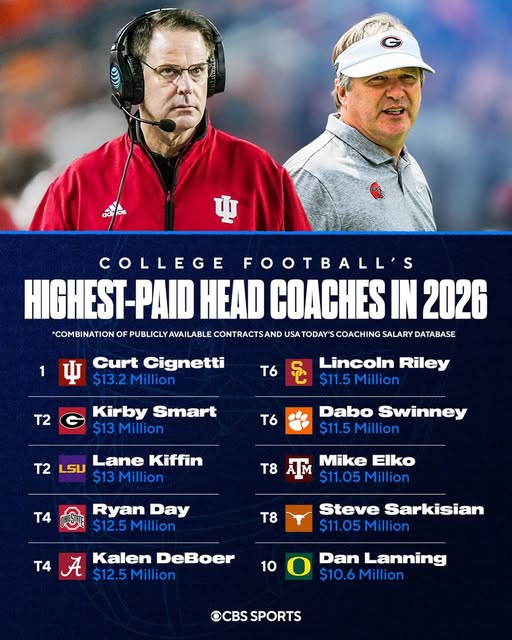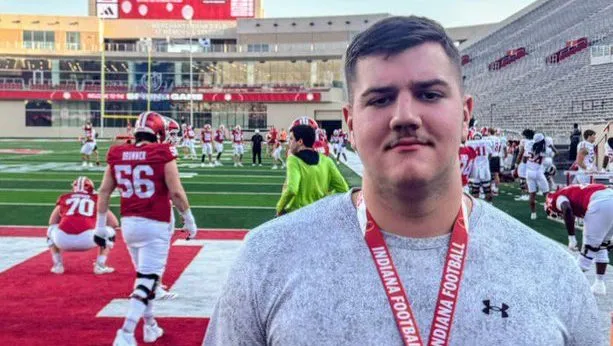
The recruiting momentum inside the walls of Indiana Hoosiers football continues to surge, and the latest commitment may be one of the clearest signs yet that the program’s vision under head coach Curt Cignetti is beginning to resonate far beyond Bloomington. Indiana added another major piece to its future offensive front this week when four-star offensive lineman Mason McDermott officially announced his commitment to the Hoosiers, delivering a recruiting victory that could have ripple effects throughout the program’s 2027 foundation.
For a program attempting to redefine itself in the ultra-competitive landscape of the Big Ten Conference, landing a prospect of McDermott’s caliber is not simply about adding size or depth. It represents a statement about trajectory. Indiana is trying to prove it can compete for elite talent against traditional conference powers, and the addition of McDermott provides another indication that the Hoosiers are gaining traction with recruits who previously may have looked elsewhere.
McDermott’s commitment instantly becomes one of the headline additions in Indiana’s recruiting class, not only because of his four-star status but because of the value offensive linemen carry in modern college football. Programs capable of consistently developing dominant lines often become the programs capable of sustaining success. Coaches across the country frequently point to line-of-scrimmage development as the clearest separator between occasional breakthrough seasons and long-term relevance.
That reality is especially important in the Big Ten, where physicality remains central to the identity of the conference. While offenses have evolved and passing attacks have expanded across the league, the ability to control games in the trenches continues to define championship contenders. Indiana’s pursuit of McDermott reflected that understanding from the start.
At 6-foot-6 with the frame coaches covet for high-level offensive tackle development, McDermott emerged as one of the more intriguing offensive line prospects in his recruiting cycle because of his combination of reach, mobility and raw power. Evaluators consistently praised his footwork and balance, traits that separate developmental prospects from players capable of eventually protecting quarterbacks on Saturdays against elite edge rushers.
Indiana’s coaching staff made McDermott a priority early in the process, and sources close to the recruitment indicated the relationship-building approach from Cignetti and his assistants played a major role in securing the commitment. The Hoosiers have emphasized authenticity and long-term development since the current staff arrived, and recruits have repeatedly referenced the culture being established inside the program.
That message clearly connected with McDermott.
The offensive lineman’s decision comes at a pivotal moment for Indiana football, which is attempting to capitalize on renewed energy surrounding the program. The Hoosiers have spent years battling the perception that competing consistently in the Big Ten is nearly impossible without the recruiting advantages enjoyed by national brands such as Ohio State Buckeyes football, Michigan Wolverines football and Penn State Nittany Lions football.
But recruiting wins like this can alter those conversations.
McDermott’s pledge gives Indiana a prospect capable of becoming a cornerstone piece rather than merely a depth addition. Offensive linemen often require time physically before making major impacts at the college level, but coaches believe elite line recruits provide the foundation necessary for program stability. A quarterback can elevate a team for a season. A dominant offensive line can elevate a program for years.
The Hoosiers understand that challenge intimately. Indiana has experienced flashes of promise over the years, including memorable stretches where the offense showed explosiveness and toughness, but sustaining success has remained elusive. Much of that inconsistency has come down to roster depth and trench play against the conference’s elite.
That is why McDermott’s commitment carries significance beyond recruiting rankings.
It reflects a calculated philosophical investment in the future identity of the program.
Cignetti has built his reputation on player development and culture establishment. Before arriving in Bloomington, he consistently produced winning programs while developing overlooked talent into high-level contributors. Since taking over at Indiana, he has worked aggressively to reshape expectations surrounding the program, both internally and externally.
Recruiting has become one of the central battlegrounds in that transformation.
The modern recruiting landscape demands more than traditional pitches. Players now evaluate coaching stability, NFL development, NIL opportunities, scheme fit and program direction simultaneously. Indiana’s ability to land McDermott suggests the Hoosiers are presenting a compelling enough vision to compete in those conversations.
For offensive linemen specifically, development often matters more than glamour. Skill position players may gravitate toward offensive systems and statistical production, but linemen tend to prioritize coaching relationships, strength development and pathways to professional football. Indiana’s staff appears to have convinced McDermott that Bloomington offers the right environment for long-term growth.
The commitment also sends a message to other recruits watching Indiana’s rise. High-level recruiting classes frequently gain momentum through peer influence. When respected prospects commit to a program, others take notice. McDermott’s decision could help the Hoosiers continue building credibility within recruiting circles, especially among offensive linemen who understand the importance of continuity and collective growth up front.
Inside recruiting departments across the country, there is a belief that offensive linemen often recruit each other. Elite line prospects want to play beside other elite linemen because development, protection schemes and offensive success depend heavily on chemistry and cohesion. Indiana now has a centerpiece addition capable of helping attract additional trench talent.
There is also strategic importance in securing foundational players early.
The expanded landscape of college football, shaped by conference realignment, NIL influence and the transfer portal era, has created unprecedented roster volatility. Programs that can establish strong high school recruiting pipelines still maintain a critical long-term advantage because developmental continuity remains essential, particularly along the offensive line.
Veteran coaches often describe offensive line units as requiring years rather than months to fully mature. Chemistry, communication and physical progression cannot always be accelerated through quick portal additions alone. Indiana’s pursuit of McDermott reflects an understanding that sustainable roster building still begins with recruiting and development.
The excitement surrounding McDermott’s commitment also speaks to growing optimism among Indiana supporters who have been eager for evidence that the current staff can compete on the recruiting trail. Fans understand the reality of the Big Ten arms race. Competing against nationally established programs requires talent accumulation at a level Indiana has historically struggled to sustain.
Every recruiting cycle becomes an opportunity to close that gap incrementally.
Landing four-star prospects matters because those players are often the difference-makers capable of elevating a program from competitive to dangerous. While recruiting rankings never guarantee success, roster construction trends across college football consistently show that championship-level programs accumulate and develop high-end talent in the trenches.
Indiana hopes McDermott becomes part of that blueprint.
From a schematic perspective, the addition also fits what the Hoosiers appear to be building offensively. Modern offenses increasingly require offensive linemen capable of versatility and athletic movement in space. Gone are the days when sheer size alone defined elite line play. Coaches now prioritize mobility, balance and adaptability against increasingly sophisticated defensive fronts.
McDermott’s profile aligns with those evolving demands.
Scouts have praised his ability to mirror defenders in pass protection while maintaining enough physicality to anchor the run game. That balance is crucial in the Big Ten, where offenses must prepare for multiple defensive styles throughout conference play. One week may require dealing with power-heavy fronts. The next may demand handling speed-oriented pass-rushing schemes.
Versatility becomes survival.
For Indiana, adding a prospect capable of eventually handling those challenges represents another important developmental step.
Recruiting victories also create perception changes nationally. Programs build reputations over time, and those reputations influence future recruiting battles. Indiana has often been forced to sell potential rather than established prestige. Commitments from players like McDermott help shift the conversation from possibility toward legitimacy.
That process takes time, but momentum matters.
Cignetti’s staff appears determined to challenge long-standing assumptions about Indiana football’s ceiling. The staff’s recruiting philosophy has emphasized identifying players who fit the culture while also possessing the physical tools to compete against elite conference competition. McDermott checks both boxes.
The timing of the commitment also adds another layer of significance as programs across the country intensify recruiting efforts heading into the next evaluation periods. Summer camps, unofficial visits and national showcases often reshape recruiting boards quickly. Securing an early pledge from a high-profile offensive lineman provides stability within the class while giving coaches a cornerstone around which to continue building.
Momentum on the trail can become contagious.
Programs that secure key commitments early often gain increased visibility with additional prospects. Recruits notice who is joining a class, and successful recruiting classes frequently grow through interconnected relationships between prospects. Indiana’s coaching staff undoubtedly hopes McDermott’s commitment becomes part of a larger recruiting wave.
There is also an emotional dimension to commitments like this for fan bases seeking proof of progress. College football supporters invest deeply in recruiting because those decisions represent hope for the future. Every highly rated commitment carries symbolic weight. It becomes evidence that the program’s message is resonating and that the rebuild has substance beyond rhetoric.
Indiana fans have experienced enough ups and downs to understand how important foundational recruiting victories can become.
The path toward sustained relevance in the Big Ten remains challenging, but recruiting wins like McDermott’s commitment help narrow the psychological gap between Indiana and more established conference brands. The Hoosiers are not merely trying to participate in the league. They are trying to build a roster capable of competing physically every week.
That process begins up front.
The best teams in college football almost always share one common characteristic: they control the line of scrimmage. Whether it is protecting quarterbacks, establishing rushing attacks or wearing down opponents late in games, elite offensive line play remains one of the sport’s greatest competitive advantages.
Indiana’s investment in McDermott reflects a recognition of that truth.
The commitment also underscores the increasingly national nature of recruiting battles. Geographic boundaries continue to matter less as programs recruit aggressively across multiple regions. Relationships, developmental reputation and program culture now carry as much importance as location itself. Indiana’s ability to win this recruitment suggests the staff is successfully expanding the program’s reach and appeal.
For McDermott, the decision ultimately represents belief in a vision.
Young recruits rarely commit solely because of facilities or logos anymore. They commit because they believe a coaching staff can maximize their future. Indiana sold McDermott on opportunity, development and the chance to help shape the future direction of the program.
That opportunity could eventually place significant expectations on the young lineman.
Four-star recruits arrive with pressure, especially at programs seeking transformative pieces. Fans quickly project future success onto highly rated commitments, and offensive linemen often carry the burden of helping change the physical identity of a team. McDermott will eventually enter a program hoping he becomes part of the foundation for long-term success.
But for now, Indiana can celebrate a recruiting victory that represents far more than a single commitment.
It represents momentum.
It represents validation.
And perhaps most importantly, it represents belief that Indiana football can become something more substantial inside one of college football’s toughest conferences.
In the modern era of college athletics, where perception shifts quickly and recruiting battles often determine competitive ceilings years in advance, commitments like McDermott’s matter enormously. They energize fan bases, strengthen recruiting classes and provide coaching staffs with tangible proof that their vision is gaining traction.
For Indiana, the addition of Mason McDermott is not the finish line.
It is another important step in a larger transformation the Hoosiers hope will eventually reshape the future of football in Bloomington.