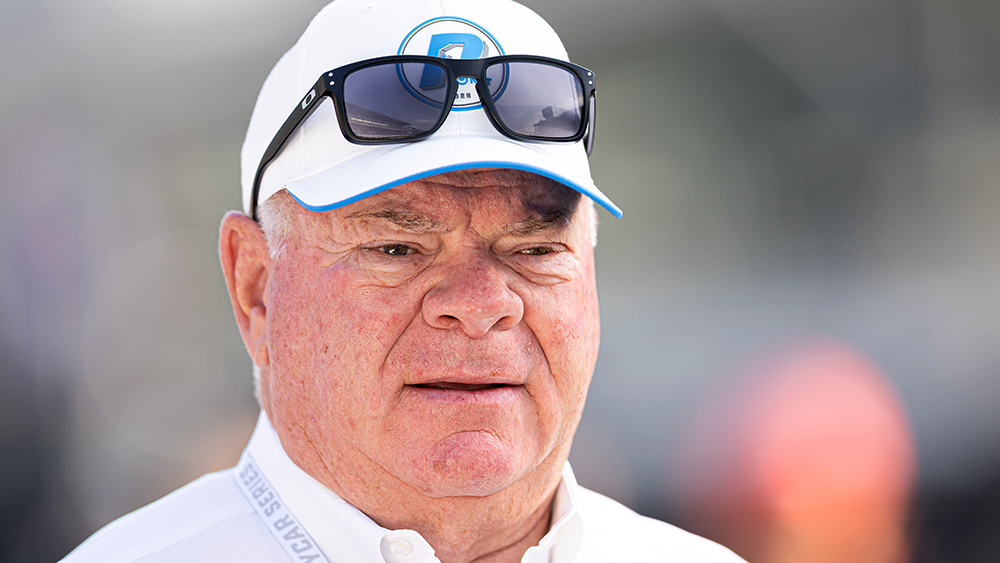
In a sports landscape where success is often measured in trophies, rankings and headlines, two figures from vastly different corners of American competition continue to prove that sustained excellence begins with something deeper than talent alone. For legendary motorsports owner Chip Ganassi and Curt Cignetti, the path to winning has never been accidental. It has been built on discipline, relentless standards and an unwavering refusal to accept mediocrity.
At first glance, the worlds they occupy could not appear more different. Ganassi has spent decades constructing one of the most respected racing empires in motorsports, overseeing victories at the highest levels of IndyCar, NASCAR, IMSA and endurance racing. Cignetti, meanwhile, arrived in Bloomington carrying the task of restoring belief inside an Indiana Hoosiers football program desperate for consistency and relevance in the unforgiving landscape of the Big Ten Conference.
Yet those who know both men point to striking similarities in the way they operate. Both are products of deeply competitive upbringings. Both demand accountability at every level of their organizations. And both have cultivated reputations for turning overlooked situations into winning operations through culture, preparation and uncompromising standards.
The connection between Ganassi and Cignetti is rooted not only in shared philosophies, but in a broader understanding of what it takes to build sustainable success in environments where pressure never fades. For Indiana fans searching for evidence that their football program can compete with national powers, the comparison has become increasingly compelling.
Ganassi’s career has long served as a blueprint for organizational excellence. Before becoming one of the most accomplished team owners in American motorsports history, he was a driver himself, learning firsthand the unforgiving nature of elite competition. That experience shaped the mindset that eventually defined Chip Ganassi Racing — a culture where preparation is exhaustive, excuses are unacceptable and every member of the operation understands the standard expected daily.
The numbers alone tell part of the story. Indianapolis 500 victories. Daytona triumphs. Championships across multiple series. Decades of relevance in sports where dynasties rarely survive long. But what separates Ganassi from many successful owners is his ability to continuously evolve without compromising the identity of his teams.
That same adaptability has quickly become one of Cignetti’s defining traits at Indiana.
When Indiana hired Cignetti, the move was initially viewed by some outside the program as a calculated gamble. Cignetti had established himself as a proven winner at multiple stops, including impressive runs at lower levels of college football, but skeptics questioned whether that success could translate in the Big Ten, where resources, recruiting battles and weekly competition create an entirely different level of pressure.
Cignetti, however, never carried himself like a coach seeking validation. From the moment he arrived, his message was direct and unapologetic. Winning was not a distant dream. It was the expectation.
That mentality resonated immediately within the building.
Players described a coach who brought instant clarity. Practices became sharper. Accountability increased. Standards were raised across the board. The culture shifted from hoping to compete toward expecting results.
Those familiar with Ganassi’s leadership style saw familiar traits emerge.
Like Ganassi, Cignetti believes culture cannot be selectively enforced. It must become the foundation of everything an organization does. Every detail matters. Every rep matters. Every meeting matters. The pursuit of excellence is not reserved for game day or race day — it becomes embedded in daily habits.
That philosophy often separates good programs from consistently elite ones.
In motorsports, Ganassi’s teams have long been known for extracting maximum performance in high-pressure situations because the preparation behind the scenes eliminates uncertainty when the moment arrives. Cignetti is attempting to instill the same operational consistency within Indiana football, building a program capable of sustaining success instead of briefly flashing potential before fading back into irrelevance.
The challenge facing Cignetti is significant. Indiana football has spent much of its history fighting for respect in a conference dominated by traditional powers. Programs like Ohio State Buckeyes football, Michigan Wolverines football and Penn State Nittany Lions football have long controlled the conference spotlight, leaving programs such as Indiana battling to redefine expectations.
But Cignetti’s track record suggests he thrives in precisely those situations.
Throughout his coaching career, he has consistently inherited programs needing identity and direction before engineering dramatic turnarounds. His confidence does not stem from motivational slogans or public bravado. It comes from an established belief that winning habits eventually produce winning results.
Ganassi understands that principle perhaps better than anyone.
In racing, success can disappear instantly. One mechanical failure, one strategic error or one split-second decision can derail months of work. Sustained dominance requires organizations capable of responding quickly without losing focus. Ganassi built his teams around that resilience, fostering environments where adversity sharpens execution instead of fracturing confidence.
Cignetti appears determined to create that same resilience at Indiana.
Inside college athletics, culture is often discussed in vague or overly simplified terms. Coaches speak about toughness, accountability and belief, but sustaining those concepts over an entire season — especially in a demanding conference — requires complete organizational buy-in. Players must trust the process. Coaches must maintain consistency. Leaders must model the standards they preach.
That is where the parallels between Ganassi and Cignetti become especially clear.
Neither man projects complacency after success. In fact, those around them often describe an almost relentless dissatisfaction, a constant push to improve even when results are positive. For Ganassi, championships became fuel for pursuing the next one. For Cignetti, early signs of progress at Indiana represent only the beginning of what he believes the program can become.
The mentality is infectious.
Indiana players have openly discussed the confidence Cignetti has brought into the program. That confidence is not rooted in arrogance, but in preparation. Teams that prepare thoroughly tend to play faster, respond better under pressure and maintain composure in difficult moments. Those qualities are especially critical in the modern college football landscape, where transfer portal movement, NIL dynamics and constant roster turnover create instability for many programs.
Cignetti’s ability to establish structure quickly has helped Indiana navigate those realities with increasing optimism.
Ganassi’s career offers another important lesson that aligns closely with Cignetti’s philosophy: successful organizations rarely panic during transitions. Over the years, Ganassi Racing has evolved through changing technologies, driver lineups, sponsorship landscapes and competitive eras. Yet the organization’s identity remained remarkably consistent because the underlying culture never disappeared.
That long-term thinking is essential for college football coaches attempting to build sustainable contenders rather than short-lived surprises.
For Indiana, the excitement surrounding Cignetti extends beyond wins and losses. It reflects a growing belief that the program finally possesses leadership capable of changing expectations permanently. Fans have seen coaches arrive promising transformation before. What makes Cignetti different, many believe, is the credibility attached to his process.
Winning followed him everywhere before Indiana.
Now the Hoosiers are hoping that same blueprint can elevate them inside one of college football’s most demanding conferences.
Ganassi’s influence in sports extends beyond racing victories because he represents a model of organizational leadership that transcends competition itself. He values preparation over noise, execution over hype and accountability over comfort. Those same traits increasingly define Cignetti’s approach.
The comparison also highlights something larger about modern sports leadership. Talent alone rarely sustains winning cultures. The best organizations create environments where excellence becomes habitual. They identify people who embrace pressure rather than avoid it. They maintain standards regardless of circumstances.
Ganassi mastered that in motorsports.
Cignetti is attempting to master it in Bloomington.
There is also an undeniable blue-collar edge to both men. Neither built success through shortcuts or celebrity status. Their reputations were earned through years of work, difficult decisions and relentless competitiveness. That authenticity resonates with athletes because players quickly recognize leaders who genuinely live the standards they demand.
Indiana’s locker room appears to believe in Cignetti for precisely that reason.
In today’s college football environment, where programs constantly battle distractions, maintaining unified focus becomes increasingly difficult. Coaches must manage recruiting, player development, media attention, NIL concerns and fan expectations simultaneously. The ability to create organizational alignment is more valuable than ever.
Ganassi has spent decades doing exactly that across multiple racing disciplines. Cignetti’s challenge is applying similar principles within a rapidly changing college football ecosystem.
So far, the early signs are encouraging for Indiana.
The energy surrounding the program feels different. Expectations have changed. Confidence has grown. Most importantly, the standard inside the building appears higher than it has been in years.
That does not guarantee championships or immediate breakthroughs against conference heavyweights. Rebuilding programs requires time, consistency and patience. But sustainable success often begins with leadership capable of changing belief systems before changing results.
Both Ganassi and Cignetti understand that transformation process.
For Ganassi, every championship team began with culture long before trophies arrived. For Cignetti, Indiana’s long-term ceiling may depend less on one recruiting class or one breakthrough season than on whether he can permanently reshape the program’s mindset.
The comparison between the two leaders ultimately speaks to a universal truth across sports. Winning is rarely accidental. It is constructed deliberately through preparation, standards and accountability repeated daily over time.
That mentality has defined Chip Ganassi’s career.
Now Curt Cignetti is attempting to make it the foundation of Indiana football’s future.
And in Bloomington, belief is beginning to follow.