Curt Cignetti’s Response to Purdue AD’s Championship Jab Says Plenty About Indiana’s New Reality
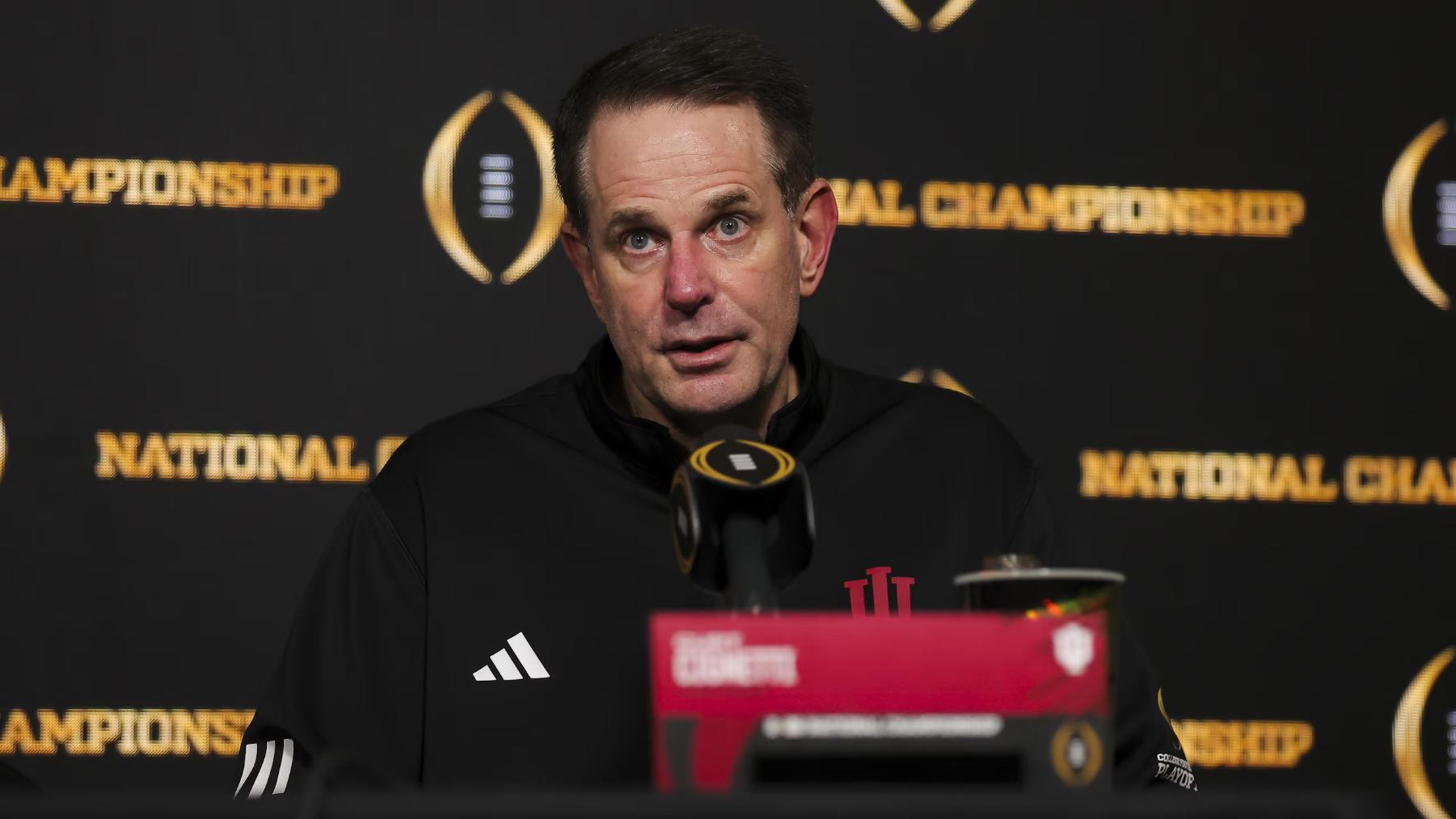
The latest chapter in the Indiana-Purdue rivalry did not require a fiery response from Curt Cignetti. In fact, the Indiana coach’s decision to essentially dismiss a pointed remark from Purdue athletic director Tommy McClelland may have said more than any retort could have.
McClelland, speaking during his introductory news conference as Purdue’s new athletic director, laid down an ambitious challenge for the Boilermakers while taking an unmistakable shot at their in-state rival.
“We are here to win championships,” McClelland said, before adding that those who do not want to win championships should “go to Indiana.”
The timing made the comment particularly striking.
Indiana is not entering the 2026 season as the program that spent decades fighting for relevance in the Big Ten. The Hoosiers are coming off the most successful season in school football history: a perfect 16-0 campaign that produced a Big Ten championship, the program’s first College Football Playoff national championship and an undefeated season that fundamentally changed the perception of Indiana football.
When Cignetti was asked about McClelland’s remark, he chose not to engage.
“Not really,” was the substance of his response, according to the report.
That restraint is notable because Cignetti has never been known for avoiding confrontation. When he arrived in Bloomington before the 2024 season, he famously told Indiana fans to “Google me” after making clear that he believed his coaching résumé would eventually validate his confidence. His early rhetoric also included blunt shots at Purdue, Michigan and Ohio State.
Two seasons later, the results have made the bravado difficult to dismiss.
Cignetti inherited an Indiana program that had gone 3-9 in 2023. In his first season, the Hoosiers went 11-2 and reached the College Football Playoff. In Year 2, Indiana did something nobody in the program’s history had accomplished: it went 16-0 and won the national championship. Cignetti’s two-year record at Indiana entering 2026 stands at 27-2.
That transformation is the central context surrounding McClelland’s comment.
Trash talk is part of college football, particularly in a rivalry as old and deeply rooted as Indiana-Purdue. But rivalry rhetoric carries a different weight when the team being targeted has just reached the summit of the sport.
Indiana’s dominance over Purdue has also been unusually decisive since Cignetti arrived. The Hoosiers defeated the Boilermakers 66-0 in 2024 and followed it with a 56-3 victory in 2025. The latter came in the 100th meeting between the schools and gave Indiana a second consecutive overwhelming victory in the Old Oaken Bucket rivalry.
The 2025 meeting was not simply another rivalry win. It was the final regular-season statement before Indiana went on to defeat Ohio State in the Big Ten championship game and then navigate the College Football Playoff.
Quarterback Fernando Mendoza was the centerpiece of that run. After transferring from California, Mendoza completed 72% of his passes for 3,535 yards, 41 touchdowns and only six interceptions during Indiana’s perfect 2025 season. He became the first Indiana quarterback to win the Heisman Trophy and subsequently emerged as the No. 1 overall pick in the 2026 NFL draft.
Replacing that production is one of the defining challenges facing Cignetti in 2026.
Indiana has turned to TCU transfer Josh Hoover at quarterback, while continuing to use the transfer portal as a major mechanism for roster construction. The Hoosiers also added players such as Michigan State wide receiver Nick Marsh and strengthened their defense with transfer talent. The objective is clear: reload rather than rebuild.
That distinction matters because the championship standard McClelland invoked is no longer theoretical for Indiana.
The Hoosiers have already demonstrated that their rise was not merely a one-season fluke. Cignetti’s first team reached the playoff. His second won the national championship. Now the question is whether Indiana can sustain elite performance after losing several key contributors to the NFL.
The answer will determine whether 2025 represented the beginning of an Indiana football era or the peak of an extraordinary two-year run.
Cignetti’s own contract reflects how dramatically the program’s expectations have changed. Indiana reworked his agreement following the national championship, giving him a deal worth $105.6 million over eight years, or an average of $13.2 million annually, through 2033. The contract made Cignetti one of the highest-paid coaches in college football.
There is no NFL-style salary cap governing these college programs, but the financial stakes are increasingly similar in importance. College football’s new revenue-sharing environment, NIL spending and transfer-portal economics have turned roster management into a resource-allocation battle. Indiana’s willingness to invest heavily in Cignetti is evidence that the school views football as a long-term championship operation rather than a temporary surge.
Purdue, meanwhile, is attempting to build its own answer.
McClelland arrived after serving as athletic director at Rice, with experience that also includes Vanderbilt, Louisiana Tech and McNeese State. His mandate at Purdue is broader than football, but the Boilermakers’ football program remains central to the challenge of closing the gap with Indiana.
And that gap is substantial.
Purdue has not simply struggled against Indiana recently; it has been unable to keep the games competitive. Consecutive losses of 66-0 and 56-3 represent a 122-3 scoring margin across two seasons. For a rivalry that traditionally produced unpredictable results, the current imbalance is difficult to ignore.
Purdue coach Barry Odom has already acknowledged Indiana’s accomplishment while emphasizing that his program cannot spend its time measuring itself against Cignetti’s results. Odom said in the spring that Purdue had to focus on building its own program and competing for championships rather than dwelling on what Indiana had accomplished.
That philosophy is likely to become even more important after McClelland’s remark.
The next opportunity to settle the argument on the field arrives Nov. 28, when Indiana hosts Purdue in Bloomington. It will be the first meeting since McClelland publicly raised the stakes.
By then, however, the national championship talk may have taken on a different meaning.
Indiana’s 2026 schedule offers little room for complacency. The Hoosiers face Nebraska and Rutgers on the road before hosting Ohio State on Oct. 17 and traveling to Michigan one week later. Later comes USC, Washington and finally Purdue.
Those games will provide a much better indication of whether Indiana remains a legitimate Big Ten and College Football Playoff contender.
For Purdue, the objective is more immediate: become competitive again.
McClelland’s comments have created a storyline, but storylines do not win games. Purdue will need improved quarterback play, greater efficiency on early downs, better pass protection and a defense capable of surviving against Big Ten offenses with playoff-caliber personnel.
Indiana, meanwhile, has a different burden.
The Hoosiers are no longer chasing respect. They are defending it.
That is what makes Cignetti’s response so fitting. Two years ago, the coach needed words to convince people that Indiana could become a winner. Today, the program has a national championship banner, a 27-2 record under Cignetti and a coach whose résumé no longer requires an explanation.
McClelland can declare that Purdue is where championships are won.
Cignetti does not need to argue.
The next time the two programs meet, the scoreboard will have the final word.