New Purdue AD Takes Massive Shot at the Indiana Hoosiers
WEST LAFAYETTE, Ind. — Tommy McClelland did not need long to make his presence felt at Purdue. During his introductory news conference as the Boilermakers’ new athletic director, McClelland delivered a line aimed directly at Indiana that immediately transformed a routine leadership transition into the latest chapter of one of college football’s fiercest in-state rivalries.
“We are here to win championships,” McClelland said. “If you don’t want to win championships, go to Indiana.”
The remark drew laughter in the room. It also landed differently outside it.
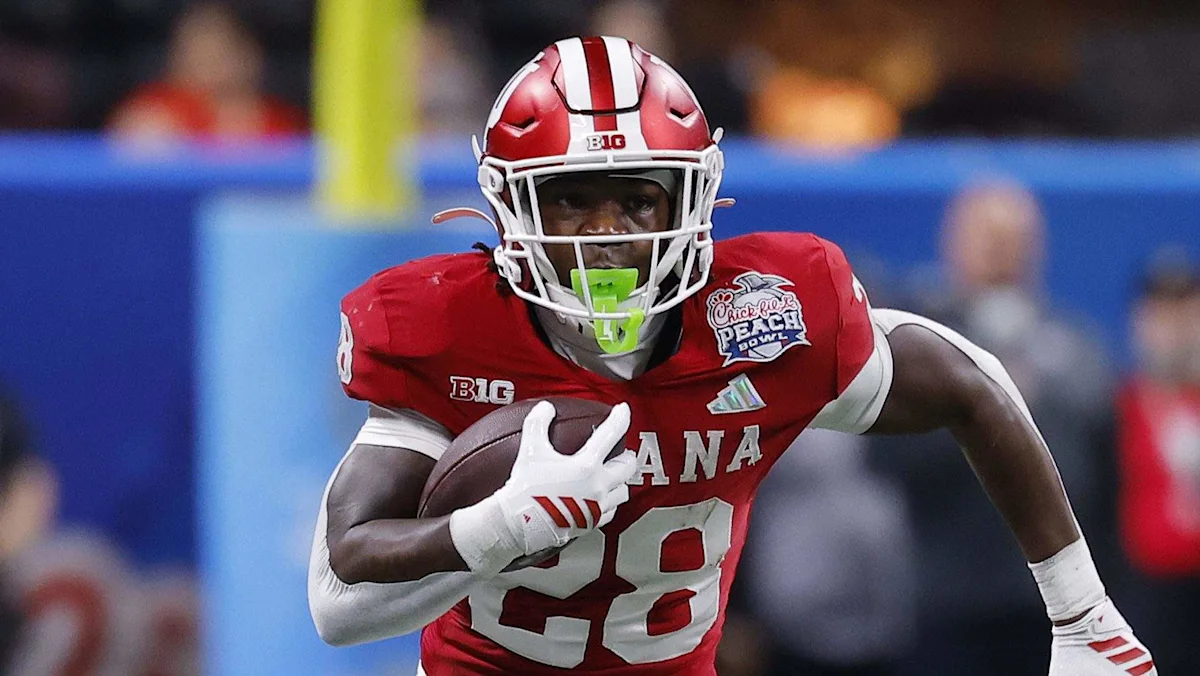
Indiana has spent the past two seasons turning itself from one of college football’s perennial afterthoughts into a national championship program. The Hoosiers went 16-0 in 2025, won the Big Ten championship, defeated Alabama 38-3 in the College Football Playoff quarterfinals, routed Oregon 56-22 in the semifinals and defeated Miami 27-21 to claim the national championship.
Then came the final chapter of that historic season: a 56-3 demolition of Purdue in the Old Oaken Bucket rivalry.
That context made McClelland’s opening salvo particularly combustible.
For Purdue, however, the bigger story is not the quote. It is the standard McClelland has established for himself on his first day in charge.
McClelland, who previously served as athletic director at Rice and held administrative positions at Vanderbilt, Louisiana Tech and McNeese State, was hired to replace Mike Bobinski, who announced his retirement after a decade leading Purdue athletics. Bobinski’s tenure included Purdue’s emergence as a consistent national power in men’s basketball and the department’s transition into the rapidly changing revenue-sharing era of college athletics.
McClelland now inherits an athletic department operating in perhaps the most consequential financial environment in college sports history.
NIL collectives, direct athlete revenue sharing, transfer-portal movement and Big Ten television money have fundamentally altered the way athletic departments compete. For Purdue, football represents the most obvious opportunity — and the most urgent problem.
The Boilermakers finished 2-10 in 2025 and 0-9 in Big Ten play. Indiana, meanwhile, finished the regular season undefeated and went on to win the national championship.
The rivalry could hardly be more lopsided at the moment.
That is why McClelland’s words immediately became a referendum on whether Purdue can actually close the enormous gap between rhetoric and results.
Indiana coach Curt Cignetti, who has never been shy about expressing confidence in his program, was asked about McClelland’s comments during his first media appearance since the new Purdue AD’s introduction.
His response was remarkably brief.
“Not really,” Cignetti said before moving on.
It was a response consistent with the approach that has helped transform Indiana football.
Cignetti arrived in Bloomington in 2024 with an unmistakable confidence and quickly backed it up. His first Indiana team reached the College Football Playoff for the first time in program history. The 2025 team went even further, becoming the first Indiana squad to finish 16-0 and capturing the national championship.
The Hoosiers were not simply winning close games against lesser competition. Their résumé included road victories at Oregon and Penn State, a Big Ten championship victory over Ohio State and three dominant postseason performances against Alabama, Oregon and Miami.
And the Purdue game was perhaps the clearest illustration of the current gap.
Indiana scored 56 points while holding Purdue to three. The Hoosiers entered halftime with a commanding advantage and never allowed the Boilermakers to generate meaningful momentum. The result represented one of the most lopsided outcomes in the history of the rivalry and extended the growing perception that Indiana had become the state’s premier football program.
For Purdue, the challenge is not merely beating Indiana once.
It is rebuilding a football operation capable of competing consistently in a Big Ten conference that now contains some of the deepest and most financially powerful programs in the country.
That makes McClelland’s background particularly important.
His reputation has been built partly around fundraising and organizational development, skills that could become increasingly valuable as athletic departments navigate the new economics of college sports. Purdue needs more than a successful coach. It needs an infrastructure capable of identifying talent, retaining key players, competing in the transfer portal and building the financial resources necessary to keep pace.
The Boilermakers have already taken a step in that direction with Kevin Kane, who enters his first season as Purdue’s head coach after the program’s difficult 2025 campaign. The challenge for McClelland will be determining how aggressively the university must invest in Kane and the football program while maintaining the competitive standard established by Matt Painter’s men’s basketball program.
That balance will define much of McClelland’s tenure.
Purdue basketball remains the athletic department’s most dependable national brand. The Boilermakers reached the national championship game in 2024 and have remained among the Big Ten’s most consistent programs under Painter.
Football is different.
The sport drives the overwhelming majority of the financial ecosystem surrounding major college athletics, and the Big Ten’s national footprint has made football success more valuable than ever. A program that struggles to compete on Saturdays risks falling behind not only on the field but also in recruiting, donor engagement, facilities and roster retention.
Indiana has demonstrated precisely how quickly that equation can change.
Cignetti’s program went from an unlikely CFP participant to a national champion in two seasons. The Hoosiers have since secured the kind of institutional momentum that programs spend decades trying to create.
Cignetti also signed an eight-year, $93.25 million contract extension in October 2025, according to published reports, illustrating the financial commitment Indiana made to the architect of its transformation.
That is the uncomfortable reality waiting for McClelland.
If Purdue wants to make good on the new AD’s championship declaration, it must compete in a marketplace where elite football programs are increasingly separated by resources as much as traditional recruiting advantages.
And that means McClelland’s comment will eventually be judged by something far less forgiving than a press conference audience.
The scoreboard.
Purdue and Indiana have a rivalry that dates back more than a century, but the modern stakes have changed. The Old Oaken Bucket is no longer simply about bragging rights. It has become a measuring stick for the direction of both programs.
Indiana has spent the past two seasons raising the bar.
McClelland, intentionally or otherwise, has now challenged Purdue to clear it.
There is also a historical irony to the statement. Purdue has enjoyed substantial success across its athletic history, particularly in basketball, while Indiana possesses one of the nation’s most recognizable championship traditions. Recent success has only strengthened the Hoosiers’ argument. Indiana’s 2025 football season ended with the school’s first national championship in the College Football Playoff era and a perfect 16-0 record.
For McClelland, though, none of that appears to matter.
His message was unmistakable: Purdue does not intend to define itself by Indiana’s accomplishments.
The next step is proving Purdue can create accomplishments of its own.
That will require more than a provocative quote. It will require recruiting victories, stronger roster construction, improved player development, greater investment and a football program capable of surviving the weekly attrition of Big Ten play.
It will also require Purdue to eventually stand across the field from Indiana again.
And when that happens, McClelland’s opening-day comment will still be hanging over the rivalry.
For now, Indiana has the national championship, the perfect season and the 56-3 victory.
Purdue has a new athletic director promising that championships are the standard.
The next move belongs to the Boilermakers.