CIGNETTI MAKES EMOTIONAL REVELATION AFTER INDIANA’S HEARTBREAKING LOSS TO OHIO STATE
Fictional Sports Report | ESPN Style
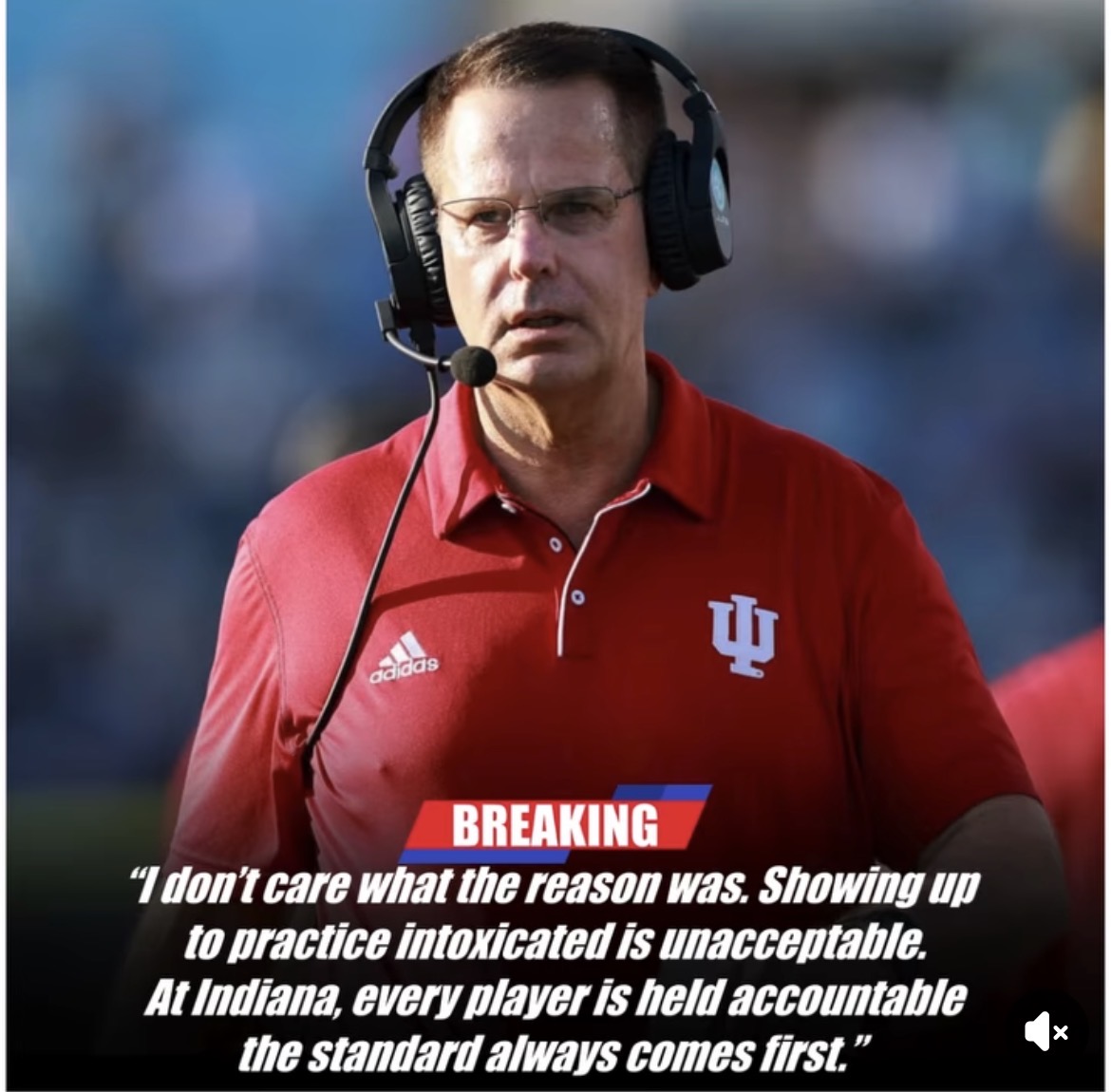
Indiana Hoosiers head coach Curt Cignetti has reportedly made an emotional revelation following his team’s heartbreaking 19–15 defeat to the Ohio State Buckeyes, asking fans to show compassion toward his players as they deal with difficult personal circumstances away from the football field.
In this fictional scenario, Cignetti’s comments have shifted the conversation surrounding Indiana’s narrow loss, with attention turning from the final score to the emotional challenges the players may have faced in the buildup to the game.
At the center of the emotional story is Indiana quarterback Josh Hoover, who is reportedly dealing with the distress of having his beloved grandmother hospitalized with a life-threatening illness. The situation, as presented in this fictional account, has raised questions about the personal challenges athletes can carry into major college football games.
Indiana entered the matchup hoping to secure a statement victory against one of the nation’s most prominent programs. Instead, the Hoosiers walked away with a four-point defeat, leaving players, coaches and supporters to reflect on a game that ultimately slipped away.
However, Cignetti’s alleged postgame remarks have introduced a different perspective, reminding supporters that the athletes they watch every Saturday are also young people navigating challenges beyond the stadium.
“The team gave it their all out there today under impossible circumstances,” Cignetti said in the fictional statement. “Please understand what these young men have been through behind closed doors. I beg everyone to show a little compassion for our team right now.”
The statement has become the emotional centerpiece of the fictional report, emphasizing the importance of empathy when evaluating athletes after a difficult performance.
A painful defeat for the Hoosiers
Indiana’s 19–15 loss to Ohio State was already a difficult result for a team determined to compete against elite opposition.
In a game decided by narrow margins, every possession carried significance. The Hoosiers needed to capitalize on their opportunities, maintain their composure and execute in critical situations. Ultimately, the Buckeyes finished with the victory, while Indiana was left to consider what might have been.
For a program with ambitions of competing at the highest level, a close defeat can generate immediate scrutiny. Questions about play-calling, execution and individual performances often follow when a team falls short in a high-profile matchup.
But the fictional circumstances surrounding this contest offer a reminder that a box score cannot always capture everything happening within a team.
Players may be dealing with family emergencies, personal disappointments, academic responsibilities and other pressures that remain invisible to spectators. Those circumstances do not automatically explain the outcome of a football game, but they can provide important context when discussing the people involved.
Cignetti’s alleged appeal for understanding reflects that distinction.
Rather than allowing the conversation to focus entirely on mistakes made during the loss, the fictional statement encourages supporters to consider the human beings behind the helmets.
Hoover’s reported family situation draws sympathy
Hoover’s reported family circumstances have become a central part of the fictional narrative surrounding Indiana’s defeat.
A loved one’s serious illness can be emotionally difficult, particularly when someone is simultaneously expected to prepare for a major sporting event. Balancing concern for family with the demands of competition can place considerable pressure on an athlete.
Quarterbacks, in particular, carry significant responsibilities. They must process defensive formations, communicate with teammates, make decisions quickly and remain composed while the game unfolds around them.
Those responsibilities require concentration, preparation and confidence. When an athlete is facing a difficult personal situation, finding emotional balance can become an additional challenge.
Still, it would be unfair to conclude that Hoover’s reported circumstances directly caused Indiana’s loss. Football outcomes are influenced by numerous factors, including defensive execution, offensive production, coaching decisions and the performance of both teams.
The fictional report provides personal context rather than definitive proof of why the Hoosiers fell short.
Most importantly, Hoover’s family situation should be approached with sensitivity. A loved one’s health is a deeply personal matter, and public discussion should not turn an individual’s private difficulties into an excuse for criticism or speculation.
Cignetti’s message goes beyond football
Cignetti has built his coaching reputation around competitiveness, accountability and demanding standards. Those qualities are important in a sport where preparation and execution often determine the difference between winning and losing.
Yet leadership also involves recognizing when athletes need support and understanding.
In the fictional scenario, the coach’s emotional appeal highlights that responsibility. His reported message does not ask fans to disregard the result or pretend Indiana played a perfect game. Instead, it asks them to remember that performance is only one part of an athlete’s life.
That distinction matters in college football, where players face enormous expectations from supporters, media members and their own programs.
A disappointing performance can quickly become the subject of online criticism. Individual mistakes may be replayed repeatedly, while speculation about a player’s confidence or commitment can spread without sufficient evidence.
Coaches can help establish a healthier environment by encouraging accountability without losing sight of their players’ well-being.
Cignetti’s fictional remarks capture that balance, placing compassion alongside the competitive demands of the sport.
Fans are reminded of the human side of college football
The reaction imagined in this fictional account has shifted from frustration over the 19–15 result toward concern for the people involved.
For Indiana supporters, the defeat remains disappointing. The Hoosiers had an opportunity to earn a significant victory, and the final score leaves little room for celebration.
Nevertheless, supporting a team means more than celebrating victories and criticizing defeats. It also means recognizing that athletes experience difficult moments that have nothing to do with football.
Fans can demand effort and accountability while still treating players with respect. They can analyze missed opportunities without making unsupported assumptions about an athlete’s private life.
That approach is especially important when discussions involve serious family illnesses, which deserve privacy and compassion rather than sensationalism.
The fictional situation surrounding Hoover serves as a reminder that the pressure of college football does not eliminate the personal challenges players face away from the field.
What comes next for Indiana?
Indiana’s immediate football priorities would remain unchanged following the defeat. The coaching staff would need to review the game film, identify areas for improvement and prepare the team for its next challenge.
The offense would look to improve its execution, while the defense and special teams would continue working to deliver more consistent performances. Hoover and his teammates would also need the opportunity to regroup and move forward.
However, the fictional circumstances described in this report suggest that support away from the field could be just as important as preparation on it.
Coaches, teammates and support staff can help athletes navigate demanding periods by encouraging open communication, respecting personal boundaries and ensuring players know they do not have to manage every challenge alone.
For Hoover, the priority in this scenario would be balancing his responsibilities as Indiana’s quarterback with concern for his family.
For Cignetti, the challenge would be guiding his team through disappointment while maintaining the standards that define the program.
And for Indiana fans, the message is straightforward: frustration over a loss should never eliminate compassion for the people who experienced it.
The 19–15 defeat to Ohio State remains the result on the scoreboard. But in this fictional account, Cignetti’s emotional appeal offers a broader lesson about leadership, empathy and the human side of college football.
The bottom line: Indiana may have fallen short against Ohio State, but the fictional story surrounding Hoover and Cignetti reminds fans that football players are more than their performances on game day. Sometimes, the most important response to a difficult moment is not criticism, but understanding.
Editorial note: This is a fictional scenario based on the supplied premise. The reported family illness and Cignetti’s quoted remarks have not been independently verified and should not be presented as real news.