CIGNETTI CONSIDERED BENCHING JOSH HOOVER AS INDIANA QB STRUGGLED AGAINST MICHIGAN
Indiana Hoosiers head coach Curt Cignetti faced a difficult decision during his team’s hard-fought victory over Michigan on October 24, 2026, as starting quarterback Josh Hoover struggled while playing through an apparent injury.
Hoover’s limited second-half passing production raised questions about whether Indiana should have turned to its backup quarterback. However, Cignetti and his staff ultimately stuck with Hoover, and that decision paid off when the Hoosiers secured a dramatic 13-6 overtime victory at Michigan Stadium.
According to postgame reports, Indiana seriously considered making a quarterback change during the second half, with backup Grant Wilson emerging as a possible alternative.
Hoover’s struggles put Indiana’s quarterback situation under the spotlight
Hoover entered the matchup against Michigan under pressure to deliver a bounce-back performance after Indiana’s narrow 19-15 defeat to Ohio State the previous week. The Hoosiers were looking to protect their College Football Playoff hopes, but their offense struggled to find consistency against a physical Michigan defense.
The quarterback’s performance became increasingly concerning as the game progressed. Hoover completed just eight of 18 passes for 81 yards and threw an interception. His accuracy and limited effectiveness through the air forced Indiana to rely heavily on its defense and running game to remain competitive.
The situation was particularly challenging because Hoover was reportedly dealing with an arm and wrist issue. ESPN’s Pete Thamel reported that the quarterback was playing through the problem, offering important context for his difficult afternoon against the Wolverines.
For Cignetti, the challenge was balancing his confidence in his starting quarterback with the need to make the best decision for the team. Indiana had championship aspirations, and every possession mattered in a game where points were difficult to come by.
One second-half pass ended in an interception
Hoover’s second-half struggles became one of the defining storylines of the contest.
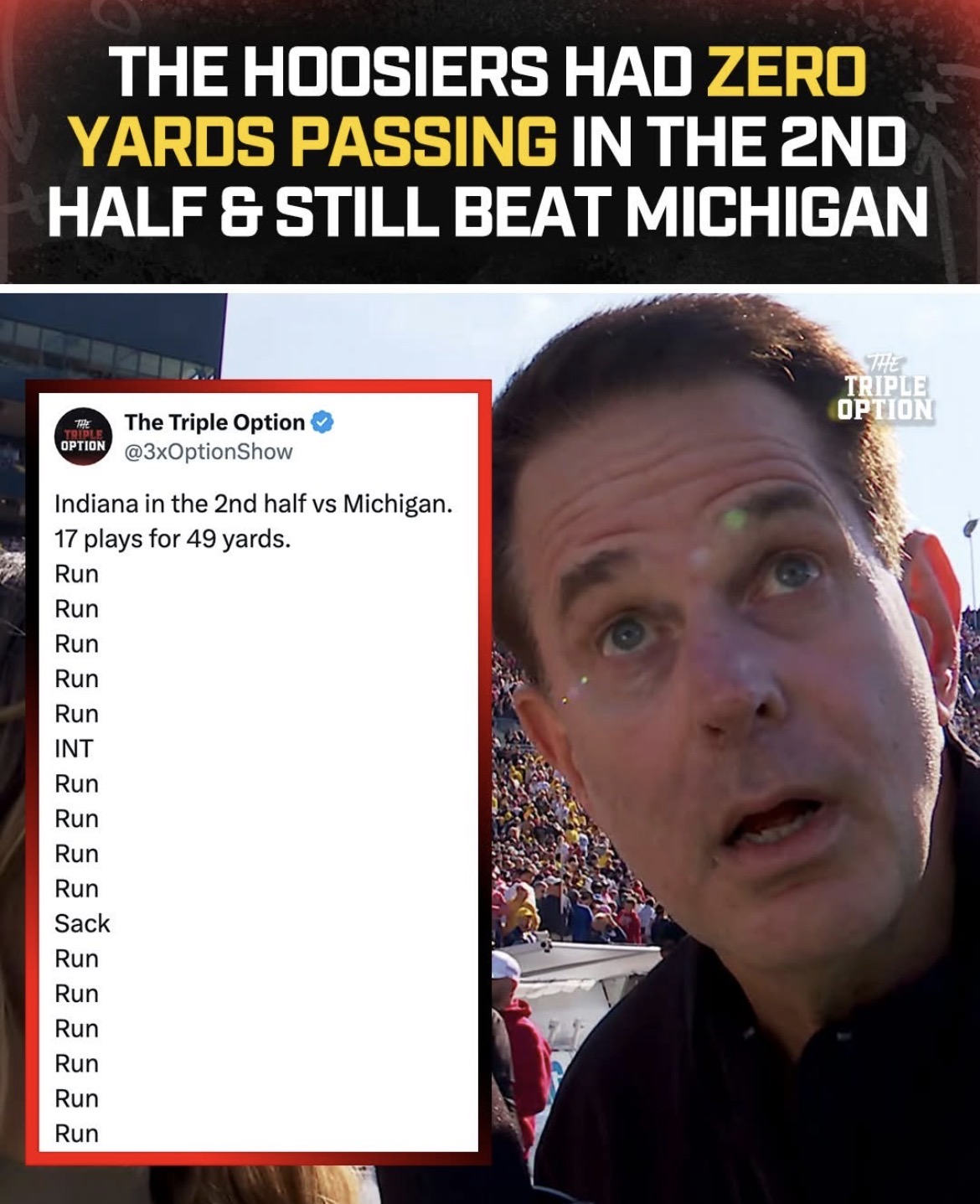
During the second half of regulation, Hoover attempted just one pass, and that throw was intercepted. Indiana’s passing game effectively disappeared for much of the remainder of regulation, putting additional pressure on the defense to keep Michigan from taking control.
The interception was costly because the Wolverines received an opportunity to move into scoring position and cut into Indiana’s lead. Michigan eventually managed to put points on the board, turning the contest into an increasingly tense defensive battle.
Hoover’s limited involvement in the passing game raised questions about whether Indiana could continue relying on him while he was visibly struggling to produce through the air.
However, the circumstances surrounding his performance made the situation more complicated than simply evaluating his statistics. If Hoover was not operating at full health, Cignetti had to consider whether removing him would improve the offense or create additional problems for a team already struggling to generate momentum.
The coaching staff’s consideration of backup Grant Wilson reflected the difficult decision facing Indiana. Ultimately, the Hoosiers continued with Hoover, hoping their starting quarterback could find a way to contribute despite his limitations.
Cignetti explains Hoover’s condition
Following the victory, Cignetti acknowledged that Hoover was not completely healthy.
“He wasn’t 100% today,” Cignetti said, according to postgame reporting. The coach also indicated that Hoover had practiced throughout the week, although he had been limited.
Cignetti’s comments helped explain why Indiana’s offense looked different from what fans had come to expect. Rather than suggesting that the quarterback’s struggles were entirely a result of poor decision-making or a lack of confidence, the coach pointed to the physical challenge Hoover was managing.
The situation also highlighted the difficulty of preparing for a major conference matchup when a starting quarterback is less than fully healthy. Indiana needed Hoover’s experience and leadership, but the coaching staff also had to account for the possibility that his physical condition could limit the offense’s effectiveness.
Even so, Cignetti did not allow the quarterback’s struggles to overshadow the importance of the result.
Indiana’s defense delivered when it mattered most, limiting Michigan’s scoring opportunities and keeping the Hoosiers in a game that could easily have slipped away. The defensive performance gave the offense time to recover and created the opportunity for Indiana to win in overtime.
Indiana’s decision to stick with Hoover pays off
Despite the difficult afternoon, Hoover made a crucial contribution when Indiana needed it most.
In overtime, the quarterback completed a 21-yard pass to Brock Schott, moving the Hoosiers into a favorable position. On the following play, Hoover ran the ball into the end zone for the winning touchdown.
That sequence transformed the narrative surrounding his performance.
After struggling to move the ball consistently through the air, Hoover delivered a critical completion before finishing the game himself with his legs. His contribution demonstrated that even when his passing production was limited, he could still make a decisive play in a high-pressure situation.
Indiana escaped Michigan Stadium with a 13-6 victory, improving to 7-1 and securing a significant road win. The result also ended a long wait for the Hoosiers, who had not beaten Michigan at its home stadium since 1967, according to postgame reports.
For Cignetti, the victory was about more than overcoming an offensive struggle. It demonstrated his team’s ability to win a physical game when its preferred offensive approach was not working.
The Hoosiers could have allowed Hoover’s difficulties to derail their performance. Instead, they leaned on their defense, stayed within striking distance and found a way to finish the job.
What comes next for Hoover and Indiana?
Although Indiana earned the victory, Hoover’s performance will remain an important storyline as the Hoosiers move deeper into the season.
His health will be a key factor to monitor, particularly given the reported arm and wrist issue. Indiana’s offensive effectiveness depends on its ability to distribute the ball, create explosive plays and take advantage of the talented receivers available to the quarterback.
The Hoosiers will also need to evaluate how they manage the quarterback position if Hoover continues to experience physical limitations. Having a capable backup provides flexibility, but changing quarterbacks during a close game can introduce additional challenges.
Cignetti and his staff must determine whether Hoover is healthy enough to return to his expected level of performance and whether any adjustments are necessary to protect both the quarterback and the team’s chances of winning.
The upcoming matchup against Minnesota on October 31 will provide Indiana with another opportunity to improve its offensive execution and maintain its position in the College Football Playoff conversation.
For now, the most important takeaway is that Indiana found a way to win despite a difficult day from its starting quarterback.
Cignetti’s willingness to consider a change showed that the coaching staff was prepared to explore its options. But sticking with Hoover ultimately produced the result Indiana needed, as the quarterback delivered a decisive overtime contribution.
Whether Hoover returns to full health and rediscovers his passing rhythm will be one of the biggest questions facing the Hoosiers in the coming weeks.