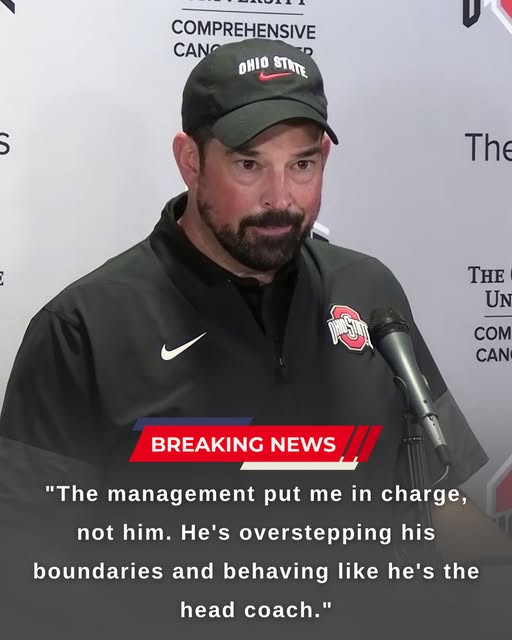
COLUMBUS, Ohio — In a moment that sent shockwaves through the Ohio State program and the broader college football world, Buckeyes head coach Ryan Day stepped to the podium Monday afternoon and delivered a pointed, unsparing message that cut to the heart of what he believes defines — and threatens — his team’s championship aspirations.
A star player, whose identity sources close to the program confirmed to ESPN but who has not yet been officially named amid ongoing internal reviews, was publicly rebuked for what Day described as an “abuse of power” that undermined team discipline, fostered locker room factions, and prioritized personal entitlement over collective sacrifice.
“We build this program on accountability, on putting the Buckeye first,” Day said, his voice steady but laced with the frustration of a coach who has led Ohio State to elite heights, including a recent national title run, yet refuses to let complacency erode the foundation. “When one guy starts bending the rules because he thinks his status gives him a pass, it doesn’t just affect him. It eats away at everything we’ve fought to build.”
The remarks came during what was expected to be a routine summer update on fall camp preparations ahead of the 2026 season. Instead, Day laid bare internal tensions that had simmered beneath the surface of a program known for its talent factory and relentless standards. According to multiple sources familiar with the situation, the issue involved a high-profile veteran who leveraged his on-field production and NIL opportunities into what teammates perceived as special treatment — from scheduling leniency on workouts and academic commitments to influencing playing time and position battles in ways that favored personal alliances over merit.
This wasn’t a one-off lapse. Day described a pattern of “locker room manipulation” where privileges — late arrivals excused without consequence, selective film study participation, and an air of untouchability — created divides that threatened the culture Day has spent years cultivating since taking over in 2019.
A Culture Under Pressure
Ohio State enters 2026 riding high expectations once again. After capturing the 2024 national championship and navigating a challenging 2025 campaign that included a Big Ten title game stumble before a playoff exit, the Buckeyes boast one of the nation’s most dynamic offenses. Quarterback Julian Sayin returns after a standout first full season as starter, throwing for over 3,600 yards and 32 touchdowns at a blistering 77% completion rate. Wide receiver Jeremiah Smith, the consensus No. 1 player in college football entering the year per PFF, headlines a loaded skill group alongside veterans like Brandon Inniss.
Yet Day’s comments underscore a truth often lost in the glow of five-star recruiting hauls and Heisman buzz: talent alone doesn’t sustain dynasties. Discipline does.
Those close to the program point to recent history as context. In previous seasons, Ohio State has dealt with flashes of internal friction, from post-Michigan locker room venting to the demands of NIL-era player empowerment. Day himself has emphasized strict standards, with players like punter Joe McGuire publicly detailing harsh penalties for tardiness — everything from dawn patrol cleanups to temporary “exile” from normal locker room access. “It’s so bad,” McGuire said earlier this summer, “I’d rather crash my car than be late.”
The star player’s situation, sources say, escalated beyond minor infractions. It involved using influence to shield others from similar accountability, creating cliques that coaches believed impacted competitive reps and unity on the practice field. One insider described it as “star treatment bleeding into entitlement,” where off-field privileges — perhaps amplified by external agents or NIL collectives — clashed with the program’s blue-collar ethos.
Day didn’t mince words on the ripple effects. “This isn’t about one guy missing a lift or showing up late once,” he continued. “It’s about the example it sets. When personal privileges come before team discipline, you start losing in the fourth quarter before the ball is even snapped. We’ve seen what happens when we let that slide — and we’re not going there again.”
Historical Echoes and Program Precedent
This isn’t the first time a powerhouse program has confronted star power run amok. Think back to Michigan’s late-2010s transitions or Alabama’s occasional roster purges under Nick Saban. At Ohio State, the shadow of past icons like Urban Meyer looms large — a coach who demanded buy-in but also navigated high-maintenance talent. Day, with an .872 winning percentage that ranks among the best in the modern era, has largely avoided major scandals while producing NFL talent at a historic clip: 20 first-round picks in his tenure, 11 in one recent draft alone.
But the current episode highlights evolving challenges in the post-NIL, transfer portal landscape. Players arrive with agency, agents, and social media followings that can amplify voices inside the locker room. Day’s public stance signals zero tolerance for any erosion of the “Buckeye Brotherhood” — the same unity that helped the program rebound from rivalry setbacks and push through playoff adversity.
Analysts like those at Eleven Warriors and The Athletic have long noted Day’s evolution as a CEO-style leader, empowering coordinators like Matt Patricia on defense while stepping up on offense when needed. His willingness to address this head-on, rather than behind closed doors, reflects both confidence in the program’s depth and a proactive strike against complacency heading into a murderous 2026 schedule featuring early tests against top competition.
Impact on the Player, Team, and Big Ten Landscape
For the player in question, the fallout could be significant. While Day stopped short of announcing immediate suspension or dismissal — emphasizing internal processes — sources indicate the situation remains fluid. A demotion in reps, loss of captaincy consideration, or even a forced portal entry aren’t off the table if behavior doesn’t change. For a projected high NFL Draft pick, this is a pivotal moment: redeem through leadership and production, or risk watching younger talents like incoming five-stars eclipse him.
Team-wide, the message is galvanizing. Wide receiver Brandon Inniss, a vocal leader, echoed themes of accountability in recent comments, stressing collective ownership after late-game collapses in prior years. “Our fault,” he’s said of offensive shortcomings — a mindset Day is doubling down on. Younger players and transfers are watching closely; this reinforces that no name is bigger than the block ‘O’.
In the Big Ten, where Oregon, Penn State, and Michigan lurk as perennial threats, and with expanded playoffs rewarding depth and resilience, Ohio State’s internal reset could prove decisive. The conference is loaded with physical, portal-fortified rosters. Any perceived softness — whether in discipline or culture — gets exposed under the lights. Day’s comments also serve as a league-wide signal: Ohio State won’t be distracted by individual drama.
Financially and strategically, salary cap isn’t a factor in college, but NIL valuation and roster management are. A disgruntled star could disrupt collective deals or spark portal activity. Day’s transparency may actually strengthen recruiting; top prospects crave programs with clear standards over those offering unchecked freedom.
Looking Ahead: Standards Above Stars
As fall camp looms, the Buckeyes will lean on proven veterans and emerging depth. Sayin-Smith chemistry remains the offensive engine, capable of torching secondaries with precision and explosiveness. Defensively, returners and transfers must coalesce under Patricia’s scheme. Special teams, long a point of emphasis, benefit from the same discipline Day demands everywhere.
Day’s track record suggests this won’t derail the program. He’s navigated noise before — post-Michigan scrutiny, play-calling criticism, external pressure — and emerged stronger. His post-championship evolution, from offensive guru to program architect, includes this: public accountability when it matters most.
“This program is bigger than any one player, any one season,” Day concluded. “We win with humility, we compete with discipline, and we hold each other to the standard Ohio State demands. No exceptions.”
The coming weeks will test whether that standard holds. For now, the message is clear: in Columbus, the team comes first. Always.