Curt Cignetti has spent the past two seasons at Indiana challenging one of college football’s most familiar assumptions: that rebuilding a program takes time.
For decades, first-year head coaches have been afforded patience. New systems require installation. New staffs need time to establish relationships. Players must learn unfamiliar schemes, adjust to different expectations and buy into a new culture. Even talented rosters often need months — sometimes years — before a coaching change produces meaningful results.
Cignetti has made that timeline look increasingly outdated.
The Indiana coach arrived in Bloomington with a reputation for turning programs around quickly, but the speed and consistency of his success with the Hoosiers have elevated the conversation. Instead of treating Year 1 as a grace period, college football increasingly is asking a different question: Why can’t a new coach win immediately?
That question is no longer limited to Indiana.
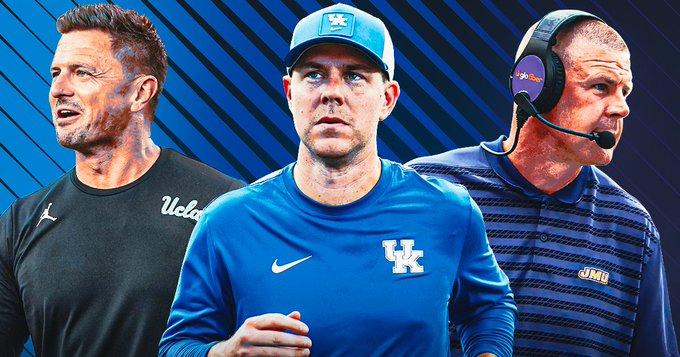
As the 2026 season moves toward Week 6, six first-year head coaches have teams ranked in the national polls, providing perhaps the clearest indication yet that the traditional learning curve for new coaches is becoming less relevant in the modern era.
The circumstances surrounding each program are different. Some inherited talented rosters. Others benefited from aggressive transfer-portal additions, strong recruiting classes or established quarterback play. But the common thread is unmistakable: winning quickly is no longer viewed as an exception.
Cignetti’s Indiana tenure remains one of the strongest examples.
When he took over the Hoosiers, the expectation was that he would bring discipline, structure and accountability to a program searching for sustained relevance. Instead, Indiana immediately became one of the country’s most compelling stories. Cignetti’s approach was direct, demanding and unapologetically competitive.
The results followed.
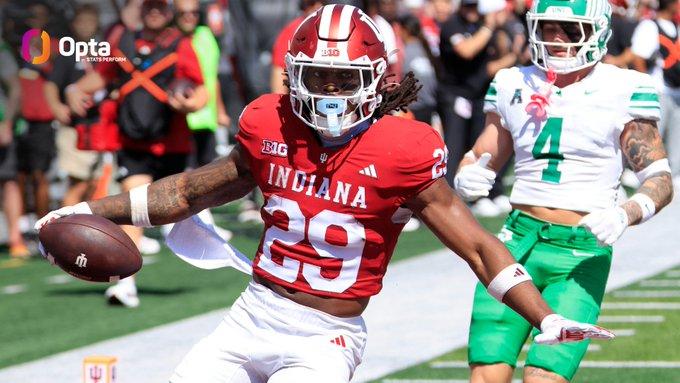
Indiana’s transformation under Cignetti has changed the expectations surrounding what a first-year coach can accomplish. The Hoosiers went from a program often discussed in terms of potential to one capable of competing nationally, and the momentum created by that turnaround has continued to shape perceptions of the coaching profession.
There is a broader reason this is happening now.
The transfer portal has dramatically altered the way coaches inherit programs. A new coach no longer necessarily has to spend several recruiting cycles rebuilding a roster from the ground up. Players with college experience can arrive immediately, while returning veterans can provide continuity inside a new system.
Name, image and likeness opportunities have also changed the equation.
Programs with the resources and infrastructure to move aggressively in the portal can address roster weaknesses almost overnight. A coach can identify a deficiency at quarterback, offensive line, secondary or along the defensive front and potentially fill it before the next season begins.
That means the modern first-year coach may inherit a roster that looks very different from the one available to coaches of previous generations.
Cignetti understood that reality.
His success has demonstrated that experience within the coaching profession can translate quickly when a coach has the right roster, staff and institutional support. More importantly, his approach has helped eliminate the assumption that patience must automatically precede production.
Now, six first-year coaches enter Week 6 with ranked teams.
That number matters because it reflects more than a handful of surprise results. It suggests a larger shift in the sport’s competitive landscape.
College football has become increasingly impatient.
Administrators expect immediate progress. Fans want results immediately. Players have unprecedented mobility. Recruiting has become a year-round competition. And the transfer portal has made roster construction far more fluid than it was even a few seasons ago.
A first-year coach therefore enters the job with opportunities that previous generations did not have.
But those opportunities come with pressure.
The same portal that allows a coach to rebuild quickly also allows players to leave quickly. A program that fails to establish direction can lose important pieces of its roster. A coach who struggles to create a strong culture may find himself competing not only against opposing teams but also against the possibility of his own players entering the portal.
That makes early success particularly valuable.
Winning creates credibility.
Credibility strengthens recruiting.
Recruiting strengthens the roster.
And a stronger roster makes winning easier.
The cycle can accelerate quickly.
Cignetti has been one of the coaches most capable of exploiting that cycle. His teams have played with a clear identity, and his willingness to demand accountability has become part of Indiana’s broader transformation.
The result is a program that no longer approaches each season simply hoping to become competitive.
Indiana expects to compete.
That distinction is significant.
The emergence of six ranked teams under first-year coaches also creates an intriguing contrast with the traditional coaching model. Historically, new coaches were often judged on incremental progress: Was the team more competitive? Did recruiting improve? Was the culture changing? Did the program look better than it did a year earlier?
Those measurements still matter, but today’s environment increasingly demands something else.
Can you win now?
The coaches producing ranked teams in their first seasons are demonstrating that the answer can be yes.
That does not mean every first-year coach should be expected to produce a championship contender immediately. Context remains critical. A coach taking over a depleted roster at a struggling program faces a different challenge from someone inheriting a talented team with strong infrastructure.
But the ceiling has changed.
Cignetti’s success has helped raise it.
His Indiana tenure has become a case study in what can happen when a coach arrives with a defined philosophy and immediately establishes authority. Rather than spending a season explaining why the program needs time, Cignetti has operated as though the opportunity to win was already available.
Other first-year coaches are now following that blueprint in different ways.
Some have leaned heavily on experienced quarterbacks. Others have rebuilt through the transfer portal. Some have retained enough of the previous staff’s infrastructure to minimize disruption. Others have brought in entirely new systems and convinced their players to adapt quickly.
Different paths, same objective.
Win.
And by Week 6, the national rankings are beginning to reflect that reality.
For Indiana, the development is particularly meaningful because Cignetti has helped create the standard by which many of these situations are now being judged. His success did not eliminate the challenges of taking over a college football program, but it did weaken the argument that those challenges necessarily require several years to overcome.
The sport has changed.
The roster-building process has changed.
The expectations have changed.
And perhaps the definition of a first-year coach has changed with them.
A new coach is no longer automatically synonymous with a rebuilding team.
The six ranked first-year programs entering Week 6 are evidence of that shift. Their success does not guarantee that the season will end with conference championships or College Football Playoff appearances. Maintaining early momentum is an entirely different challenge from creating it.
Still, the message is clear.
The learning curve is getting shorter.
Cignetti helped prove that at Indiana. Now, a growing group of first-year coaches is reinforcing the same idea across the sport.
In an era defined by player movement, expanded resources, aggressive roster management and relentless expectations, college football may no longer have the patience — or the need — to wait several seasons for a new coach to make his mark.
The old rebuilding timeline is fading.
The results are arriving faster.
And six ranked teams entering Week 6 may be the latest evidence that college football’s new coaching era has already arrived.